
Volterra Off the Beaten Path: A Local's Guide to Tuscany's Quiet Hill Town
Reading time: 8 minutes · Last updated: September 13, 2026.
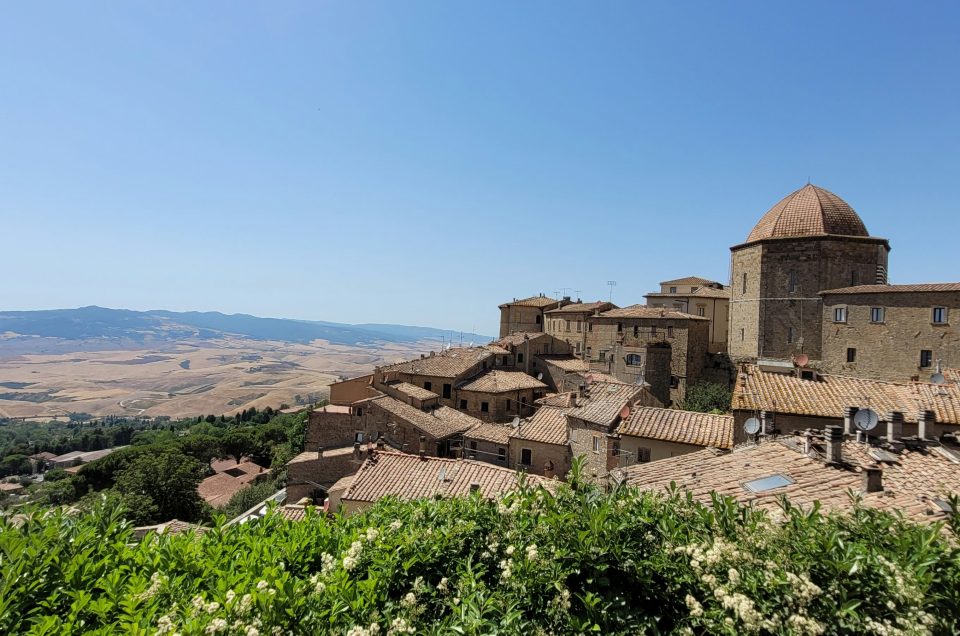
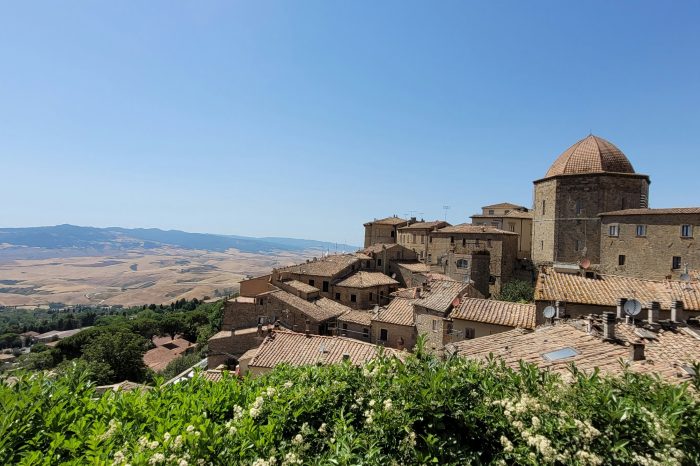
On most combined day tours from Florence, Volterra gets an hour or two. Then the coach pulls away toward San Gimignano and the next stop on the itinerary. In fact, that is barely enough time to find the main square, let alone the alabaster workshops tucked into the side streets. So if you want to see Volterra off the beaten path, plan a full day here on its own, and skip the rushed group-tour stopover entirely. This walled Etruscan hill town sits roughly seventy kilometers southwest of Florence. Indeed, it has stood for close to three thousand years without needing anyone's approval. Give it a full day, and it repays you with Etruscan walls, working stone studios, and a hiking loop that most visitors never even hear about.
We're Out of the Box Florence, a locally run tour company based in the city. This is roughly how we'd spend a day here ourselves.
A Town Most Bus Tours Rush Past
Many Florence-based day tours pair Volterra with San Gimignano in a single nine-hour outing. That sounds generous until you do the math. Still, subtract driving time, lunch, and San Gimignano's own crowded main square, and Volterra is left with whatever time remains. Consequently, most visitors leave having seen one piazza and one gift shop, not the town locals actually live in.
By contrast, Volterra rewards people who linger. Indeed, its historic center still functions as a working town, home to roughly six thousand residents inside the walls. Daily life here also runs independently of any tour schedule. The public bus from Florence, meanwhile, takes nearly three hours. Because of that, few day-trippers attempt it without a car or a small private trip. As a result, Volterra keeps a slower rhythm than San Gimignano or Pisa, even in high season.
A Quick Walk Through Nearly 3,000 Years of History
Volterra started life as Velathri, one of the twelve cities of the ancient Etruscan confederation. Its Etruscan walls date to the 4th century BC and once enclosed 116 hectares. The perimeter, in fact, stretched more than four miles, among the most extensive defensive circuits in the Etruscan world. Sections of that wall still stand today, along with two ancient gateways.
In addition, the town's medieval government building, the Palazzo dei Priori, dates to 1208. It is, in fact, the oldest structure of its kind in Tuscany. Florence's own Palazzo Vecchio and most other regional town halls were modeled after it, a detail many visitors to Florence never learn. Meanwhile, just outside the old walls, a Roman theatre from the 1st century BC once seated up to 4,000 spectators. The Caecina family, a wealthy local dynasty, funded its construction, and archaeologists rediscovered it only in the 1950s.
The Alabaster Workshops: A Living Craft, Not a Souvenir Stand
Volterra sits on natural deposits of alabaster. Carving it into bowls, lamps, and sculpture has, in fact, been a local trade for centuries. Several small workshops around town still cut and polish the stone by hand, and many also welcome visitors to watch.
Skip the mass-produced trinkets near the main square. Instead, look for a workshop with dust on the floor and a craftsperson mid-project; that is usually the real thing. Furthermore, the Guarnacci Etruscan Museum is worth the detour. Founded in 1761, it houses roughly 600 Etruscan alabaster funerary urns, and it also ranks among the earliest public museums anywhere in Europe. This makes it a useful stop before or after the modern workshops. It shows, after all, just how long this material has shaped the town's identity.
Hike the Balze and the Volterra Loop
Beyond the walls, centuries of erosion have carved a set of dramatic cliffs known as the Balze. Rain has slowly eaten away the soft clay and sand beneath the town. As a result, the collapse has already swallowed an ancient necropolis and an 11th-century abbey, and it is still advancing today. A short, well-marked walk from Porta San Francesco leads right to the edge of the chasm, and the view rewards the short climb back up.
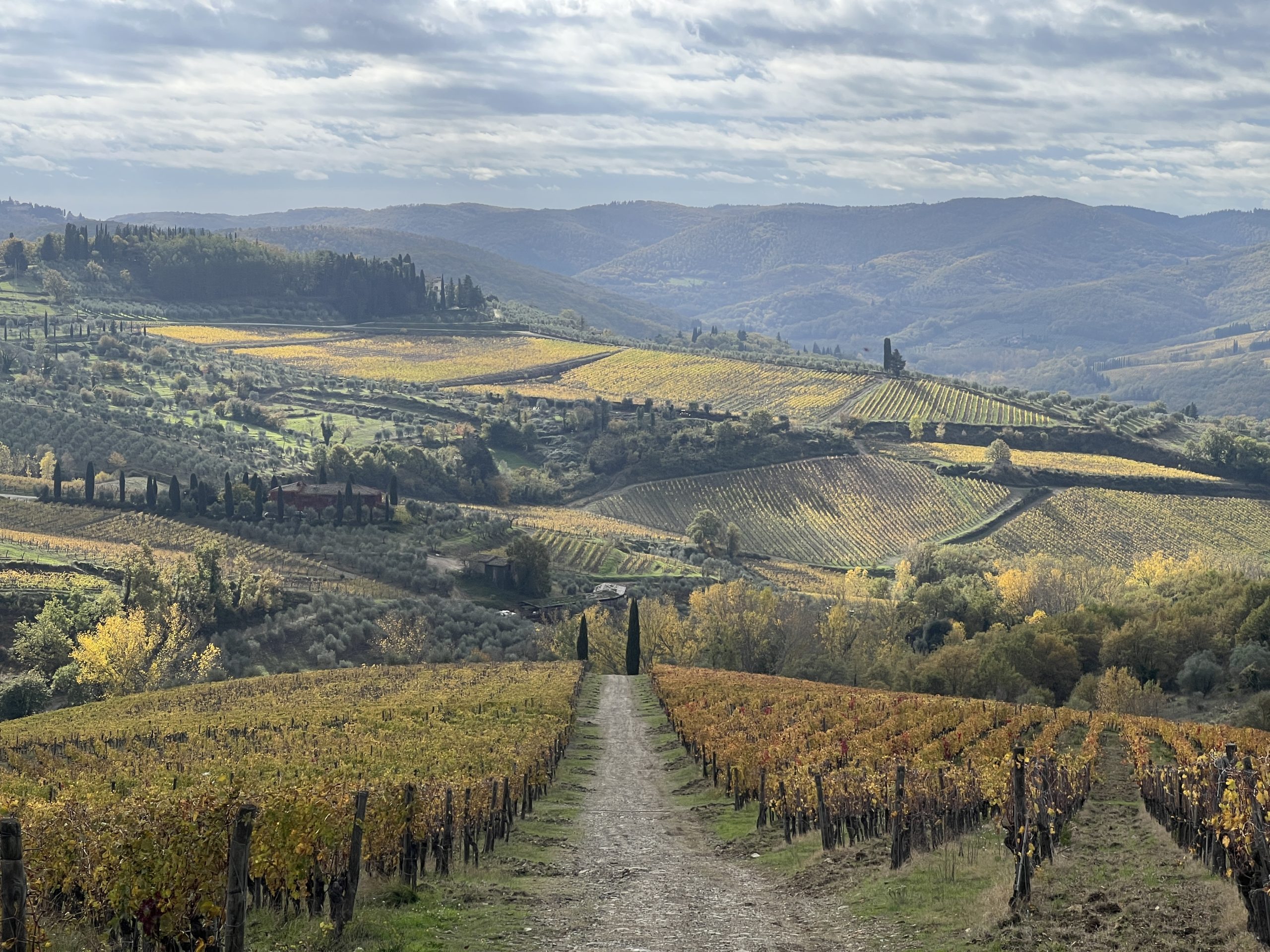
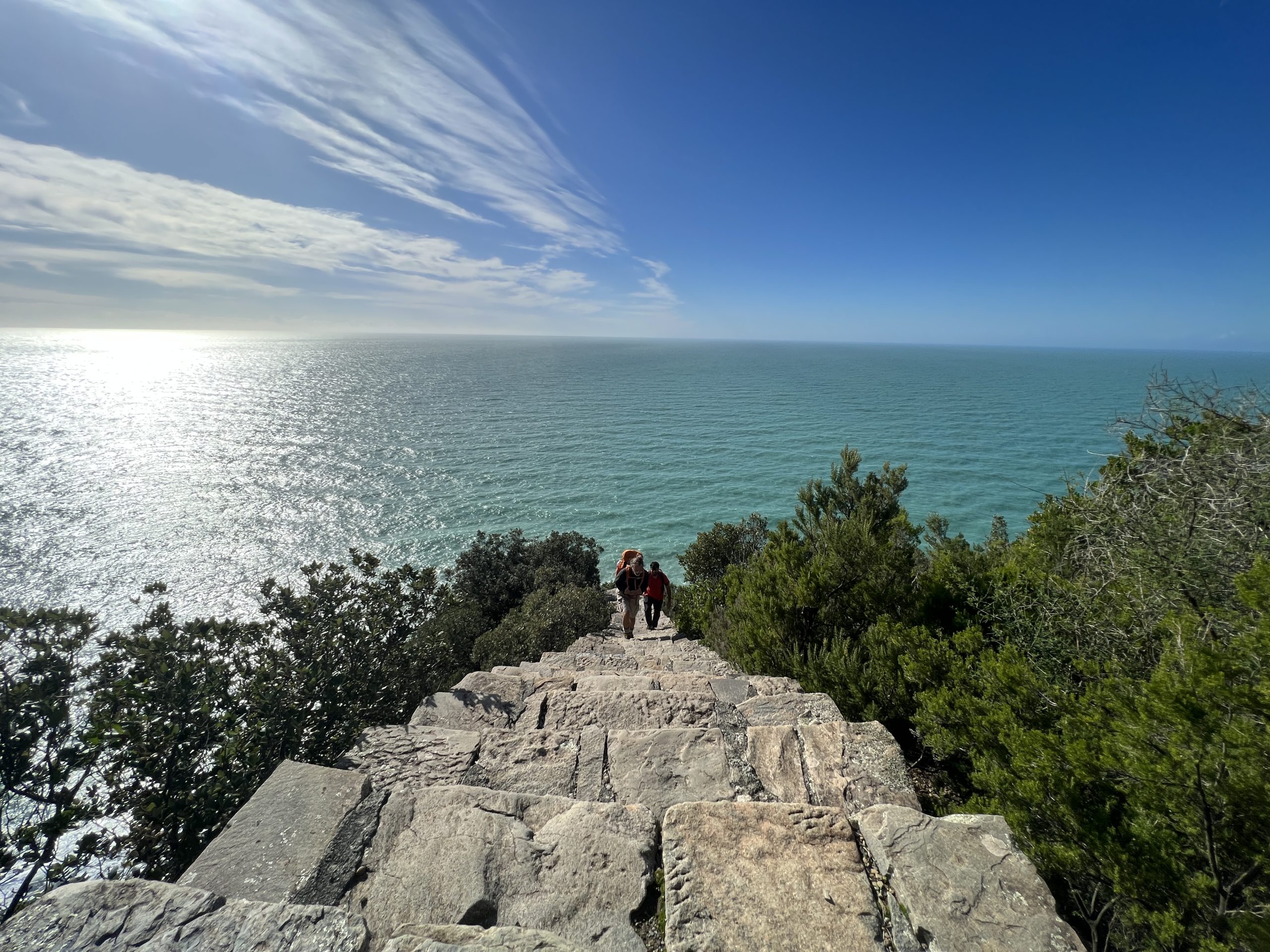
For a longer outing, the Volterra Loop trail circles the town through the surrounding countryside. It covers about 17.6 kilometers and climbs roughly 575 meters along the way, typically taking four to five hours. Hikers who have done it also describe it as far less crowded than trails near Tuscany's more famous hill towns. Spring and fall bring the mildest hiking weather in this part of Tuscany. September, therefore, counts as one of the better months to attempt it.
Quick fact: the Volterra Loop covers roughly 17.6 km and 575 m of elevation gain in 4.5–5.5 hours. So plan a full day if you want to combine it with the town itself.
A Practical Checklist Before You Set Off
A little planning turns Volterra from a rushed stopover into an easy, unhurried day. So, keep these points in mind before you leave Florence.
- Wear sturdy shoes; the Balze walk and the Volterra Loop both cross uneven, sometimes steep ground.
- Also carry cash for the smaller alabaster workshops, since not every studio takes cards.
- Expect some shops and workshops to close for a couple of hours around midday, since this is common in small Italian towns.
- Bring water and a hat if you are hiking, because there is little shade on the open stretches of the Loop.
- Allow at least half a day for the historic center alone, and add a full day if you plan to hike as well.
Combine It With San Gimignano the Right Way
San Gimignano and Volterra sit close enough together that many visitors want to see both. That instinct is not wrong; the execution usually is. Cramming both towns into one nine-hour coach loop leaves too little time for either. Instead, consider splitting the two across a slower two-day trip, or an overnight stay in the area, so each town gets a proper visit rather than a photo stop. Alternatively, treat them as two separate day trips on two different visits to Tuscany. Either way, resist the urge to check both off in a single rushed afternoon.
Getting There Without a Bus Tour
Volterra sits about seventy kilometers from Florence, and driving takes just over an hour. Public transport, however, tells a different story. The direct bus from Florence's Stazione Leopolda runs infrequently and takes nearly three hours. Meanwhile, the train-plus-bus combination through Pontedera is only marginally faster.
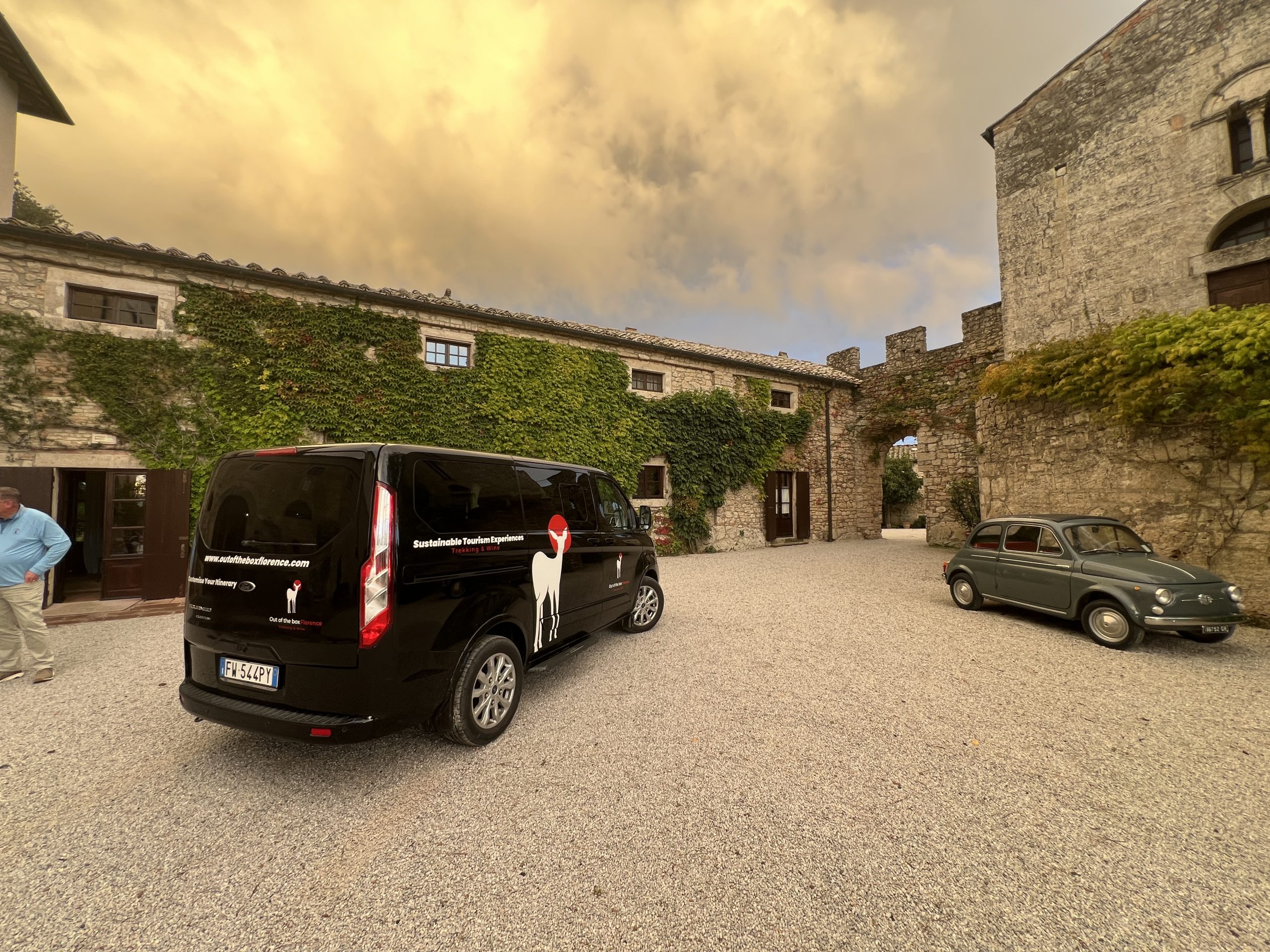
As a result, a car or a small private day trip makes far more sense than the limited public bus, and it also beats a rushed, multi-town coach tour. Whichever way you arrive, plan to stay at least half a day. Ideally, make it a full one, since Volterra's best sides only show up once the group tours have already left for their next stop.
Fuel Up in Florence Before You Go
Volterra doesn't have the same density of cafés and bakeries as central Florence. Because of that, it helps to start the day well fed. Grab a coffee and something from a bakery counter before you leave the city. Look for a queue of locals rather than a printed English menu instead; that's a reliable sign the pastries are fresh.
Need a curated starting point? Our Florence Off the Beaten Path: From Real Locals map covers where locals actually eat and drink around the city, and it's worth a look before you head out for the day.
Frequently Asked Questions About Visiting Volterra
Is Volterra worth visiting from Florence?
Yes. Volterra offers Etruscan walls, a Roman theatre, working alabaster workshops, and a hiking trail. It also stays far quieter than nearby San Gimignano or Pisa, even at the height of summer.
How far is Volterra from Florence?
Volterra sits about seventy kilometers from Florence, roughly a one-hour drive. The public bus, however, takes close to three hours because of limited, indirect routes.
Can I visit Volterra without joining a big bus tour?
Yes, and it is arguably a better way to see it. Driving yourself or joining a small private day trip lets you set your own pace, instead of splitting a nine-hour outing with San Gimignano.
What is Volterra known for?
Volterra is known for its Etruscan heritage, its 1208 Palazzo dei Priori, and a well-preserved Roman theatre. It's also known for centuries of alabaster carving that continues in workshops around town today.
Is Volterra good for hiking?
Yes. The Balze cliffs are reachable on a short walk from Porta San Francesco. Meanwhile, the longer Volterra Loop trail covers about 17.6 kilometers through the surrounding countryside, best tackled in spring or fall.
When is the best time to visit Volterra?
Spring (April–May) and fall (September–October) bring mild temperatures for walking and fewer visitors than summer, so both seasons work well for exploring on foot.
Plan Your Own Volterra Off the Beaten Path Day
Seeing Volterra off the beaten path is exactly the kind of day we build our tours around: real history, real craftsmanship, and none of the nine-hour bus-tour shuffle. Does hiking through Tuscany's quieter corners sound like your kind of day? Then take a look at our sustainable hiking and gravel biking experiences, or start closer to home with one of our Florence urban hikes.
For the full lineup, browse all of our Tuscany tours, or reach out through our contact form and tell us what kind of day you're after. We'll help you build it, and you can also email us directly at info@outoftheboxflorence.com.
This article was drafted with AI assistance and reviewed by our team before publishing, in line with EU AI Act transparency requirements (Article 50). All route, safety, and pricing details were independently fact-checked against official and local sources.