
Reading time: 8 minutes · Last updated: September 20, 2026.
By 7 a.m. on Via de' Neri, the shutters are already rolling up and a scooter is unloading crates outside a greengrocer while the bells of Santo Spirito settle into the morning. Espresso cups clatter at the bar counter. Meanwhile, an hour east of the city, someone is lacing up boots in a damp Apennine wood, waiting for a dog to freeze mid-stride over a patch of disturbed soil. That second scene is truffle hunting in Tuscany, and it is quietly one of the best reasons to leave Florence's center this autumn. Instead of another queue for a museum ticket, you spend a morning in the woods with a trained dog, a local hunter, and a small hoe. As a result, you come away with a genuine sense of how this region actually works, not just how it photographs.
We're Out of the Box Florence, a locally run tour company based in the city. This is roughly how we'd spend an autumn morning ourselves.
Why Truffle Hunting in Tuscany Beats Another Bus Tour
Coach parties still dominate the big-name sights, herding forty people through a piazza in twenty minutes. Truffle hunting works differently, largely because it has to. A hunter and a dog can only cover so much ground, so groups stay small — often four to eight people, sometimes just a couple. Consequently, you actually talk to the person leading you, rather than trailing a raised umbrella through a crowd.
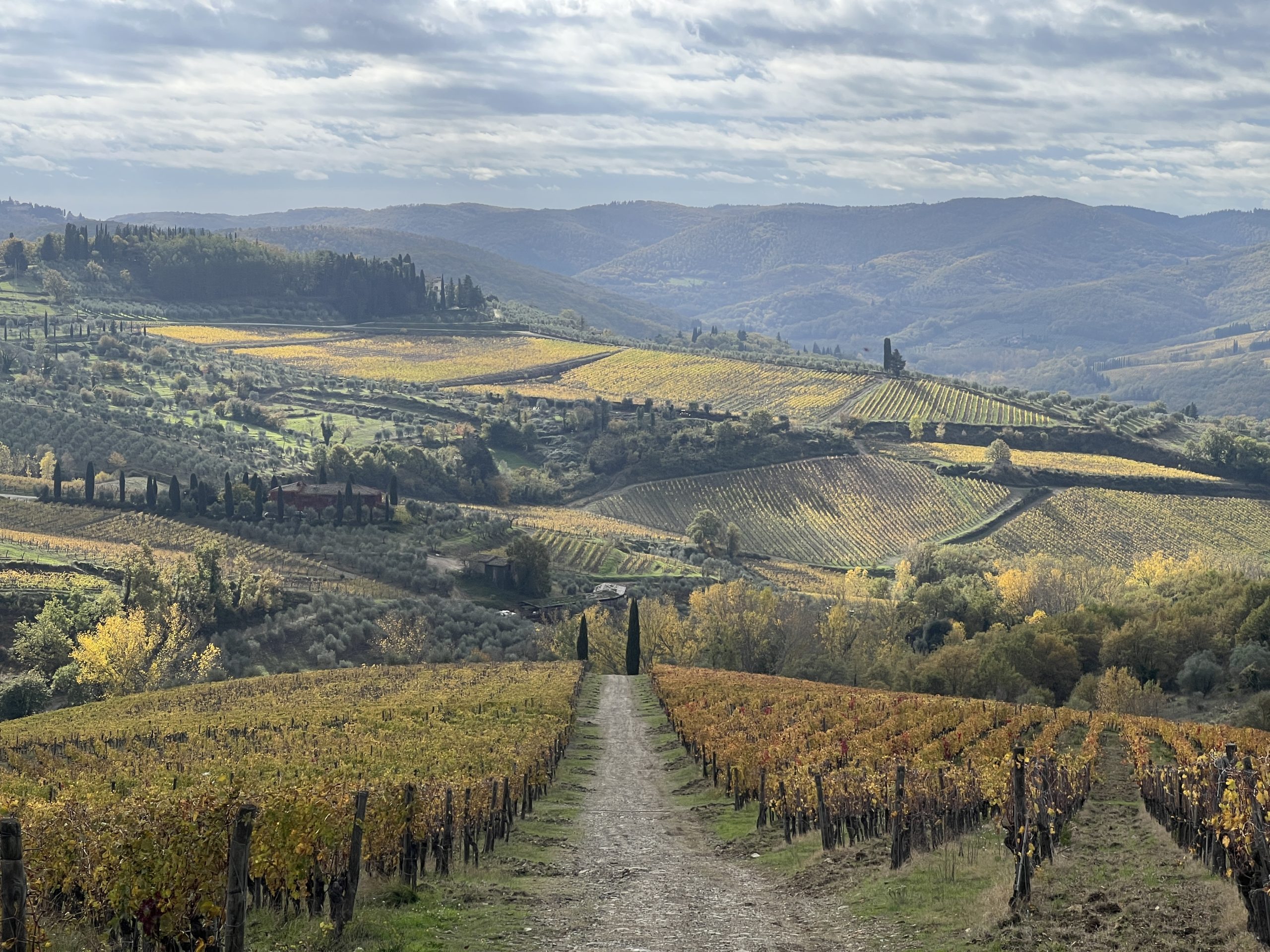
This is also outdoor Tuscany rather than postcard Tuscany. You walk through oak and chestnut woodland, not along a roped-off gallery corridor. Furthermore, the pace suits slow travel: a few hours in the forest, a break to taste what you found, then back to town before the afternoon crowds peak. For travelers who already lean toward walking Florence on foot rather than double-decker buses, a truffle hunt is a natural next step into the countryside.
When Is Truffle Hunting Season in Tuscany?
Tuscany produces truffles nearly year-round, though not all truffles are equal. The prized white truffle, Tuber magnatum, is the one everyone wants, and it runs from early October through December, peaking in November. Meanwhile, the black winter truffle, Tuber melanosporum, follows a longer window from November into March. There is also a black variety called scorzone, or Tuber aestivum, which has two separate seasons in Tuscany: one from mid-June to the end of August, and another from October through November.
In short, late September through December is prime time for truffle hunting in Tuscany, since white and black varieties overlap. On top of that, San Miniato holds its National White Truffle Market on the last three weekends of November 2026 (the 14th–15th, 21st–22nd, and 28th–29th), which draws crowds specifically for the market stalls. If a quieter walk in the woods appeals more than a festival, plan your hunt for a weekday well before or after those dates.
Quick fact: white truffle season runs early October through December, peaking in November, while the black winter truffle follows from November into March. Late September through December is the best overlap window for a hunt.
Where to Go Truffle Hunting in Tuscany, Away From the Crowds
San Miniato gets the name recognition, and it deserves some of it — the hills around it are genuine white truffle country. Even so, Tuscany has at least six recognized truffle areas, and most visitors never hear about the other five: Mugello, Casentino, Valtiberina, Crete Senesi, and Maremma Grossetana.
- Mugello, north of Florence, mixes chestnut and oak woods with a slower, more rural rhythm than the Chianti hills.
- Casentino, tucked into the Apennines toward Arezzo, borders the Casentino Forests National Park, one of the largest protected forests in the region.
- Valtiberina, near the Umbrian border, is still largely off the tourist map altogether.
- Crete Senesi, south of Siena, is better known for its bare clay hills, though its pockets of woodland hide truffles too.
- Maremma Grossetana, down toward the coast, adds a wilder, less manicured landscape to the mix.
Choosing one of these over San Miniato itself means fewer other visitors, a hunter who likely works the same patch of forest every season, and a walk that feels like a real outing rather than a staged photo opportunity. For a broader sense of how to build a trip around these quieter corners, our guide to sustainable hiking and gravel biking in Tuscany covers several of the same regions.
Meet the Lagotto Romagnolo, the Dog Behind Truffle Hunting in Tuscany
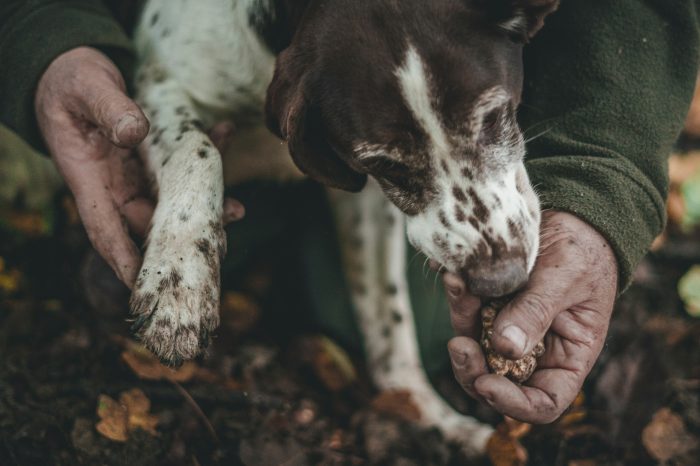
Every hunt depends on the dog, and in Italy that almost always means a Lagotto Romagnolo. Originally bred as a water retriever in the wetlands of Romagna, the breed shifted roles once those marshes were drained in the 19th century. Since then, its sharp nose has made it the standard truffle dog nationwide. In 1995, the Fédération Cynologique Internationale officially recognized the Lagotto as a truffle-searching breed, the only one in the world with that classification.
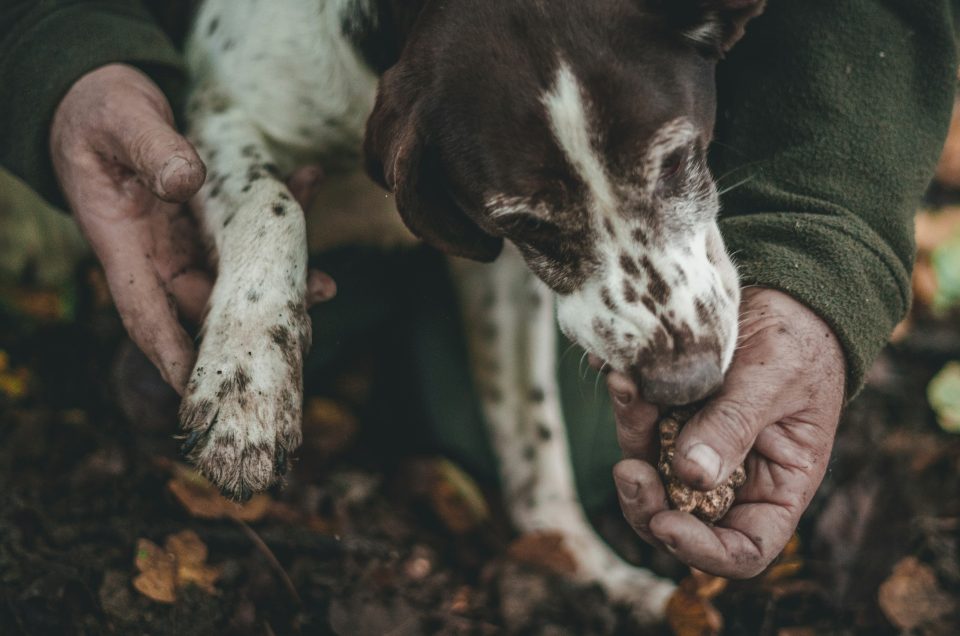
Notably, pigs are no longer part of the picture. Italy banned truffle pigs in 1985, since pigs tend to eat what they find and their rooting damages the soil. Dogs, instead, are trained to simply signal a find and let the hunter dig with a small hooked tool called a vanghetto.
What Actually Happens on a Truffle Hunt
A typical outing starts early, since truffles release more scent in cool morning air. The hunter briefs the group on what the dog's body language means — a change in pace, a stiffened tail, a sudden stop — and everyone follows at a distance so the dog can work undisturbed.
Once the dog signals, the hunter checks the spot before digging, because not every alert means a truffle is there. If it is, the vanghetto comes out, and the hole gets refilled afterward, which helps the same ground keep producing in future years. Many hunts end with a tasting on-site or at a nearby farmhouse, where the truffle gets shaved over eggs, pasta, or bruschetta. It is a hands-on morning rather than a spectator one, and that is largely the point.
How to Pair Truffle Hunting in Tuscany With the Region's Outdoor Side
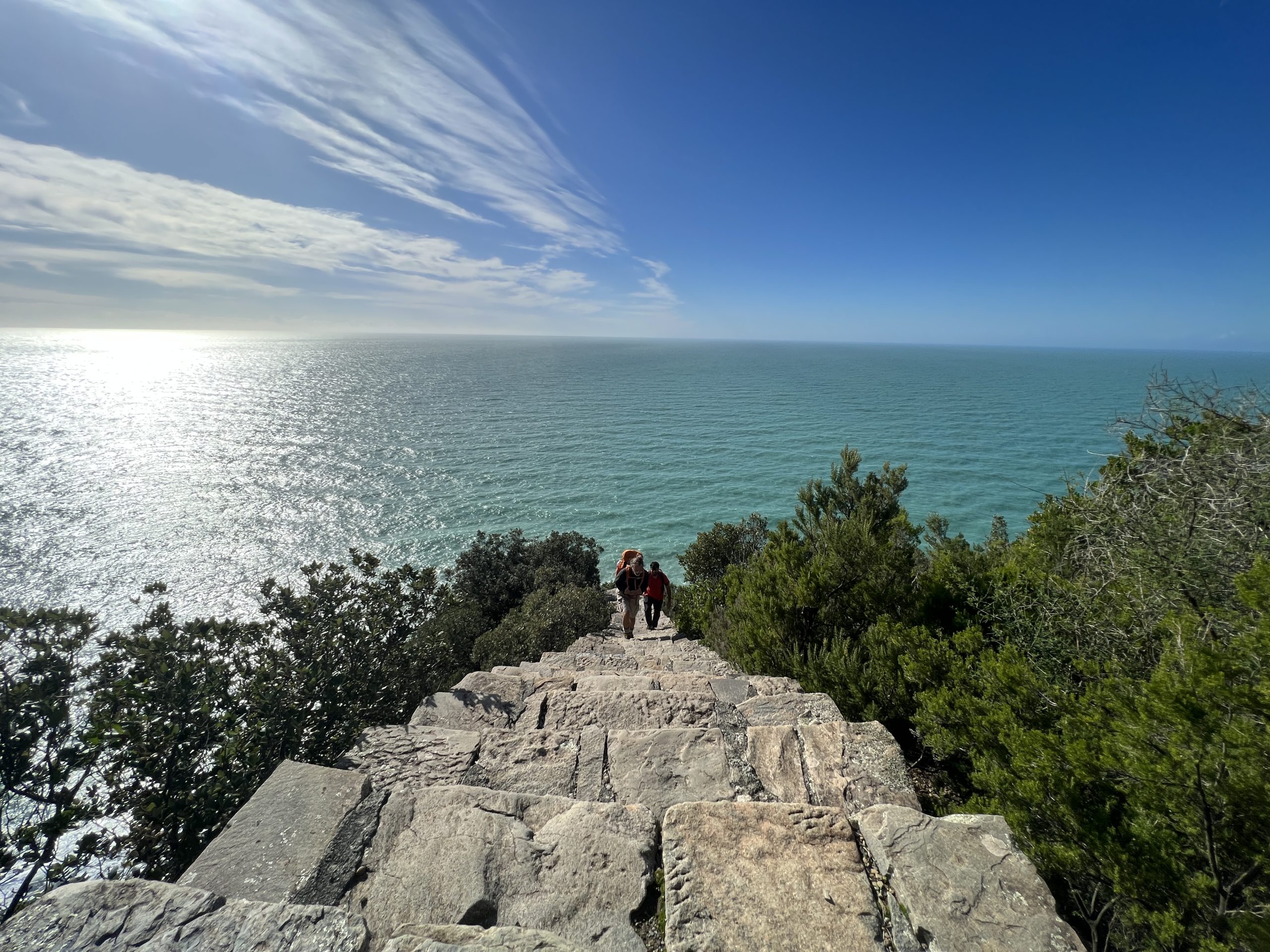
Because most truffle areas sit inside genuine forest and hill country, they pair naturally with other outdoor activities worth building a trip around. Casentino and Mugello both offer proper hiking trails beyond the truffle woods, while the gentler Apennine foothills suit gravel biking just as well.
A single autumn week could combine a morning truffle hunt with an afternoon on two wheels, or a day of hiking followed by a quieter outing on the water, such as a boat and wine outing on the Arno. Either way, the goal stays the same: fewer hours in queues, more hours outside.
Where to Eat What You Find (or Just Eat Well Afterward)
Some truffle hunts include lunch, though not all of them do. If yours does not, skip the first restaurant with an English menu taped to the window near a major sight. Instead, look for a chalkboard menu and a kitchen that changes what it serves depending on what arrived at the market that morning.
For a starting point that skips the guesswork, our Florence Off the Beaten Path: From Real Locals map collects exactly that kind of spot, curated by people who actually live here rather than by review volume.
Practical Tips for Planning Truffle Hunting in Tuscany
A few things are worth sorting out before you go, especially if autumn is your only window this year.
- Book a small-group or private hunt rather than a large coach excursion; group size is naturally limited, so popular dates fill up by early October.
- Wear real walking shoes and expect uneven, sometimes muddy ground, even on an otherwise mild day.
- Ask which truffle variety you are likely to find, since white and black truffles differ in price, flavor, and how they are used in the kitchen.
- If the San Miniato market weekends interest you, book accommodation well ahead; if they do not, simply avoid those dates and hunt elsewhere in peace.
- Pair the outing with a full day, rather than squeezing it between two other bookings, since good hunts do not run on a fixed clock.
Overall, the trip rewards travelers who leave a little slack in the schedule. A rushed truffle hunt is a contradiction in terms.
Frequently Asked Questions
What is the best time of year for truffle hunting in Tuscany?
Late September through December is generally best, since white truffle season runs from early October to December and overlaps with the start of the black winter truffle season in November. Early autumn also avoids the heaviest crowds around the San Miniato market weekends in late November.
Do I need experience to go truffle hunting?
No. The dog and hunter do the technical work; guests mainly walk, watch, and learn to read the dog's signals. Most tours are suitable for beginners, though the terrain does involve real walking on uneven ground.
Is truffle hunting in Tuscany child-friendly?
Many small-group hunts welcome children, though it is worth checking with the specific operator, since walking distance and terrain vary by location. A shorter Mugello or Casentino route tends to be gentler than a longer forest trek.
Where is the best place to go truffle hunting near Florence?
San Miniato is the best-known area and genuinely productive, though Mugello and Casentino sit closer to Florence in travel time and see far fewer visitors, which makes for a quieter, more personal outing.
Can I buy truffles directly from the hunters?
Often, yes, particularly outside the official San Miniato market. Prices vary considerably by variety, size, and season, so it is reasonable to ask the hunter directly rather than guess.
What should I wear on a truffle hunting tour?
Sturdy, waterproof walking shoes, layers, and clothing you do not mind getting muddy. Tuscan forest floors stay damp well into late autumn, even on sunny days.
Ready to Try Truffle Hunting in Tuscany This Autumn?
Truffle hunting in Tuscany is not a spectator activity, and that is exactly its appeal. Rather than photographing a landmark from behind fifty other phones, you spend a morning following a dog through real Apennine forest, learning a tradition that has barely changed in decades. It fits naturally alongside hiking, gravel biking, and the other slow, small-group experiences we build trips around.
To start planning an autumn itinerary that includes a truffle hunt, get in touch through our contact form or write directly to info@outoftheboxflorence.com. We can match the right region, group size, and pace to however much time you actually have.
This article was drafted with AI assistance and reviewed by our team before publishing, in line with EU AI Act transparency requirements (Article 50). All route, safety, and pricing details were independently fact-checked against official and local sources.