
The four food experiences worth building a day around in Tuscany are a truffle hunt, an olive mill visit, a pecorino tasting and a home cooking class. Three of the four are seasonal: white truffle runs from October to December, the olive harvest falls in late October and early November, and only the cooking class works all year.
Food in Tuscany is not a category of tourism. It is a calendar.
Almost everything worth tasting here has a window, and the difference between arriving inside that window and outside it is the difference between watching a mill press olives picked that morning and looking at a shiny machine that is switched off.
This guide covers what each experience actually involves, when it is available, and which of them are worth the money.
Tuscan Food Experiences: What Is in Season and When
| White truffle | October to December. Peak in November, when San Miniato holds its truffle market over the last three weekends of the month |
| Summer black truffle | June to September, the scorzone. Cheaper, milder, and the reason summer hunts still work |
| Winter black truffle | December to March, the most prized of the black varieties |
| Olive harvest and olio nuovo | Late October to mid-November. New oil is at its best in the weeks straight after pressing |
| Pecorino | All year. Spring milk makes the cheeses you eat the following autumn |
| Cooking classes | All year, and better in winter, when the kitchen is the nicest place to be |
| Grape harvest | Mid-September to early October, mostly a wine event but the cellars are open and working |
When Is Truffle Season in Tuscany?
There is a truffle in season almost every month of the year in Tuscany, which surprises most people. They are not the same truffle and they are not remotely the same price.
The white truffle, Tuber magnatum, runs roughly from October to December and is the one that makes the news. Its Tuscan heartland is San Miniato, halfway between Florence and Pisa, where a national white truffle market has been held every November since 1969, over the last three weekends of the month. San Miniato also holds the record for the largest white truffle ever found, 2.52 kilograms, dug up in 1954.
The summer black truffle, the scorzone, is found from June to September. Milder, far cheaper, and the reason a hunt in July is still a real hunt rather than a performance. The winter black truffle follows from December to March and is the best of the blacks in the kitchen.
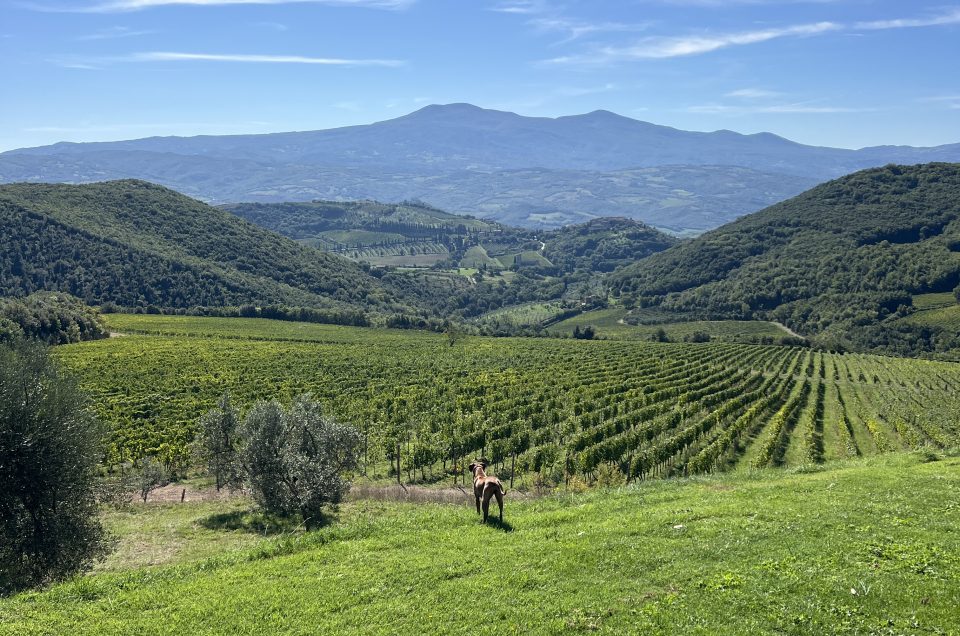
A hunt is a walk in the woods with a hunter and a dog, and the dog is the interesting part. Trained truffle dogs are usually mixed breeds or Lagotto Romagnolo, they work by scent at ground level, and they get paid in food the moment they find something. Expect 60 to 90 minutes of walking, mud in autumn, and no guarantee, because that is what makes it a hunt.
Our truffle hunting experience with lunch is a half day and works for all ages, which is why it is one of the few food experiences that families book twice.
When Is the Olive Harvest, and What Is Olio Nuovo?
The olive harvest in Tuscany falls in late October and early November, and it is the most underrated food experience in the region.
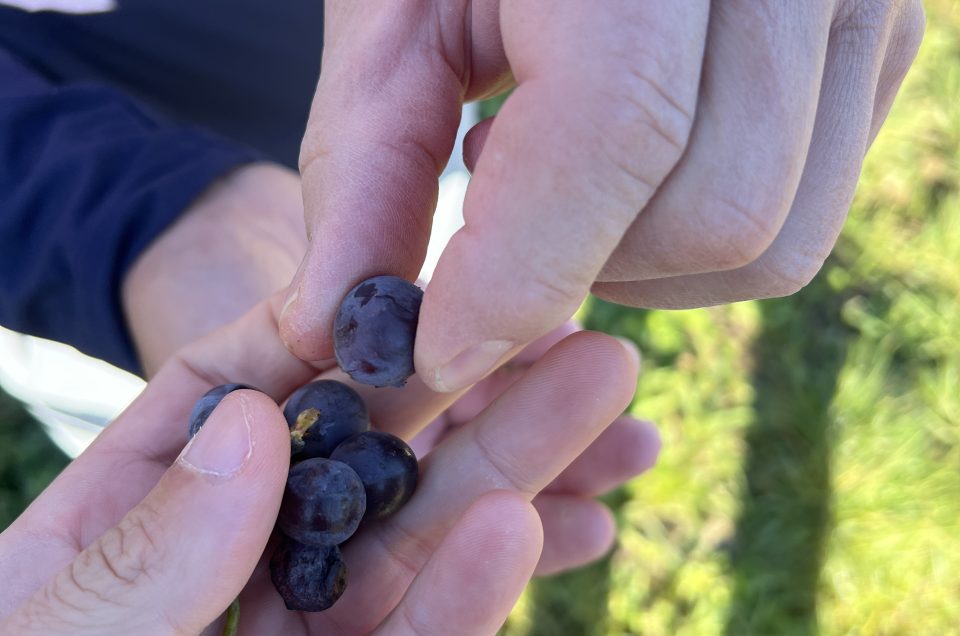
Olives are picked when they are still turning from green to purple, not when they are fully ripe, because unripe fruit gives lower yield and better oil. They go to the frantoio, the mill, within hours. A good producer presses the same day.
Olio nuovo is what comes out: unfiltered, cloudy, an aggressive green that looks almost artificial, and peppery enough at the back of the throat to make first-timers cough. That burn is polyphenols, and it fades over the following months as the oil settles. Which is why olio nuovo is a seasonal thing rather than a product: the version you taste in November is not the version in the bottle in April.
The traditional way to eat it is fettunta, grilled bread rubbed with garlic and drowned in new oil. No tomato, no basil, nothing else. It sounds too simple to be worth travelling for and it is the single best thing to eat in Tuscany in November.
Visiting a working mill during the harvest means noise, smell and people who have been awake since 5am. Like the grape harvest, it is a working site rather than a hospitality venue, and it needs to be arranged in advance.
What Makes Tuscan Cheese Worth a Stop?
Pecorino, which is sheep's cheese, and in Tuscany it is mostly a question of how long it has been left alone.
Fresco is young, soft, mild and white. Semi-stagionato sits in the middle. Stagionato is aged for months and gets harder, saltier and more complex. Some producers age wheels under ash, in walnut leaves or buried in hay, which changes the rind and the flavour underneath it.
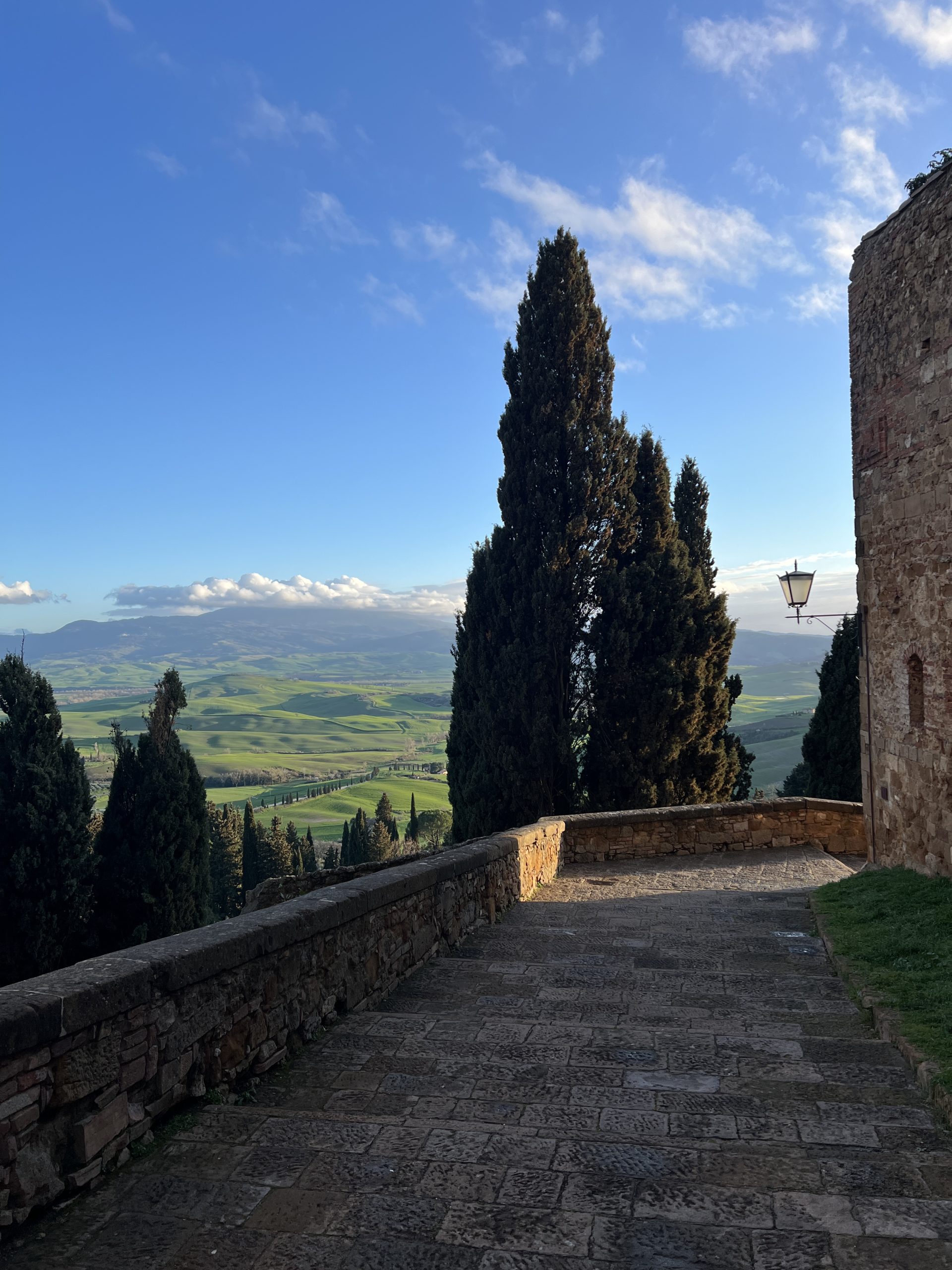
Pienza, in the Val d'Orcia, is the town most associated with pecorino, and a cheese tasting pairs naturally with a Brunello di Montalcino day, since the two towns are 25 minutes apart. In the Casentino and the Garfagnana, cow and sheep cheeses are aged in cellars by producers who sell almost nothing outside their valley.
A tasting at a producer is usually 45 minutes to an hour, often with honey, jam and a glass of something. It is the easiest food experience to add to a day that is mostly about something else.
Is a Tuscan Cooking Class Worth It?
Yes, with one condition: it has to be in a kitchen where somebody actually cooks, not in a school built for the purpose.
The difference is visible within ten minutes. In a commercial school you are one of 20 people at a numbered station making pasta from a printed sheet. In a farmhouse kitchen you are one of six, the ingredients come from outside the window, and the recipe changes according to what there is.
A typical session runs half a day and covers fresh pasta by hand, usually pici, the thick rolled Sienese pasta that requires no equipment beyond your palms, plus a sauce, a main and a dessert. Then you eat it, with wine, which is the point.
Our home cooking class in Chianti Classico takes a maximum of 7 people in a private farmhouse and starts from €126 per person. It is also the food experience we most often recommend for a rainy day, because it is the only one on this list that improves when the weather is bad.
What Should You Actually Eat in Tuscany?
Tuscan cooking is poor food that got famous. Most of the classics were built around stale bread, cheap cuts and whatever grew nearby, and they are still better than what replaced them.
- Bistecca alla fiorentina. A T-bone from Chianina cattle, cut three fingers thick, grilled over embers and served rare. Asking for it well done is legal but you will be judged.
- Ribollita. Winter. Bread, cannellini beans and cavolo nero, cooked, cooled and cooked again, which is what the name means.
- Panzanella. Summer. The same stale bread, soaked and mixed with tomato, onion and basil.
- Pici. Hand-rolled pasta from the Siena side, served with wild boar ragù or with garlic and breadcrumbs.
- Lardo di Colonnata. Pork back fat cured in marble basins in the Apuan Alps above Carrara. Better than it sounds by an enormous margin.
- Farro della Garfagnana IGP. An ancient grain grown in the mountain valley north of Lucca, usually in soup.
- Cantucci and vin santo. Almond biscuits and sweet wine. The dipping is not a tourist ritual, it is how they are eaten.
What About a Food Tour in Florence Itself?
Worth saying plainly: we do not run street food walks in Florence, and there are companies that do them well.
The reason is that the food we care about is not made in the city. Florence sells it, and the Mercato Centrale is a good morning if you want lampredotto, schiacciata and a look at how Florentines shop. But the truffle is in the woods near San Miniato, the oil is in a mill in Chianti, the pecorino is in a dairy in the Val d'Orcia, and the person who made each of them is standing next to it.
Forty minutes out of Florence is the difference between tasting a product and meeting the producer. That is the whole argument for doing food in the countryside instead of the city.
How Do Food Experiences Fit Into a Day?
They combine well, and the mistake is doing too many.
A truffle hunt or an olive mill visit occupies a morning and finishes with lunch, which means the afternoon is free for a winery or a village. A cooking class takes a half day and produces your lunch or dinner, so it does not stack with a restaurant booking. A cheese tasting is 45 minutes and slots into almost anything.
The natural pairing is one food experience with one wine visit in the same day. Two food experiences in a day is a lot of eating and, more importantly, a lot of sitting.
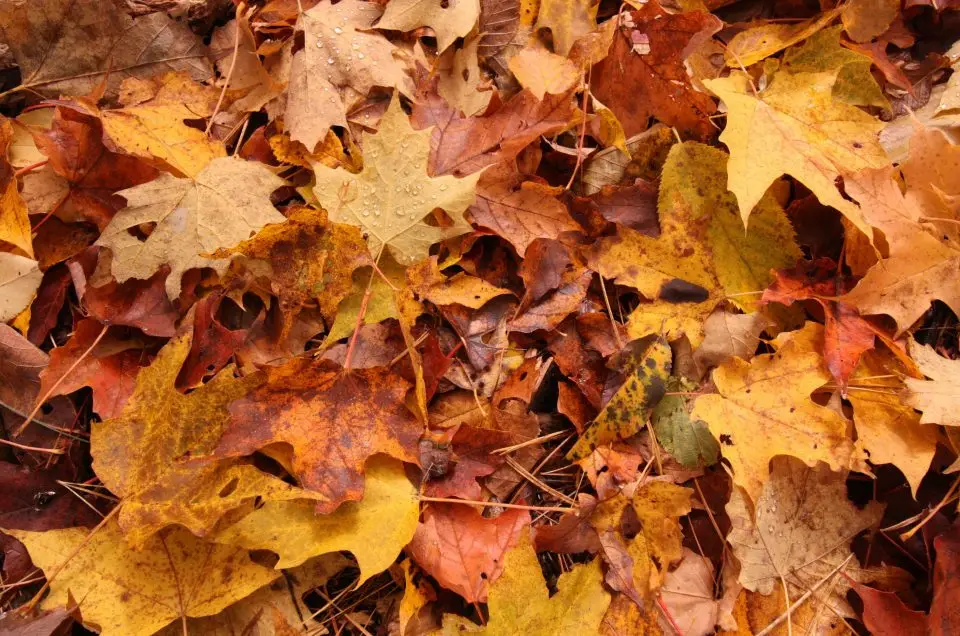
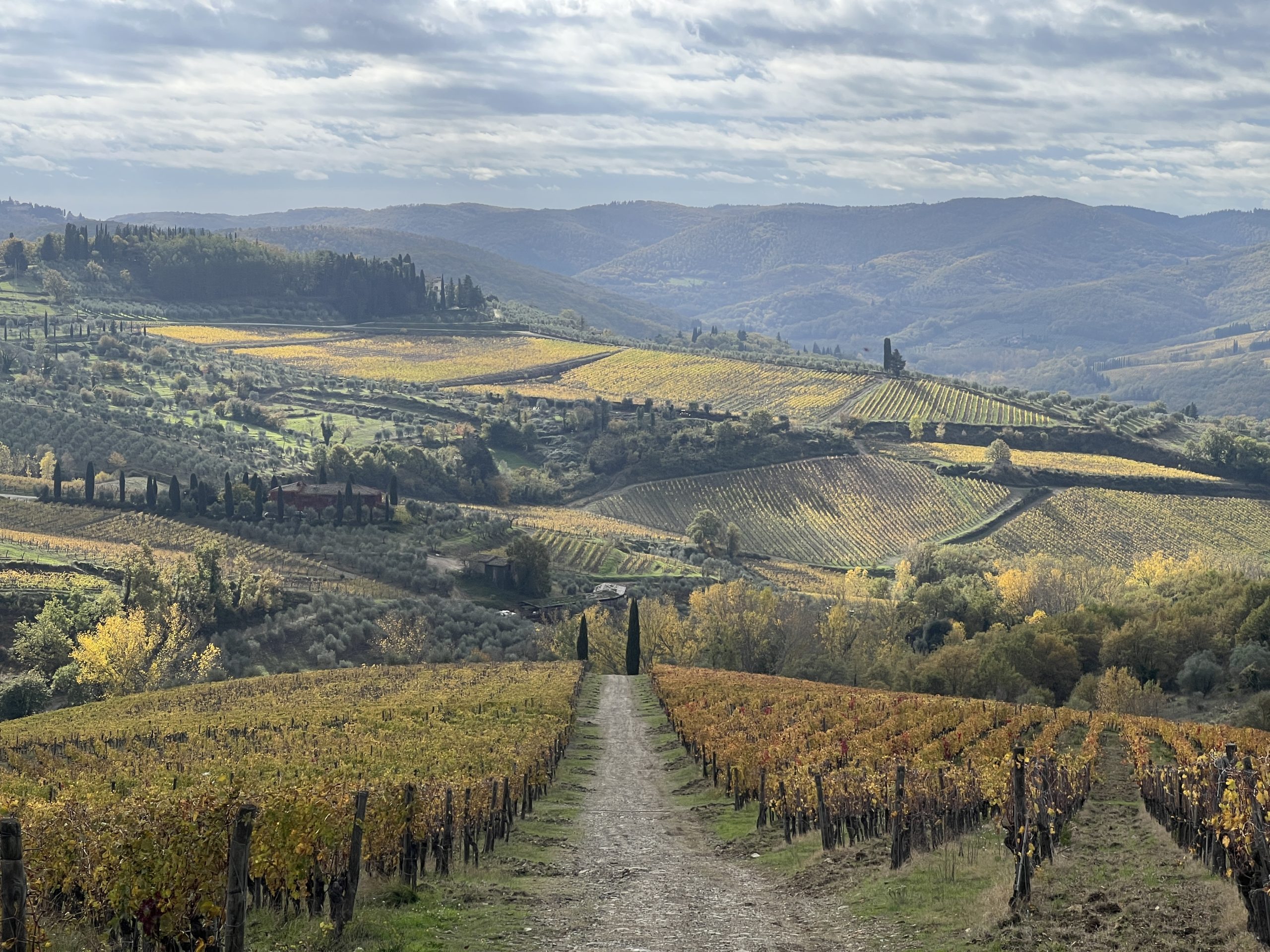
Autumn is when this cluster of experiences is at its strongest: from late October you can do the olive harvest and truffle season in the same week, with the vineyards still golden. If you are working out how many days that requires, our guide to how many days you need in Tuscany covers the arithmetic, and we can build the food days into a private itinerary around your dates.
Written by Stefano Mazzantini, founder of Out of the Box Florence, FISAR-certified sommelier and licensed hiking and cycling guide. Over 20 years guiding international travellers through Florence and Tuscany, and more than 10,000 guests since the agency was founded in Florence in 2020.
Frequently Asked Questions About Food Experiences in Tuscany
What are the best food experiences in Tuscany?
A truffle hunt with a dog and a hunter, a visit to an olive mill during the harvest, a pecorino tasting at a dairy, and a cooking class in a farmhouse kitchen. The first three are seasonal. A cooking class is the only one of the four available all year round.
When is truffle season in Tuscany?
White truffle runs from October to December, with its peak in November around San Miniato. The summer black truffle, the scorzone, is found from June to September, and the winter black truffle from December to March. There is a truffle in season for most of the year.
When is the olive harvest in Tuscany?
Late October to mid-November. Olives are picked while still turning from green to purple and pressed within hours. The result is olio nuovo: unfiltered, bright green and peppery. Visiting a working mill during the harvest needs to be arranged in advance, because it is a working site.
How does a truffle hunt actually work?
You walk in the woods with a hunter and a trained dog, usually a Lagotto Romagnolo or a mixed breed, for around 60 to 90 minutes. The dog works by scent and is rewarded with food when it finds something. There is no guarantee of a find, which is the point.
Is a cooking class in Tuscany worth it?
Yes, if it takes place in a real kitchen rather than a purpose-built school. A farmhouse class of six people making pici by hand with ingredients from the property is a different experience from a numbered station in a class of twenty. Expect half a day, ending with the meal you cooked.
What is the difference between pecorino fresco and stagionato?
Ageing. Fresco is young, soft, mild and white. Stagionato has been aged for months and is harder, saltier and more complex, sometimes matured under ash, in walnut leaves or in hay. Pienza in the Val d'Orcia is the town most associated with Tuscan pecorino.
Do you run food tours in Florence itself?
No. We run food experiences in the countryside, where the producers are. The Mercato Centrale is worth a morning for lampredotto and schiacciata, but the truffle is in the woods near San Miniato, the oil is in a Chianti mill and the pecorino is in a Val d'Orcia dairy.
Can you combine a food experience with a wine tour in one day?
Yes, and it is the best way to use a day. A truffle hunt or a mill visit takes the morning and ends with lunch, leaving the afternoon for a winery or a village. Two food experiences in the same day is too much eating and too much sitting.