
Reading time: 8 minutes · Last updated: October 11, 2026.
Short answer: choose a Chianti tour if you want a relaxed day close to Florence. Choose Montalcino if Brunello is the whole point and you accept a long drive. For most first-time visitors, Chianti Classico is the easier, better-balanced choice.
Booking a Chianti vs Montalcino wine tour sounds like a question about wine. In practice, it is mostly a question about time. One region sits about 30 kilometers from Florence. The other sits roughly 116 kilometers away, and both produce serious Sangiovese.
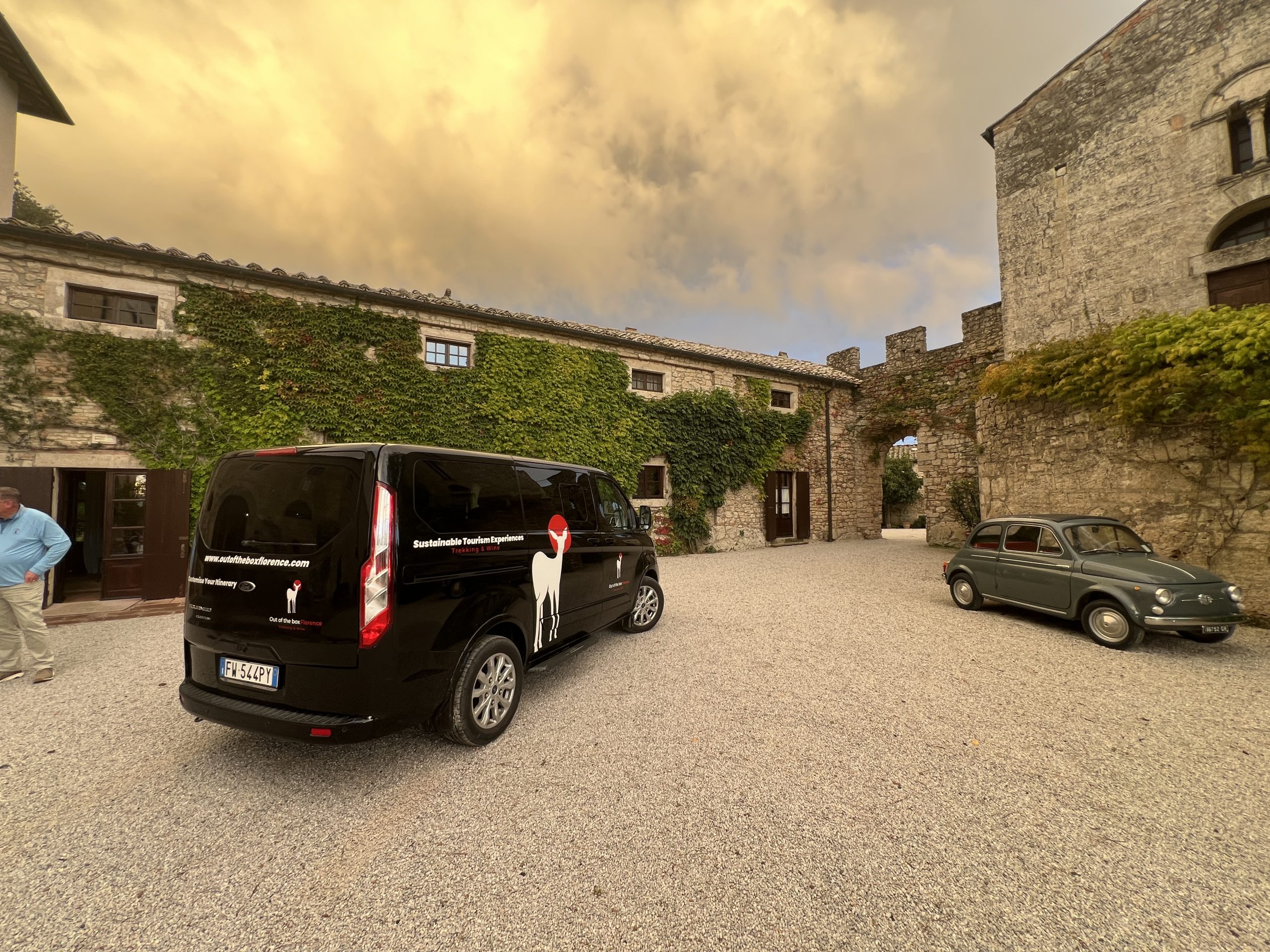
We are Out of the Box Florence, a small, locally owned tour company. Our founder, Stefano Mazzantini, is a certified wine sommelier and licensed hiking and biking guide. Therefore, this comparison comes from people who walk these vineyards, not from a booking-platform template.
Chianti vs Montalcino Wine Tour: The Quick Comparison
First, the numbers. Then, the details behind them.
| Question | Chianti Classico | Montalcino (Brunello) |
|---|---|---|
| Distance from Florence | Greve in Chianti is about 30 km, around 50 minutes by car | About 116 km, roughly 1 hour 50 minutes each way |
| Main grape | Sangiovese, at least 80% in the standard wine | 100% Sangiovese |
| Typical style | Fresh, floral, dry, moderately tannic | Warm, structured, tannic, built to age |
| Best for | A relaxed day with time to walk and eat | Brunello fans and long full days |
How Far Is Each Region? Drive Time Decides the Day
Greve in Chianti lies about 30 km south of Florence, roughly 50 minutes by car on the winding Chiantigiana road. Consequently, a Chianti day leaves room for a long lunch, a short vineyard walk and an easy return.
Montalcino is a different story. A transfer provider lists the trip at 116 km and about 1 hour 50 minutes one way. In addition, there is no direct train, so you rely on a car or a driver.
Do the math. Almost four hours of that day go on the road. As a result, a Montalcino outing works best as a full day, not a half day.
Chianti vs Montalcino Wine Tour: What You Actually Taste
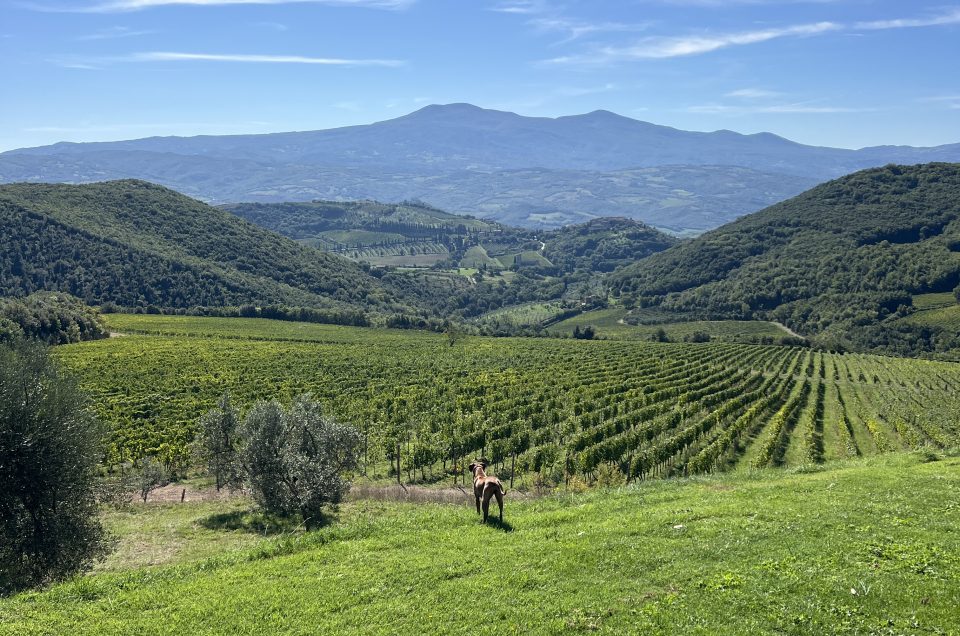
Geographically, Chianti Classico lies between Florence and Siena. The standard wine is mostly Sangiovese, and producers may add other red grapes. The aging tiers are clear: Annata needs 12 months, Riserva 24 months, and Gran Selezione 30 months. For a deeper look at the zone, read Episode 1 of our Tuscany Wine Regions Guide on Chianti Classico.
Brunello di Montalcino follows stricter rules. It must be 100% Sangiovese, with at least two years in oak and four months in bottle. Furthermore, Wine Folly notes that it cannot be released before January 1 of the fifth year after harvest. Our Episode 2 on Brunello di Montalcino covers the rules and the Rosso di Montalcino alternative in detail.
Look for the black rooster, or Gallo Nero, on Chianti Classico bottles. It marks wines from the historic zone between Florence and Siena. Similarly, Brunello labels name Montalcino as the place of origin, so reading the label becomes part of the lesson on any good tour.
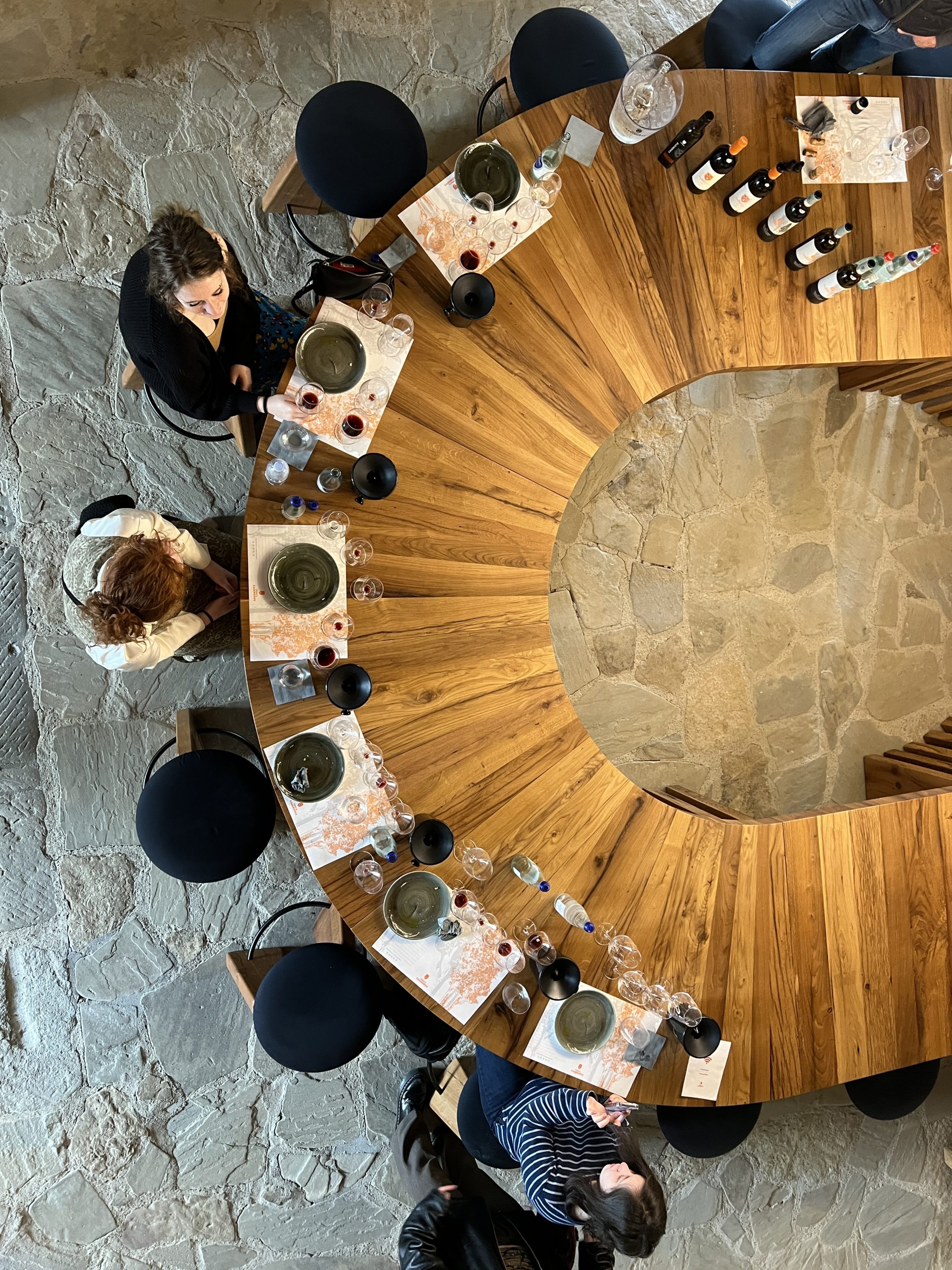
In the glass, the difference is easy to feel. Chianti Classico tends to be fresher and more floral. Brunello, by contrast, is warmer and more tannic, and it rewards patience. Rosso di Montalcino, meanwhile, is a younger and more affordable wine from the same area.
Which Is Better for a First Visit: Chianti or Montalcino?
For a first visit, we usually recommend Chianti. The reason is simple. You spend more time tasting and walking, and less time in a car.
Montalcino, however, wins in one case. If you already love Brunello and want to meet producers behind it, the longer drive is worth it. Similarly, if you travel with a driver and plan a full-day itinerary, the distance becomes much less of a problem.
Here is how we sort travelers:
- Short on time, or traveling with a mixed group? Choose Chianti Classico.
- Love structured, age-worthy reds? Choose Montalcino.
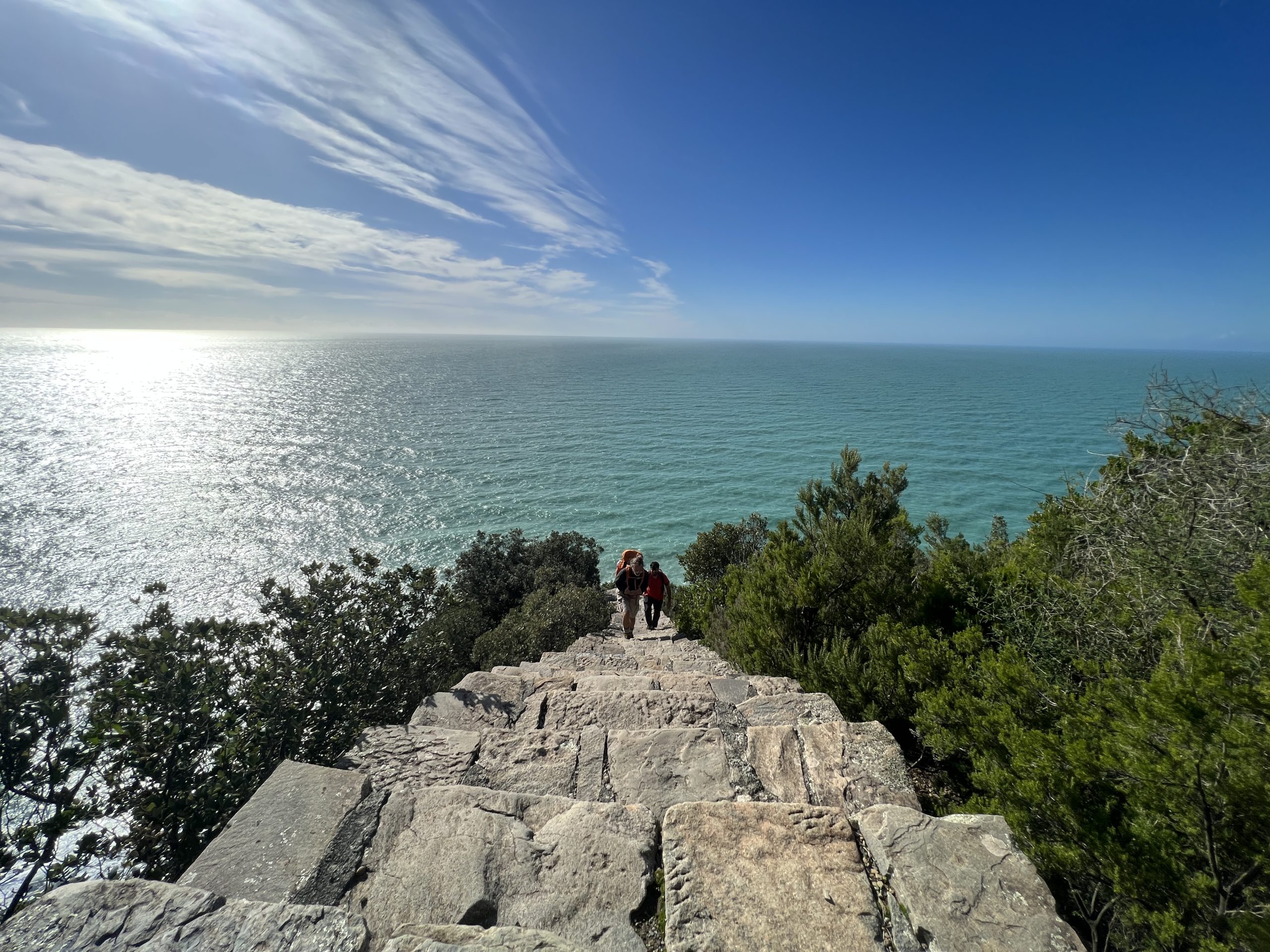
- Want exercise between tastings? Choose a Chianti walk through the vines.
- Have two full days? Do both, on separate days.
Half-Day or Full-Day: How to Pace a Chianti vs Montalcino Wine Tour
Pace matters as much as place. A half-day Chianti tour typically fits two tastings and a snack. Reviewers often say that format feels rushed, though. Therefore, a full day with a proper lunch usually gives a better experience.
Montalcino almost always needs the full day. Otherwise, you travel more than you taste. Also, ask your operator how many producers are planned, because fewer stops usually mean better conversations.
What a Chianti Day and a Montalcino Day Really Look Like
Picture a Chianti day first. You leave Florence mid-morning, and you reach the vineyards in under an hour. Next comes a walk or a cellar visit, then a tasting, then a long lunch. Finally, a second tasting leads into an easy ride home before dinner.
A Montalcino day starts earlier. You spend nearly two hours in the car before the first glass. After that, you taste, eat lunch and taste again. Then the long drive back begins, so the evening in Florence is short.
Neither plan is wrong. However, they suit different travelers. Families, mixed-interest couples and first-timers usually prefer the Chianti rhythm, while wine collectors accept the Montalcino schedule happily.
Questions to Ask Before You Book a Chianti vs Montalcino Wine Tour
Whichever region you pick, a few questions separate real local operators from volume sellers. For example, ask who your guide is and whether they hold a license. In addition, ask how many guests share the vehicle.
- Who guides the day, and what are their credentials?
- How many guests travel together at once?
- Which producers are visited, and are they family-run?
- How long do you spend at each stop?
- Is lunch included, and does it feature local products?
Good operators answer these quickly and clearly. If an answer sounds vague, that is a useful warning. Besides, a transparent cancellation policy tells you a lot about a company.
When to Take a Chianti vs Montalcino Wine Tour
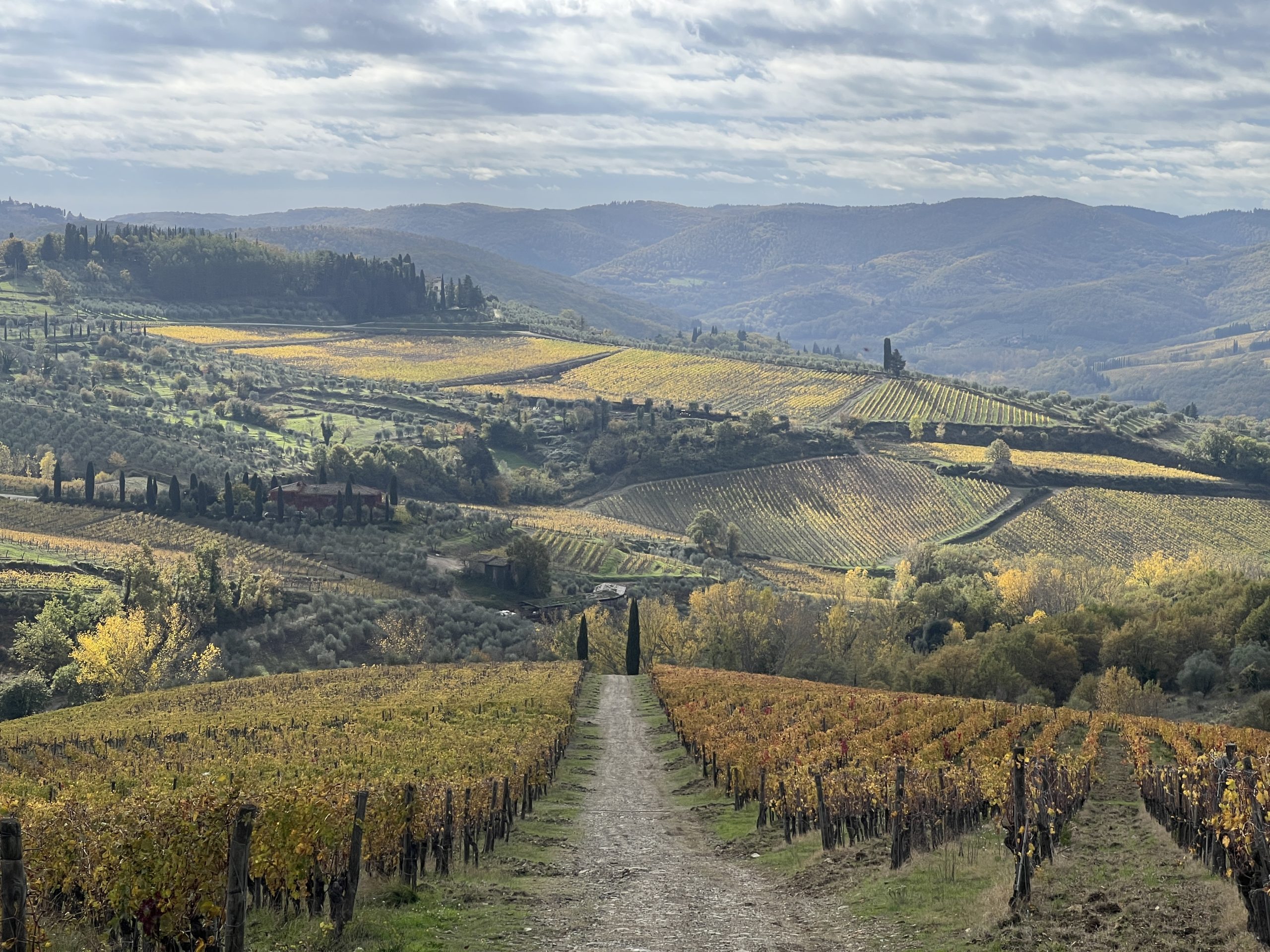
Timing changes the experience in both regions. September brings the grape harvest, while October and November bring the olive harvest and fresh olive oil. Consequently, early autumn is lively and photogenic, though weekends can feel busier.
Spring offers mild weather and green vineyards. Winter, on the other hand, is quiet and often cheaper, and cellars feel more personal. Still, always check the forecast, since rain can affect any outdoor walk.
In short, there is no bad season for Sangiovese. Pick the month that matches the experience you want, then choose the region that fits your schedule.
How to Avoid the Bus-Tour Version of Either Region
Both regions attract large coaches. Nevertheless, you can avoid them with a few habits:
- Choose small-group or private tours with a licensed local guide.
- Ask which family-run producers are on the route.
- Skip tours that list five or six stops in one day.
- Prefer weekday departures when possible.
At lunch, look for chalkboard menus and short lists. For real picks, browse our shared map, Florence Off the Beaten Path: From Real Locals.
Walk Your Wine: A Chianti Option With Fewer Cars
Chianti also offers something Montalcino rarely does on a day trip from Florence. Because the vineyards sit close, you can walk between tastings. Our Chianti Classico wine hiking day combines easy trails, vineyards and lunch. Moreover, it keeps your footprint low, which matters to us as a sustainable company.
If you prefer a classic tasting day, see our Chianti Classico wine tour. For Brunello, we also run a Brunello di Montalcino wine tour.
You can also read the official consortium pages for Chianti Classico to check the latest rules before you travel.
Curious about other Tuscan appellations? The same guide continues with Episode 3 on Bolgheri, Episode 4 on Vino Nobile di Montepulciano and Episode 5 on Carmignano, a small appellation about 20 km from Florence.
FAQ: Chianti vs Montalcino Wine Tour
Chianti vs Montalcino wine tour: which is better?
It depends on your time. Chianti is closer and more relaxed, while Montalcino suits dedicated Brunello fans who accept a long drive.
How far is Montalcino from Florence?
Montalcino is about 116 km from Florence, roughly 1 hour 50 minutes by car each way. No direct train runs there.
Is Brunello better than Chianti Classico?
Neither is better. Brunello is more structured and age-worthy, whereas Chianti Classico is fresher and easier to enjoy young.
Can I visit Chianti and Montalcino in one day?
Technically yes, but we advise against it. The driving would leave very little time to taste, talk with producers or enjoy lunch.
Should I book a half-day or full-day Chianti tour?
For most travelers, a full day works better. It adds a proper lunch and a slower pace, while a half day suits tight schedules.
Plan Your Chianti or Montalcino Wine Day
Not sure which region fits your trip? Tell us your dates, group size and favorite wines, and we will suggest the right day. You can also explore all our Tuscany tours from Florence.
Reach us through our contact form or write to info@outoftheboxflorence.com. We reply personally.
This article was drafted with AI assistance and reviewed by our team before publishing, in line with EU AI Act transparency requirements (Article 50). Distances, aging rules and grape requirements were checked against published wine references and travel sources.