
Chianti Wine Tour from Florence: A Local's Honest Guide
Reading time: 8 minutes · Last updated: July 8, 2026
Searching for a Chianti wine tour from Florence? You are not alone. Indeed, it is one of the most-searched day trips from the city. However, not every Chianti wine tour from Florence is built the same way. For example, some tours load forty people onto a coach. Then they stop at a single showroom winery built for buses. Instead, others take eight guests to two small, organic estates. There, guests sit down for lunch with the people who actually make the wine. In short, this guide explains that difference, plus everything else worth knowing before you book.
Chianti Classico DOCG: The Wine Zone Behind the Bottle
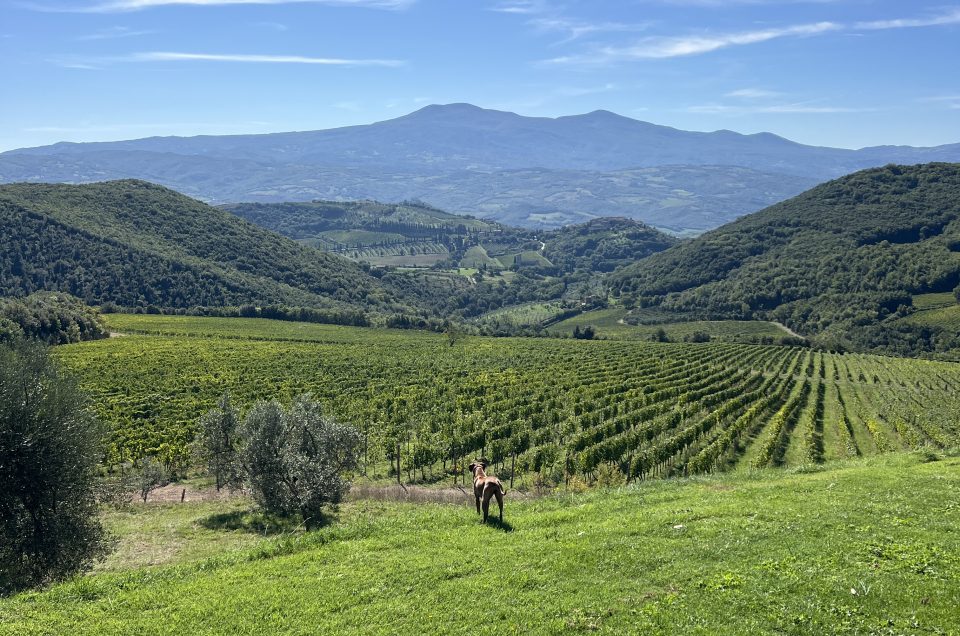
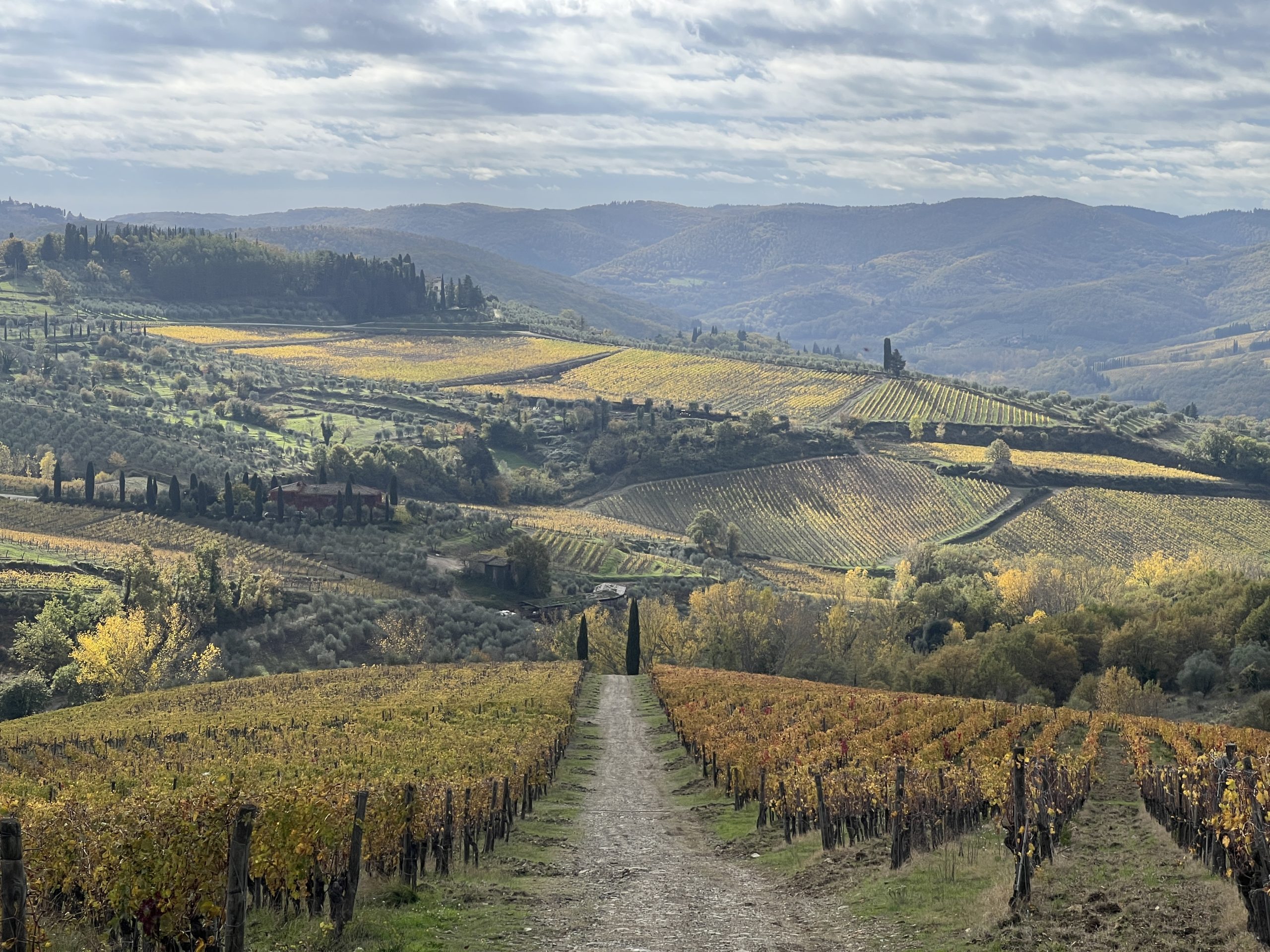
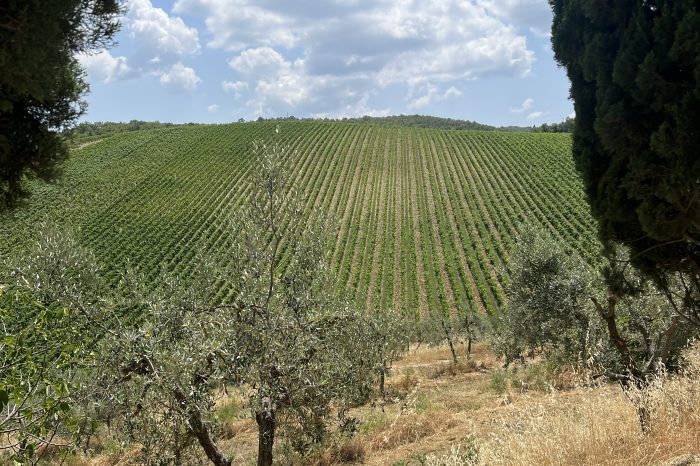
Chianti Classico is a specific, protected wine zone. Indeed, it sits roughly 40 km south of Florence and 40 km north of Siena. In between, the zone covers the hills separating the two cities. Key towns inside it include Greve, Panzano, Radda, and Gaiole in Chianti. Consequently, "Chianti Classico" names a place first, and a wine style second.
Indeed, every bottle carries a black rooster on the neck label. Locals call it the Gallo Nero. According to the Consorzio Chianti Classico, the symbol traces back to a medieval legend. In the story, a Florentine knight and a Sienese knight raced at dawn to fix the region's borders. Since a starved black rooster crowed early, the Florentine rider got a head start. Eventually, the Gallo Nero became the consortium's official trademark in 1924, and it still marks every true Chianti Classico bottle today.
Under current rules, Chianti Classico DOCG wine must contain at least 80 percent Sangiovese grapes. The remainder can also include other approved native red varieties. In other words, this is not a loose regional label. Instead, it is a strictly regulated denomination, verified by Italian Wine Central and by Visit Tuscany.
Annata, Riserva, Gran Selezione: Reading a Chianti Classico Label
Chianti Classico wines fall into three tiers, and knowing them makes any tasting more interesting. First, Annata is the entry tier, aged at least 12 months. Second, Riserva steps up to a minimum of 24 months, including at least 3 months in the bottle. Finally, Gran Selezione sits at the top, aged at least 30 months and made only from estate-grown grapes. Introduced in 2013, Gran Selezione wines must also pass an official tasting panel before release. As a result, asking a winemaker which tier you are tasting is a quick way to understand what is actually in your glass.
The Real Difference: Small Organic Estates vs. Bus-Tour Wine Stops
Indeed, Florence runs dozens of daily coach tours into Chianti. Many bundle a short wine tasting into a broader Tuscany day trip alongside Siena, San Gimignano, or Pisa. On paper, that sounds efficient. In practice, though, it usually means one stop at a large commercial winery built to process tour buses, not small groups.
Here is the part most travelers never hear: some winery stops pay a commission, or offer a group discount, to the tour operator that brings guests through the door. Of course, that practice is not illegal, and it is common across the Tuscany tour industry. Still, it shapes which wineries get chosen and how each tasting gets presented. As a result, a quick, upsell-heavy tasting at a resort-scale producer feels nothing like an hour with a family that has worked the same vineyard for generations.
What to Expect on Our Chianti Wine Tour from Florence
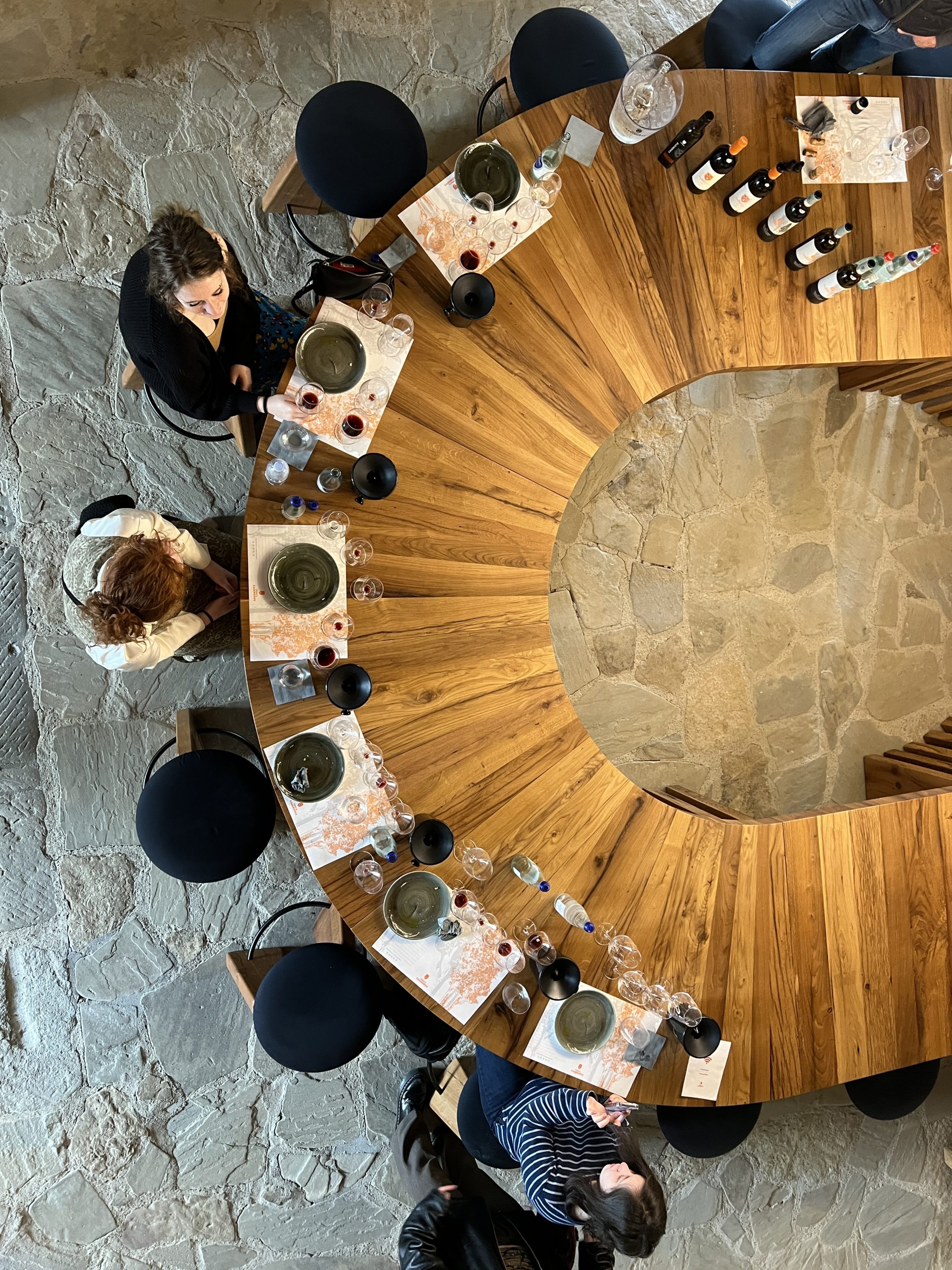
Our Chianti Classico Wine Tour runs for five hours, including pick-up and drop-off. Instead of one rushed stop, guests visit two organic or biodynamic estates. Consequently, we choose each one for its wine and its story, not its capacity to handle bus groups.
- First, an expert guide travels with you the whole day, in English or Italian.
- Second, you taste Chianti Classico DOCG wines at both estates, roughly ten wines in total.
- Meanwhile, two extra virgin olive oil tastings run alongside the wine.
- At midday, the group eats a full Tuscan lunch at one of the wineries, paired with their wine.
- Finally, we cap group size at eight guests, so the day never feels like a crowd.
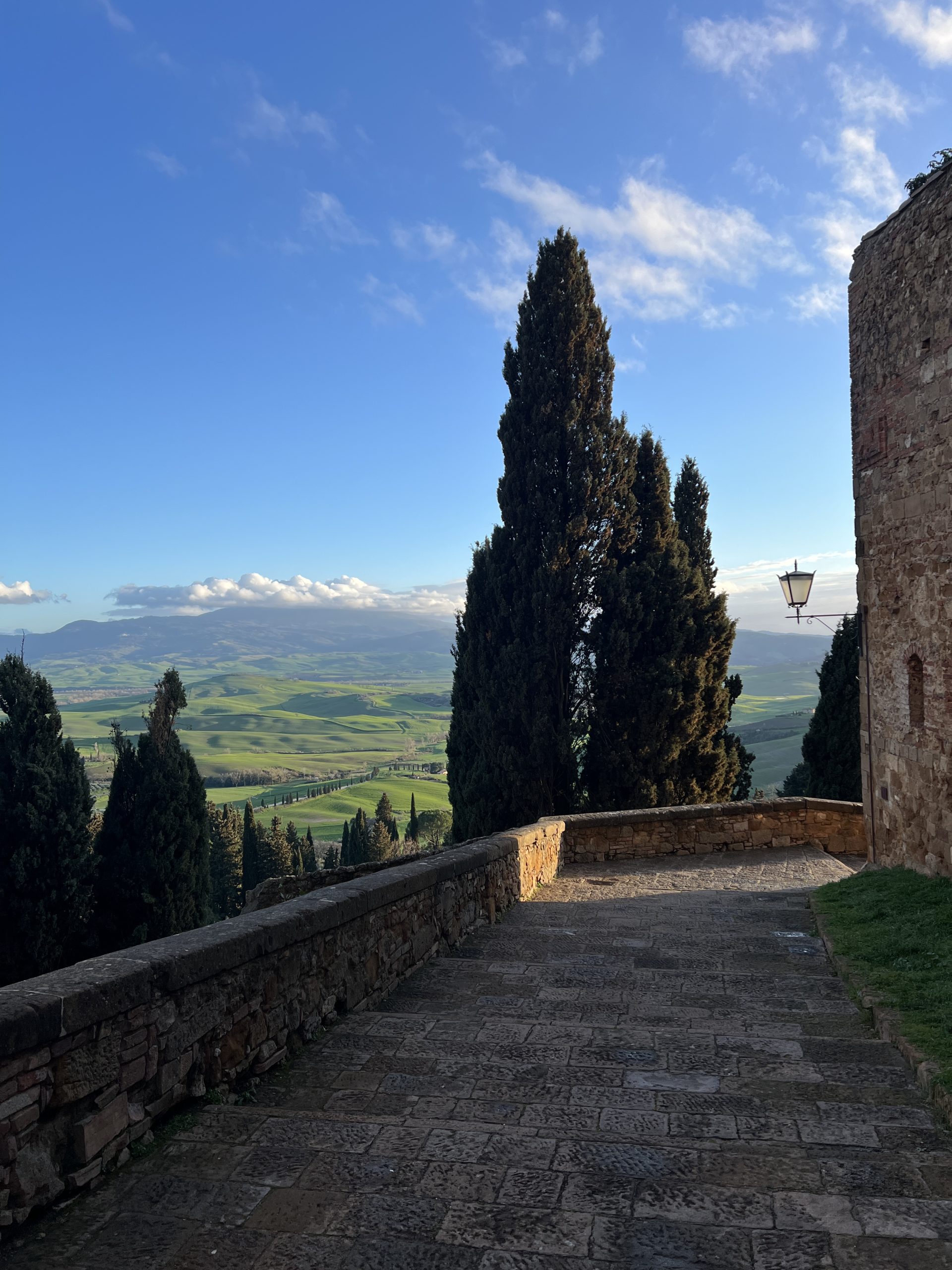
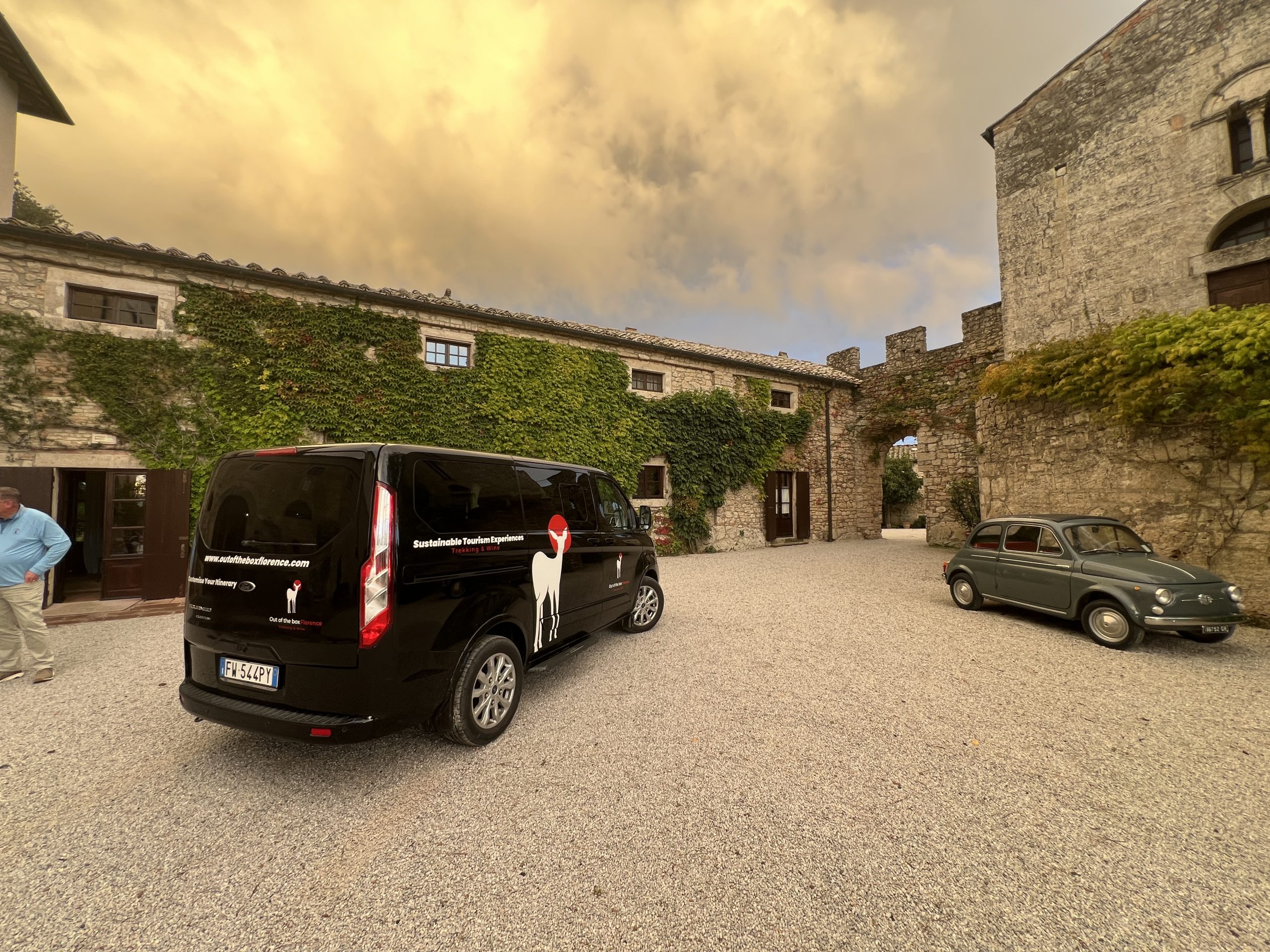
Even the drive is part of the experience. Scenic stretches of Chianti countryside connect the two estates, so transfer time never feels wasted.
Private or Semi-Private: Which Chianti Wine Tour Fits You
Two formats are available, and the right one depends on your group. The semi-private option costs €196 per person. It joins you with a small group of up to eight travelers who share similar interests. Even so, it is a shared itinerary that still sits nowhere near coach-tour scale.
The private option, on the other hand, reserves the guide and vehicle exclusively for your group. Pricing starts at €700 total for two people. Then it drops per person as the group grows, eventually reaching €180 per person for a full group of eight. Because the day belongs only to your group, you can adjust timing, pace, and stops freely, including adding a third winery.
Semi-private tours accept guests 18 and over only, since the day centers on wine tasting. Private tours, by contrast, can welcome children if you mention this when booking.
Best Time of Year for a Chianti Wine Tour from Florence
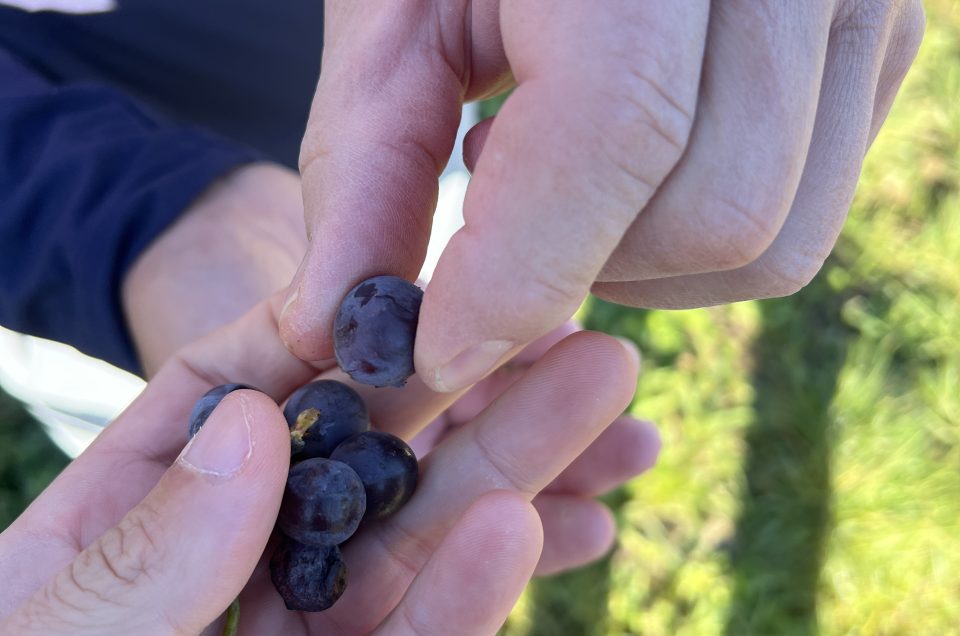
Overall, spring and early autumn make the best windows for a Chianti wine tour. In spring, the vineyards show fresh green growth, and the countryside looks its most photogenic. Later in the year, meanwhile, September and October bring the grape harvest, known locally as the vendemmia. During harvest, the estates stay busiest, and they often talk most openly about the vintage in progress.
Summer works too, since the tour itself moves between air-conditioned transport, shaded courtyards, and cool cellar spaces. Even so, book earlier in summer. Indeed, estates and guides fill up faster during peak travel months.
How Far in Advance to Book Your Chianti Wine Tour
Book at least two weeks ahead, especially between April and October. The organic and biodynamic estates on this tour are small, family-run producers. Consequently, they welcome guests strictly by appointment. Therefore, booking early secures access to the best estates rather than whichever winery happens to have a last-minute opening.
That said, last-minute requests are still worth asking about. Availability occasionally opens up, so a late enquiry costs nothing to send.
Pairing Your Chianti Day with Something Slower
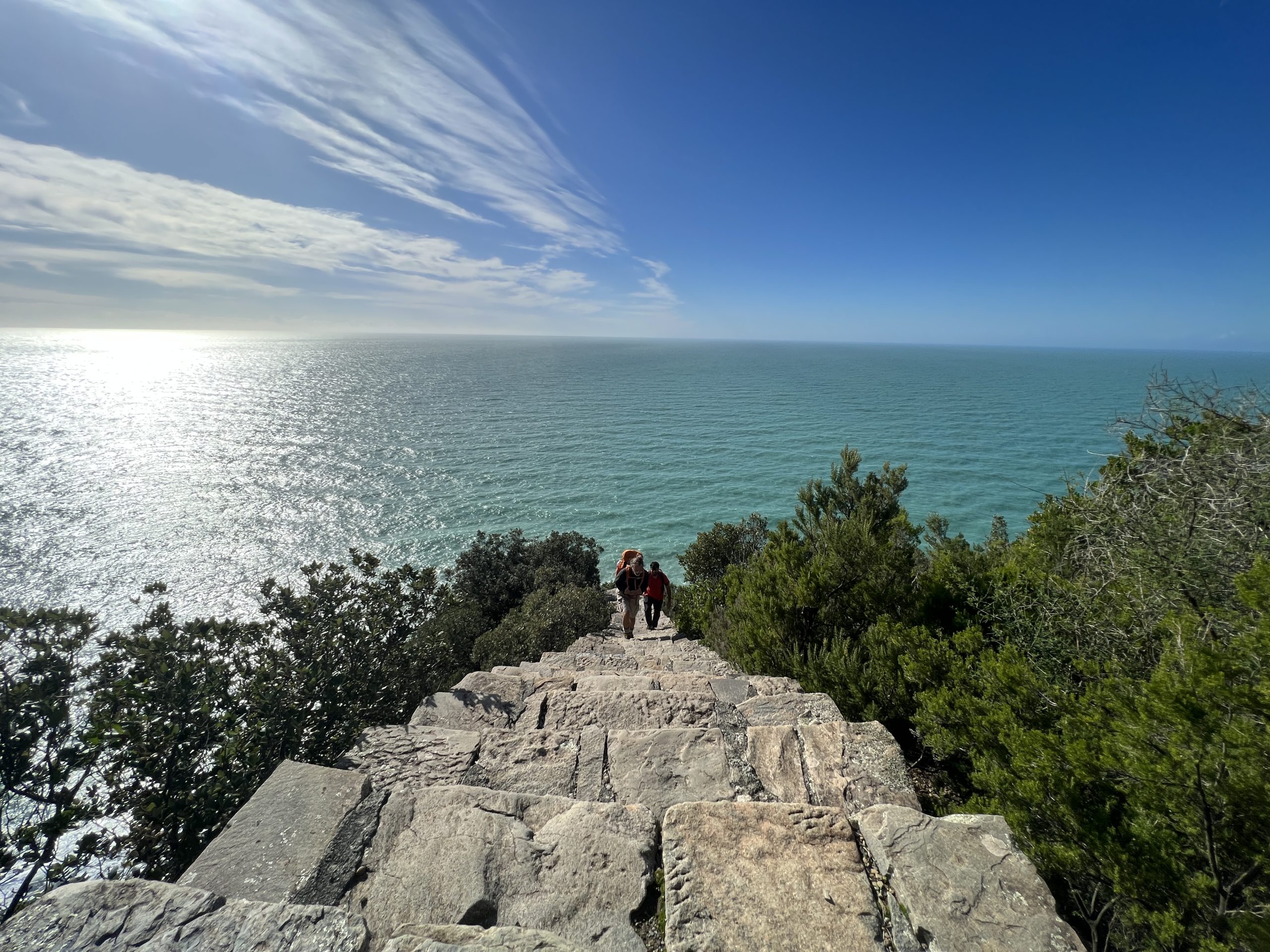
A wine tour pairs naturally with a slower pace on either side of it. For instance, our Florence urban hikes make a good morning warm-up before an afternoon in the vineyards. Alternatively, browse the full range of sustainable hiking, gravel biking, and wine experiences we run across Florence and Tuscany. Indeed, every one of them centers on small groups and real producers, not a bus schedule.
Back in the city that evening, skip the strip of tourist-menu restaurants near the main sights. Our Florence Off the Beaten Path: From Real Locals map is a better place to find where locals actually eat.
Frequently Asked Questions About Chianti Wine Tours from Florence
How much does a Chianti wine tour from Florence cost?
The semi-private tour costs €196 per person. Private tours, by contrast, are priced per group. They start at €700 for two people and drop to €180 per person for a group of eight. All prices include VAT.
What is the difference between private and semi-private Chianti wine tours?
Semi-private tours share the day with up to eight other travelers. Private tours, instead, reserve the guide and vehicle exclusively for your group. As a result, you get full flexibility on pace, stops, and timing.
How far is Chianti from Florence?
Indeed, the Chianti Classico wine zone sits about 40 km south of Florence and 40 km north of Siena. As a result, a wine tour comfortably fits into a single day.
Is lunch included on a Chianti wine tour from Florence?
Yes. A full Tuscan lunch is part of the tour, served at one of the organic estates and paired with the wines you taste that day.
How far in advance should I book a Chianti wine tour?
Book at least two weeks ahead, especially from April through October. The small estates on this tour take guests strictly by appointment.
Can children join a Chianti wine tour from Florence?
Not on the semi-private tour, since it is limited to guests 18 and over. Private tours, however, can include children if you mention this when booking.
Are Chianti wineries open on weekends?
Not always. Many close on Sundays, and quite a few of the small, family-run organic estates also close on Saturdays. Therefore, a weekday visit generally gives access to more estates than a weekend one.
Ready to Book Your Chianti Wine Tour from Florence?
If a rushed stop at a commercial winery is not what you had in mind, our Chianti Classico Wine Tour is built the other way. Expect small groups, organic estates, real winemakers, and a proper Tuscan lunch. Additionally, explore our full range of experiences on the Out of the Box Florence homepage.
Questions before booking, or want a fully custom day? Get in touch through our contact form, or email us directly at info@outoftheboxflorence.com. We are happy to help you plan a Chianti wine tour from Florence that never feels like a bus schedule.