
Wild Swimming in Tuscany: A Local's Guide to Cool Rivers and Waterfalls (2026)
8–minute read · Last updated: 29 June 2026
By 10 a.m. in late June, the stone of Florence already throws back the heat, and the queue for the Duomo barely moves. Meanwhile, half an hour outside the city, the Elsa river runs cold and turquoise under the trees. Wild swimming in Tuscany is the easiest way to escape that midday furnace, and it costs nothing. Therefore, instead of melting on a packed piazza, you can float in a natural pool with a waterfall behind your head. In this local guide, we map the rivers, waterfalls and lakes we actually use ourselves, and we show you how to reach them without a single tour bus.
Why Wild Swimming in Tuscany Beats a Crowded Pool
Summers here keep getting hotter, so travellers have started chasing what the press now calls a “coolcation.” In short, people want shade, altitude and fresh water instead of sweaty cities. Tuscany answers that wish surprisingly well, because its hills and forests hide dozens of swimming spots that locals have used for generations.
Moreover, wild swimming in Tuscany fits the slow-travel mindset perfectly. You move at the river's pace, you bring your own lunch, and you spend your money in small mountain villages rather than at a turnstile. As a result, your day feels personal instead of processed. By contrast, a coach tour drops forty strangers at a viewpoint for fifteen minutes and herds them back on board.
What “Wild Swimming in Tuscany” Actually Means
First, let us clear up the term. Wild swimming simply means swimming in natural water — a river, a stream pool, a waterfall basin or a lake — rather than in a chlorinated pool. Consequently, there are no lanes, no entry tickets and usually no lifeguards.
In Tuscany, the best spots sit along clear mountain rivers fed by the Apennines. Because the water comes straight off the hills, it stays genuinely cold even in August. That chill is the whole point, though it does mean you should ease in slowly rather than dive straight under.
SentierElsa: Turquoise Water and a Hidden Waterfall
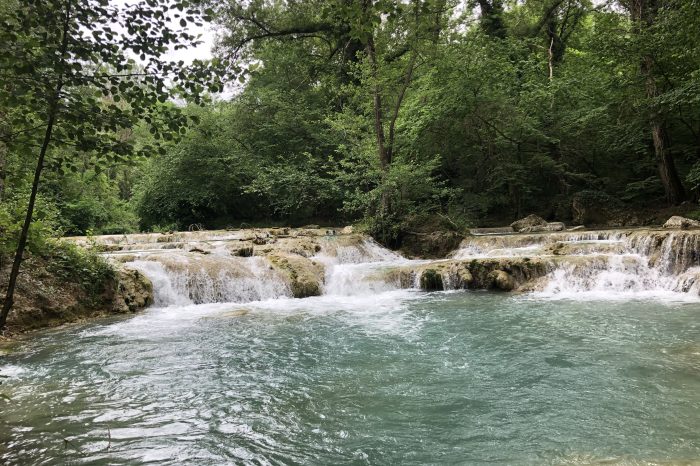
If you only try one spot, make it the Elsa river trail, known locally as the SentierElsa. It threads through the Alta Val d'Elsa river park near Colle di Val d'Elsa, roughly an hour south of Florence by car and about half an hour from Siena. Furthermore, the path is free, well signed and short enough for families.
The colour alone is worth the trip, since minerals in the water turn the river a milky turquoise. Along the way you cross several stone fords, so non-slip shoes or sandals really help. The headline sight, however, is the Diborrato Waterfall, a 15–metre drop that pours into a deep blue pool. Strong swimmers can paddle out for a clear view of the falls, whereas cautious ones can simply wade at the edges.
- Cost: free, with no entrance gate.
- Bring: grippy shoes for the river crossings, plus a dry bag for phones.
- Tip: arrive before 11 a.m. on weekends, because Tuscan families claim the best rocks early.
For more background on the route, the regional tourism board keeps a useful page on river hiking on the Elsa.
Canto alla Rana: Swimming in the Young Arno
Most visitors only meet the Arno as the brown river under Ponte Vecchio. Up in the Casentino, though, the same river is young, clear and cold. At the Parco Canto alla Rana, just a few minutes' walk from the centre of Stia, the Arno spreads into wide pools broken by small waterfalls.
This spot is genuinely family-friendly, since the park adds free picnic tables, a barbecue area and even beach-volleyball courts. Therefore, you can turn a swim into a whole lazy day without spending much at all. To reach Stia without a car, take a regional train to Arezzo and then change onto the local Casentino line operated by TFT, which ends at Pratovecchio–Stia.
Because this corner of Tuscany sits inside the wider Casentino forests, you also get cool air and shade between dips. In other words, it is a proper mountain river, not a roadside puddle.
Lago di Bilancino: The Easy Lake Option
Not everyone wants to scramble over river stones, and that is completely fine. For an easier day, head to Lago di Bilancino, an artificial lake about 30 kilometres north of Florence near Barberino di Mugello. It offers four free swimming areas, and several beaches even have showers and changing rooms.
Crucially, you can get there by public transport. A direct bus from Florence reaches the lakeside in roughly 40 minutes, so you avoid both parking stress and a rental car. Once there, you can swim, paddle a board, or simply nap on the grass. Italia.it keeps a tidy overview of Lake Bilancino if you want opening details.
Torrente Lima: Crystal Water in the Lucca Hills
Further west, the Torrente Lima runs down from the Abetone mountains toward Bagni di Lucca. Locals praise its extraordinarily clear water, and there is a small stone beach beside the famous “Laguna Blu” pool. Consequently, it draws nature lovers all summer long.
Note one timing detail, however. White-water rafting on the Lima only runs from roughly October to June, when the river is high. In July and August the flow drops, so summer is for gentle swimming and sunbathing rather than paddling rapids. Even so, the Lima rewards the longer drive with some of the cleanest water in the region.
How to Swim Wild Safely and Skip the Bus Tours
Wild swimming in Tuscany is wonderful, yet it asks for common sense. Because there are rarely lifeguards, you carry your own safety. Therefore, keep these basics in mind before you jump.
- Never swim alone. Go with a friend, since rivers hide currents and sudden deep spots.
- Check the flow first. After spring rain, currents can turn dangerous, so wade in only where the water is calm.
- Test the depth before diving. Submerged rocks shift every season, and a shallow dive is the most common river injury.
- Mind the calendar. Most spots peak from late June to mid-September, although some rivers run low by late August.
- Pack out your rubbish. These are working local landscapes, not resorts, so leave each pool cleaner than you found it.
Now for the anti-crowd part. Avoid any “Tuscan waterfall” coach excursion that promises six stops in one day, because those tours treat water like a photo backdrop. Instead, pick one river, arrive early, and let the afternoon unfold slowly. If you would rather not drive mountain roads yourself, a small-group or private guide from a locally owned company keeps the day personal and supports residents directly. You can see how we approach that on our sustainable outdoor experiences page.
What to Pack, and Where to Refuel
Smart packing turns a good swim into a great one. Above all, bring water shoes, a quick-dry towel, sun protection and plenty of drinking water. In addition, a waterproof bag protects your phone during the river fords, and a light picnic saves you from hunting for food in tiny villages.
Speaking of food, we never send guests to a random tourist trap. For our own hand-picked picks around the city, follow our curated map, Florence Off the Beaten Path: From Real Locals. Back in the mountains, the rule is simpler still: look for the bar with a chalkboard menu and a queue of locals at 1 p.m., and skip anywhere with photos of the dishes outside.
Before a river day, many of our guests warm up with a gentle Florence urban hike through quieter quarters such as the Oltrarno and San Frediano. Afterwards, a slow boat and wine experience on the Arno makes a cool, low-effort finish to the trip.
Frequently Asked Questions About Wild Swimming in Tuscany
Is wild swimming in Tuscany legal and free?
Yes, in most rivers and stream pools it is both legal and free. River parks such as the SentierElsa and Canto alla Rana have no entrance gate. That said, always respect posted signs and private land near a few stretches.
Which wild swimming spot is closest to Florence?
Lago di Bilancino is the easiest, at about 30 kilometres north and roughly 40 minutes by direct bus. For a true river, the SentierElsa near Colle di Val d'Elsa sits about an hour south by car.
When is the best time for wild swimming in Tuscany?
Generally, late June to mid-September offers the warmest air and the most welcoming water. However, mountain rivers stay cold all year, and some run low by late August, so check the flow before you travel.
Can I reach these spots without a car?
Often, yes. A direct bus serves Lago di Bilancino, while Stia is reachable by regional train to Arezzo and the local Casentino line. River-park spots, by contrast, usually need a short taxi or a guide.
Is wild swimming safe for children?
It can be, especially at calm, shallow pools like those at Canto alla Rana. Nevertheless, never let children swim unsupervised, since there are no lifeguards and currents can change quickly.
What should I avoid as a first-timer?
Avoid diving into unfamiliar water, swimming alone, and big “multi-stop waterfall” coach tours. Instead, choose one calm spot, go with someone, and ease in slowly.
Swim Wild With Local Guides
Ready to trade the heat of the centre for a cold turquoise pool? At Out of the Box Florence, we run small-group and private outdoor days built around real Tuscan nature, not bus-tour checklists. Therefore, you get quiet rivers, local food stops and a guide who actually lives here.
Tell us what you love — hiking, gravel biking, wine or water — and we will shape the day around you. Simply reach out through our contact form or email info@outoftheboxflorence.com, and let us plan your coolest day in Tuscany.