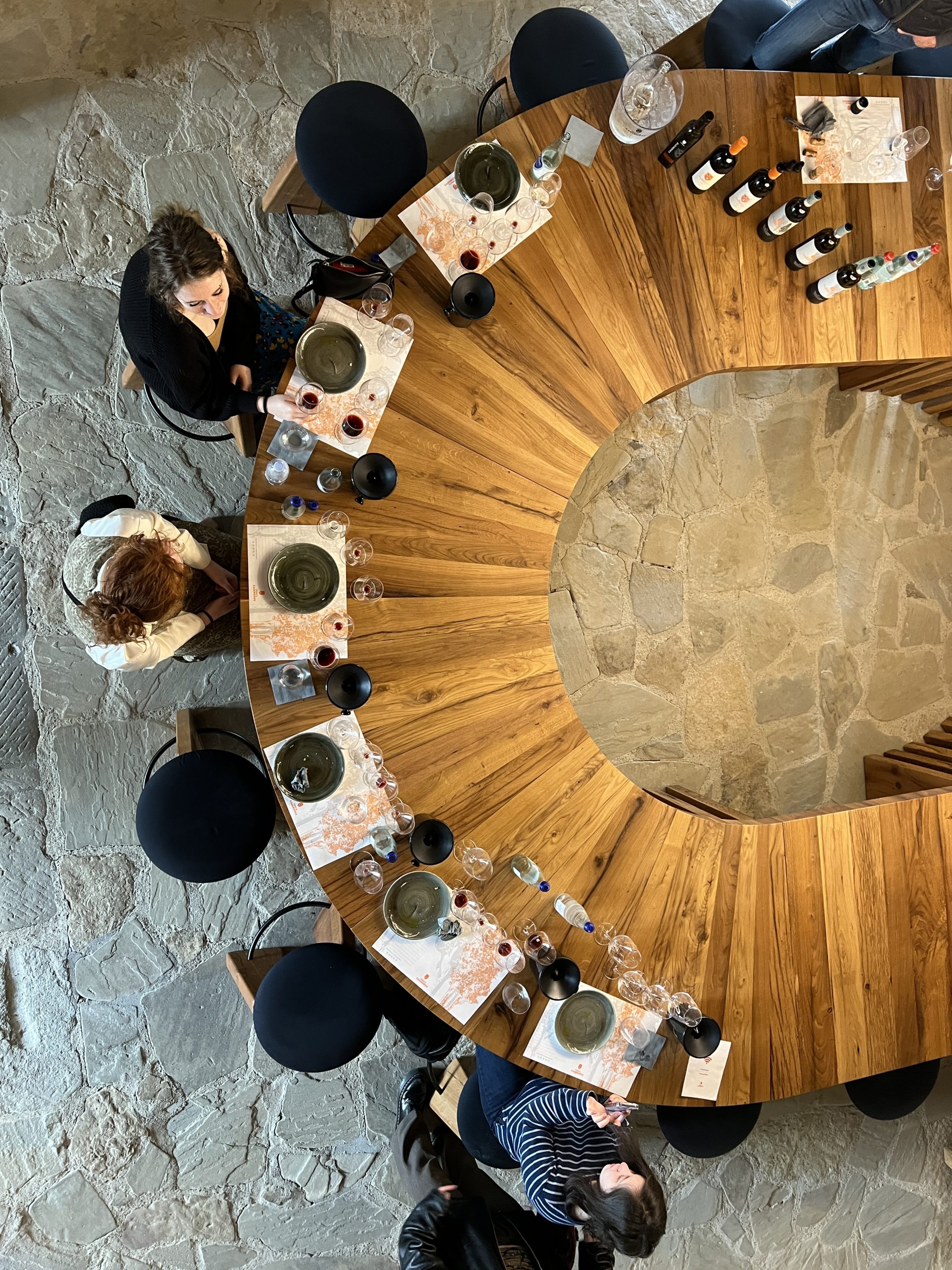

Chianti Classico Wine Tour:
Which Micro-Area (UGA) Should You Visit?
By Out of the Box Florence | Updated April 2026 | Reading time: 8 min
BLOG | Wine Travel | Chianti Classico | Tuscany Wine Tours
Private Wine Tours from Florence | Chianti · Brunello · Montalcino
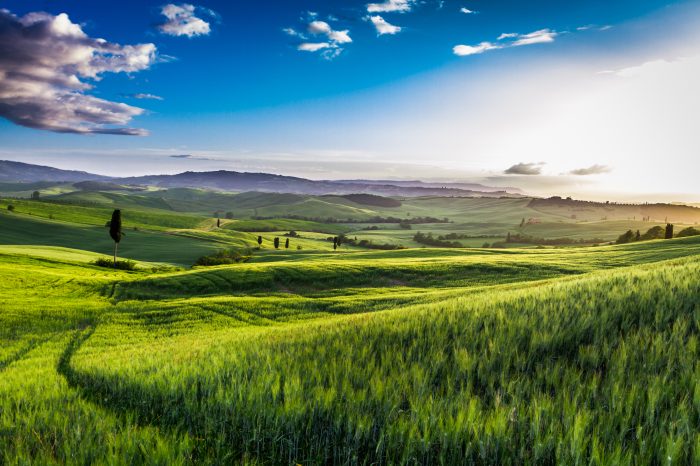
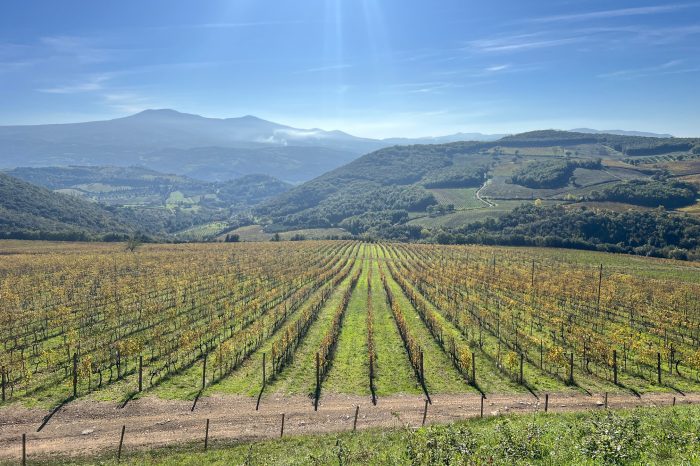
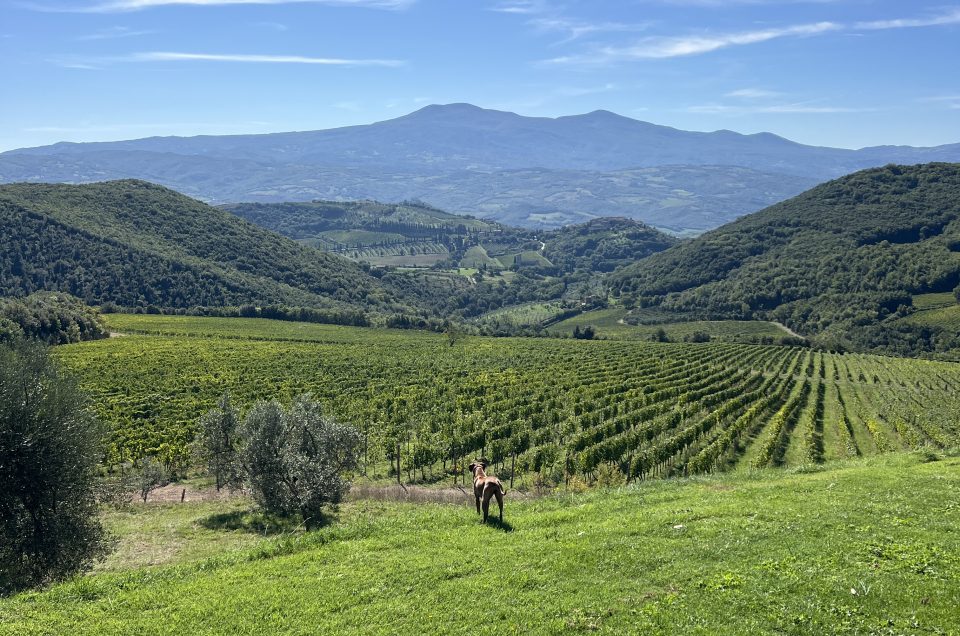
If you are planning a Chianti Classico wine tour from Florence and wondering where to go, the answer is not as simple as picking any winery on the map. The Chianti Classico DOCG is one of Italy’s most celebrated wine regions — and also one of its most geographically diverse. Stretching roughly 71,800 hectares between Florence and Siena, it is a land of rolling hills, ancient stone towers, dense forests and some of the world’s most expressive Sangiovese vines.
But here is what most wine tourists do not realise: the Chianti Classico of a cellar in Panzano tastes strikingly different from one bottled in Radda or Gaiole. The soil changes. The altitude changes. The wind, the exposure, the very personality of the wine changes. And since 2023, this diversity has an official name: the UGA system — Unità Geografiche Aggiuntive, or Additional Geographical Units.
At Out of the Box Florence, we design fully customised Chianti Classico wine tours built around the specific micro-areas you want to explore. Whether you are drawn to the powerful, sun-drenched wines of Panzano’s famous Conca d’Oro, the high-altitude elegance of Lamole, or the ancient terroirs of Gaiole and Radda — we will take you there. Read on to discover every UGA and find the one that speaks to you.
What Is Chianti Classico? The Black Rooster DOCG Explained
Chianti Classico is Italy’s premier Sangiovese-dominated DOCG, legally distinct from the broader Chianti DOC. The Black Rooster (Gallo Nero) is its iconic symbol, and the denomination covers eight historic communes: Castellina in Chianti, Gaiole in Chianti, Greve in Chianti, Radda in Chianti, and parts of Barberino Tavarnelle, Castelnuovo Berardenga, Poggibonsi and San Casciano in Val di Pesa.
Wines are produced in three tiers. The entry-level Chianti Classico Annata requires a minimum of 80% Sangiovese and 11 months of aging. The Chianti Classico Riserva must age at least 24 months. At the top sits the Chianti Classico Gran Selezione — the denomination’s prestige category, introduced in 2013, requiring single-estate grapes, at least 30 months of aging, and — since 2027 — a minimum of 90% Sangiovese with only indigenous grape varieties permitted in the blend.
The Gran Selezione is also the tier to which the new UGA system applies first, making it the ultimate expression of Chianti Classico terroir: a wine that tells you not just what it is, but precisely where it comes from.
The UGA Revolution: Why Micro-Areas Now Matter
In June 2021, the Chianti Classico Consortium voted — with an extraordinary 97% majority — to introduce the Unità Geografiche Aggiuntive (UGA) system. Officially published in Italy’s Gazzetta Ufficiale on 1 July 2023, the UGAs divide the denomination into 11 distinct micro-areas, each of which can now appear on Gran Selezione labels.
The inspiration mirrors the world’s greatest wine regions: Burgundy’s village appellations, Barolo’s MGAs, Bordeaux’s communes. The idea is deceptively powerful — consumers and wine lovers can now choose a Chianti Classico not just by producer, but by place. And place, in this corner of Tuscany, means everything.
“The territory makes the difference,” said Giovanni Manetti, President of the Chianti Classico Consortium and owner of Fontodi. “Consumers today want to find the link between wine and territory — and the UGAs give them exactly that.”
The 11 UGAs are defined by a unique combination of geology, altitude, microclimate, cultural heritage and viticultural tradition — not simply administrative boundaries. Some correspond to entire communes (Radda, Gaiole, Castellina). Others are smaller hamlets or merged zones with heightened terroir specificity (Lamole, Montefioralle, Panzano, Vagliagli, San Donato in Poggio).
The 11 Chianti Classico UGAs: A Deep Dive
Below is our comprehensive guide to all 11 micro-areas, starting from the northwest and moving clockwise through the denomination — just as the vineyards unfold when you drive the legendary Via Chiantigiana from Florence toward Siena.
1. San Casciano — The Gentle Gateway
Location: Northernmost UGA, closest to Florence, along the Pesa river valley.
Soils: Predominantly marl-based (alberese), clay-rich lower altitudes.
Wine Style: Accessible, fruit-forward Sangiovese with softer tannins and plummy warmth. Often the most approachable wines in the denomination — an ideal starting point for Chianti Classico beginners.
San Casciano sits just 20 minutes south of Florence, making it the natural first stop on any wine tour. Its milder climate and lower elevations produce wines that are more immediately pleasurable, with generous cherry fruit, gentle spice and welcoming body. Key estates here have long produced wines that balance elegance with drinkability.
2. Greve — The Heart of Chianti Classico
Location: Central-northern Chianti Classico, 30 km south of Florence.
Soils: Highly varied — calcareous clay at lower altitudes, limestone and sandstone at elevation. Altitudes range dramatically from 250m to over 700m.
Wine Style: Diverse and complex. The large commune resists simple characterisation, but the best wines show structured elegance, vibrant fruit and excellent length.
Greve in Chianti is the largest commune in the denomination and the cultural capital of the Black Rooster country. Its piazza hosts the annual Chianti Classico Collection each September. The sheer range of altitudes and soil types within the commune means Greve produces a spectrum of styles. It is also the mother commune of three separate UGAs — Lamole, Montefioralle and Panzano — each carved out for their distinctive terroir identity.
3. Montefioralle — The Medieval Hilltop
Location: Western edge of Greve commune, just north of Panzano.
Soils: Pietraforte (calcareous sandstone) and alberese (clay-limestone), with elevations reaching over 500m.
Wine Style: Stony, mineral, fresh and savoury with medium body. A wine of quiet elegance rather than power.
One of Chianti’s best-kept secrets, Montefioralle is an extraordinarily well-preserved medieval hamlet perched above the Greve valley. Vineyards here are planted on thin, rocky hillside soils that stress the vine beautifully and produce wines of notable mineral precision. Producers here may choose to label their wines as either Montefioralle or Greve UGA, but the finest expressions emphasise the stony, linear character unique to this ancient village.
4. Lamole — Altitude, Elegance and Macigno Stone
Location: Southern reaches of Greve commune, on a dramatic east-facing slope at 500m.
Soils: Macigno toscano — a local sandstone with excellent drainage, found almost exclusively along the Monte del Chianti ridge.
Wine Style: Light-bodied, fragrant, bright acidity, delicate tannins. Often compared to a cool-climate Pinot Noir in texture.
Lamole is the smallest UGA in the denomination and, many argue, the easiest to characterise. Its single slope, surrounded by dense woodland, creates a cool, shaded microclimate that slows ripening beautifully. Grapes here achieve optimum maturity gradually, producing wines of exceptional elegance and freshness. For lovers of restrained, high-toned Sangiovese with great aging potential, Lamole is unmissable.
5. Panzano — The Conca d’Oro, Crown Jewel of Chianti
Location: Southwestern Greve commune. Two opposing slopes form the famous Conca d’Oro (Golden Basin).
Soils: Pietraforte (a rare, heavy calcareous sandstone) on the western slope; some alberese on the eastern terraces.
Wine Style: Full-bodied, rich, dark fruit, great structure and freshness. Panzano wines are darker in colour and more powerful than most of the denomination.
Panzano is perhaps the most celebrated single micro-area in all of Chianti Classico. The Conca d’Oro — an amphitheatre-shaped growing zone with south-facing exposure — acts as a natural solar collector, producing concentrated, muscular Sangiovese of extraordinary character. The western slope tends toward earthier, more austere wines, while the eastern slope brings more fruit and elegance. Home to legendary estates, Panzano is the choice for wine lovers who want power, depth and complexity. Note: The Panzano UGA label will appear on Gran Selezione from the 2027 vintage onwards.
6. Radda — The Historic Capital, Home of Elegance
Location: Central Chianti Classico, centred on a high ridge between the Arbia and Pesa rivers.
Soils: Macigno sandstone at higher elevations, with some alberese and galestro lower down. Vineyards among the highest in the denomination.
Wine Style: Elegant, refined, fresh, with subtle power. Excellent aging potential. Often described as the most “Burgundian” expression of Sangiovese in Chianti.
Radda in Chianti was the historic capital of the Lega del Chianti — the medieval military league that protected this land for centuries. That sense of noble heritage is reflected in its wines. The cool, windy ridge location and rocky soils produce Sangiovese of remarkable tension and precision, where fresh acidity and fine tannins frame pure, translucent fruit. Radda is the ideal choice for collectors and wine enthusiasts who prize elegance over weight.
7. Gaiole — Ancient Castles, Mineral Power
Location: Eastern border of the denomination, near the Monti del Chianti ridge.
Soils: Highly varied — alberese, macigno and galestro. Diverse altitudes and microclimates.
Wine Style: Firm tannins, bright acidity, savoury mineral notes. Some of the denomination’s most serious, age-worthy wines.
Gaiole is one of the three original Chianti townships — along with Radda and Castellina — and its landscape of ruined castles, dense oak forests and steep rocky vineyards feels the most ancient and untamed. The territory is vast and internally diverse, but a recurring thread of firm structure, savouriness and mineral depth links its wines. The celebrated subzone of Monti, within Gaiole, produces wines of exceptional class. Roberto Stucchi of Badia a Coltibuono calls Gaiole “almost a small-scale replica of the entire denomination.”
8. Castelnuovo Berardenga — Southern Warmth, Age-Worthy Depth
Location: Southernmost UGA, closest to Siena. Open valleys descending toward the Crete Senesi.
Soils: Predominantly alberese (clay-limestone), open and warm.
Wine Style: Wide, generous, rich body. Wines of impressive depth and long aging capacity.
Castelnuovo Berardenga is where Chianti Classico meets the warmth of southern Tuscany. Proximity to Siena and open valley terrain gives a warmer growing season than the cooler northern UGAs, resulting in broader, richer wines. Some of Chianti Classico’s most celebrated historic estates — including Fèlsina, which has labelled single-vineyard wines from here for decades — are located in this UGA. For lovers of generous, robust Sangiovese built for long cellaring, this is their territory.
9. Vagliagli — The Enigmatic Western Face
Location: Western half of Castelnuovo Berardenga commune, around 400m altitude.
Soils: Galestro (schistous clay) and alberese in balanced proportion.
Wine Style: Subtle, layered, chiaroscuro style. The interplay of galestro and alberese creates wines of light and shadow — fresh acidity meets earthy depth.
Vagliagli was carved from the western portion of Castelnuovo Berardenga when the UGA system was created, recognising its distinct character. The balance of galestro and alberese soils creates wines that oscillate beautifully between freshness and earthiness. At approximately 400m, it sits at an altitude that preserves elegance while achieving full ripeness. A UGA for wine explorers and those who appreciate complexity over obvious appeal.
10. Castellina — The Classic Heart, Most Prolific
Location: Southwestern quadrant, on a high ridge overlooking Val d’Elsa and Val di Pesa.
Soils: Calcareous clays on the southwestern slopes, alluvial deposits on lower plateaux, clay-limestone toward Radda and Greve borders.
Wine Style: Classic red fruit, polished tannins, good structure. Considered one of the warmest UGAs despite its ridge altitude.
Castellina accounts for roughly 20% of total Chianti Classico production — the single highest output of any UGA — which speaks to both its extent and its vitality. The town itself sits at nearly 600m with constant wind exposure, but the broader UGA varies considerably, with lower, warmer sectors producing generous, approachable wines and higher zones offering more structure. Castellina is the backbone of the denomination: reliable, expressive and deeply rooted in Chianti’s long history.
11. San Donato in Poggio — Western Stones, Red Citrus Soul
Location: Western side of the denomination, south of San Casciano along the Pesa river. A combined zone from Barberino Tavarnelle and Poggibonsi.
Soils: Predominantly stonier soils with variable composition throughout the zone.
Wine Style: Characterised by distinctive red citrus notes, stony freshness and vibrant acidity.
San Donato in Poggio is one of Chianti Classico’s most underrated areas — a zone that wine insiders increasingly watch with excitement. The hamlet itself, a beautifully preserved medieval borgo, crowns a hilltop visible for miles. Its wines carry a signature note of red citrus and mineral freshness that distinguishes them from both the richer southern UGAs and the high-altitude northern zones. A perfect destination for those who love discovery and want to go beyond the famous names.
Quick Comparison: All 11 Chianti Classico UGAs at a Glance
UGA (Micro-Area) | Terroir Character | Wine Style |
San Casciano | Mild, fruit-forward | Accessible, plummy, softer tannins |
Greve | Diverse & complex | Varied — from structured to elegant |
Montefioralle | Stony, mineral | Fresh, savoury, medium-bodied |
Lamole | High altitude, cool | Light, fragrant, bright acidity |
Panzano | Conca d’Oro, powerful | Full-bodied, rich fruit, great structure |
Radda | High, elegant | Fresh, refined, excellent aging potential |
Gaiole | Cool, mineral, tannic | Firm tannins, bright acidity, savoury |
Castelnuovo Berardenga | Southern warmth | Wide, rich, long-aging capacity |
Vagliagli | Galestro & alberese | Subtle, chiaroscuro style, age-worthy |
Castellina | Warm, versatile | Classic red fruit, polished |
San Donato in Poggio | Stony western slopes | Red citrus notes, stony freshness |
Which Chianti Classico Tour Is Right for You?
The beauty of working with Out of the Box Florence is that there is no fixed itinerary. We build every tour around your preferences, your palate and your curiosity. Here is a quick guide to help you identify your ideal micro-area:
- You love elegant, Burgundy-style reds → Radda or Lamole
- You want powerful, full-bodied wines → Panzano (Conca d’Oro)
- You are a collector seeking age-worthy bottles → Gaiole or Castelnuovo Berardenga
- You prefer accessible, fruit-driven wines → San Casciano or Castellina
- You are a wine explorer seeking hidden gems → San Donato in Poggio or Vagliagli
- You want the historic heart of Chianti Classico → Radda, Gaiole or Castellina
- You are fascinated by unique geology → Montefioralle or Lamole
Of course, many of our guests choose to combine two or three UGAs in a single day — tasting the contrast between a cool, high-altitude Lamole and a powerful Panzano in the same afternoon is one of the most illuminating wine experiences you can have in Tuscany.
Beyond Chianti Classico: Our Other Tuscany Wine Tours
While Chianti Classico is our passion, Out of the Box Florence also offers deeply immersive tours to Tuscany’s other iconic wine territories:
- Brunello di Montalcino: The king of Italian wines. Visit historic estates around Montalcino, taste multiple vintages and discover why Brunello commands the world’s attention.
- Vino Nobile di Montepulciano: Elegant Sangiovese (Prugnolo Gentile) from the Renaissance hill-town of Montepulciano — one of Italy’s most beautiful wine destinations.
- Bolgheri & the Super Tuscans: Discover how Sassicaia, Ornellaia and Masseto transformed Italian wine — and the coast that inspired them.
- Vernaccia di San Gimignano: Tuscany’s only DOCG white wine, produced in the medieval city of the towers. Perfect for warm-season touring.
- Combined Brunello + Chianti Classico: For the ultimate Tuscan wine immersion — two legendary denominations, one unforgettable day.
All tours depart from Florence and are led by expert local guides who are passionate about wine, food and the cultural heritage of Tuscany. Private transport, exclusive cellar access and curated tastings are standard. We also arrange special experiences such as harvest participation, winemaker lunches and vertical tastings of multiple vintages.
 Ready to Explore Chianti Classico?
Every tour we design is tailored to YOU. Tell us which UGA micro-area excites you most and we will build the perfect day around it.
Contact Out of the Box Florence: info@outoftheboxflorence.com | +39 3470809904 | www.outoftheboxflorence.com | outoftheboxflorence@gmail.com
OUT OF THE BOX FLORENCE
Exclusive Private Wine Experiences in Tuscany
Contact Us
Plan your perfect Chianti Classico wine tour today
We would love to hear from you. Whether you have already chosen your favourite Chianti Classico UGA micro-area, or you need expert advice on where to start, our team is here to help. Every tour we offer is tailor-made, private and designed around what matters most to you.
Tell us which wines you love, how much time you have, and what kind of experience you are looking for — and we will craft the perfect Tuscany wine itinerary. From intimate cellar visits with artisan producers to exclusive lunches with winemakers overlooking the vineyards, we take care of every detail.
Contact Us
info@outoftheboxflorence.com ; outoftheboxflorence@gmail.com | |
Phone / WhatsApp | +39 3470809904 |
Website | www.outoftheboxflorence.com |
@outoftheboxflorence | |
Based in | Florence, Italy — Tours available year-round |
Our Wine Tour Experiences
Chianti Classico UGA Wine Tour — Full Day or Half Day
Choose your preferred UGA micro-area and we design the day entirely around it. Private transport, 2–3 winery visits, cellar tours and guided tastings included.
Chianti Classico Wine Tour
Brunello di Montalcino Grand Tour
Immerse yourself in the world of Brunello — one of Italy’s most prestigious and age-worthy wines. Visit iconic Montalcino estates and taste across multiple vintages.
Brunello di Montalcino Wine Tour
Chianti Classico + Brunello Combined Tour
The ultimate Tuscany wine tour. Two denominations, one unforgettable day. Ideal for serious wine lovers visiting Tuscany for the first time.
Bolgheri & Super Tuscan Tour | Vino Nobile di Montepulciano | Vernaccia di San Gimignano
Ask us about our full portfolio of bespoke Tuscany wine experiences.
Your Tuscany Wine Adventure Starts Here
Send us a message and we will reply within 24 hours with a personalised tour proposal.
info@outoftheboxflorence.com | outoftheboxflorence@gmail.com www.outoftheboxflorence.com
© 2026 Out of the Box Florence|All rights reserved|Florence, Italy

Chianti Classico Wine Hiking Tour from Florence | 3 Wineries & Lunch
Florence| 7 Guests | 9 Hours | Age 18+
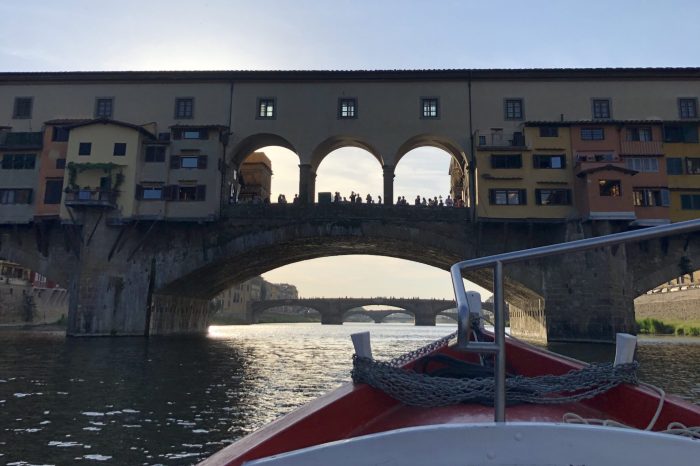
Florence Wine Boat Tour on the Arno | Ponte Vecchio & Organic Prosecco
Florence| 14 Guests | 1 Hour | Age 5+


Multidays Hiking and Biking in Tuscany and Cinque Terre
Florence| 8 Guests | Multi-Days | Age 18+

Tuscany Gravel Bike Tours | Out of the Box Florence
Florence| 8 Guests | Single/Multi-days | Age 18+