
Slow Food Tuscany: 5 Hidden Food Treasures Near Florence
Reading time: about 8 minutes · Last updated: 14 June 2026
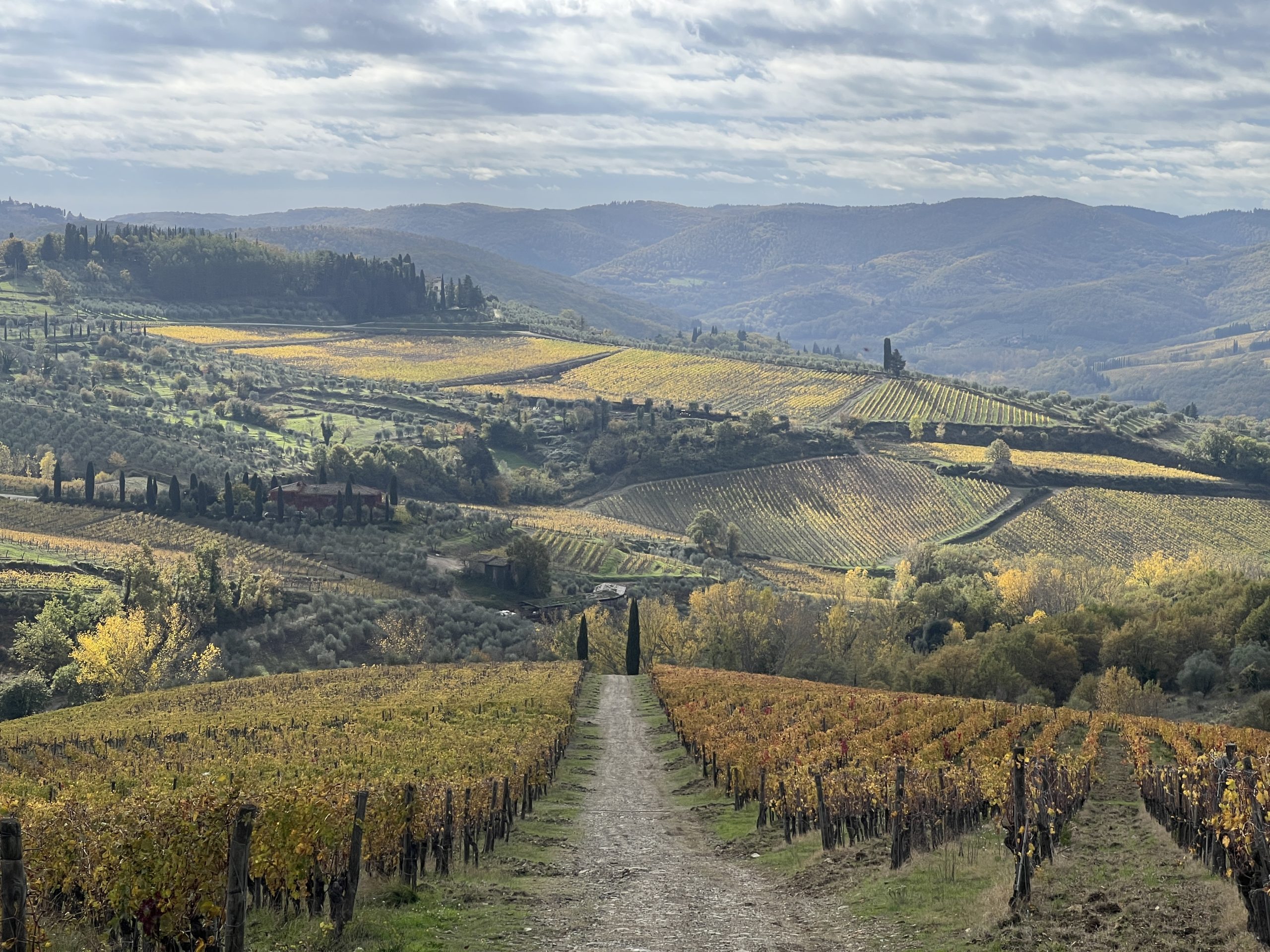
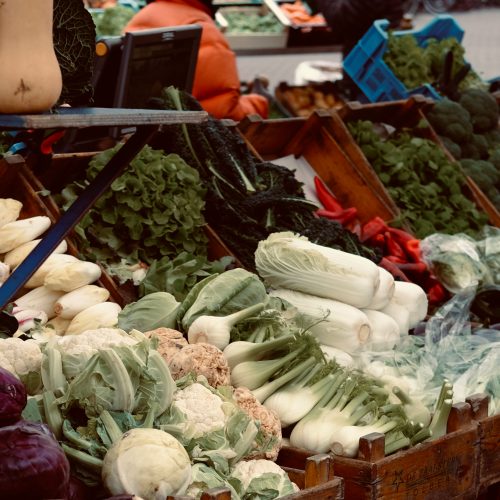
At the Sant'Ambrogio market, a farmer stacks violet onions next to a handwritten sign: Certaldo. Most visitors walk straight past, because nobody queues for an onion. Yet that onion appears in the Decameron and sits on a town's coat of arms. Moreover, it is officially protected as part of Slow Food Tuscany, the network of Presidia safeguarding the region's most endangered traditional foods. In this guide, we go deep into five protected foods near Florence. Expect a medieval onion, a figure-of-eight fig, a forest prosciutto, a giant pancetta and one crimson-tinted hidden gem.
What Is Slow Food Tuscany? The Presidia, Explained Simply
Slow Food was born in Italy in the 1980s to defend local food traditions against homogenization. Its sharpest tool is the Presidium. In short, a Presidium gathers the last producers of an endangered food and writes a strict protocol with them. The goal is simple: help the product survive. Tuscany counts dozens of them, all listed on the Slow Food Foundation's Tuscany page.
Here is the part most tourists miss: many of them live within an hour of Florence. Therefore, you do not need a week in remote Maremma to taste them. Instead, you need curiosity, a regional train ticket, and the willingness to skip one more pizza by the Duomo. As a small local tour company, we built Out of the Box Florence around exactly this idea. The best of Tuscany hides one valley away from the crowds.
Cipolla di Certaldo: Slow Food Tuscany in Boccaccio's Hometown
Giovanni Boccaccio was raised in Certaldo. In Day Six of the Decameron he even named a character Frate Cipolla – Friar Onion. The reason, he wrote, is that this soil "produces onions famous throughout Tuscany". Seven centuries later, the onion still stands on the town's coat of arms. Its motto translates roughly as: "By nature I am strong, and sweet as well."
There are actually two onions here, and the project protects both. The Statina is round, pale violet, juicy and sweet; it is harvested from May to August and eaten fresh all summer. By contrast, the Vernina is deep red, slightly flattened, and pungent; it arrives in late August and keeps through winter. Locals cook them into silky onion soup, or into francesina, boiled beef re-cooked with onions and tomato.
Getting there is easy: direct trains run from Florence to Certaldo in about 50 minutes, and the medieval upper town rewards the climb. Time it well and you can pair onions with a festival. For example, Mercantia brings street theatre each July, and Boccaccesca celebrates local food in autumn.
Fico Secco di Carmignano: Slow Food Tuscany's Sweetest Survivor
Carmignano sits about half an hour west of Florence. Locals once nicknamed it "Carmignan da' fichi", Carmignano of the figs, because every farmhouse kept a fig tree by the porch. The dried fig made here is unlike any supermarket version. Producers use mainly the white Dottato variety. They slice each fig open by hand, then dry the fruit on cane mats in the sun for four or five days.
Then comes the slow part. The figs rest over a month in a cool room until a sugar veil, the gruma, blooms on the surface. Finally, pairs of figs are pressed around a few anise seeds to form picce, shaped like a figure of eight. By rule, the new harvest goes on sale from the third Sunday of October, during the Benvenuto Fico Secco festival.
In addition to figs, the area produces Carmignano wine. Its boundaries were fixed by a Medici decree in 1716, among Europe's earliest protected wine zones. Meanwhile, the Medici villa at nearby Poggio a Caiano belongs to Tuscany's UNESCO-listed villa circuit.
Prosciutto del Casentino: Slow Food Tuscany From the Forest
East of Florence, the Casentino valley follows the upper Arno through some of Tuscany's most forested terrain. Historically, this was a land of woodcutters, shepherds and dark-coated pigs grazing half-wild under the trees. In fact, a nineteenth-century text records local hams shipped as far as Germany and England. Today, Slow Food has revived that tradition with the grey pig of the Casentino. These animals live outdoors, foraging mostly in the oak and chestnut understory.
The recipe is patient. Legs are salted twice with garlic, pepper and other spices, then matured for weeks. Traditionally, hams hung in the kitchen near the fireplace; therefore a faint, natural oak-and-beech smokiness is still allowed. Aging lasts at least 12 months, and the producers now push maturation toward 18 for a deeper flavor. The result is a 9-to-12-kilo prosciutto, vivid red at the cut, intense on the nose and delicate on the palate.
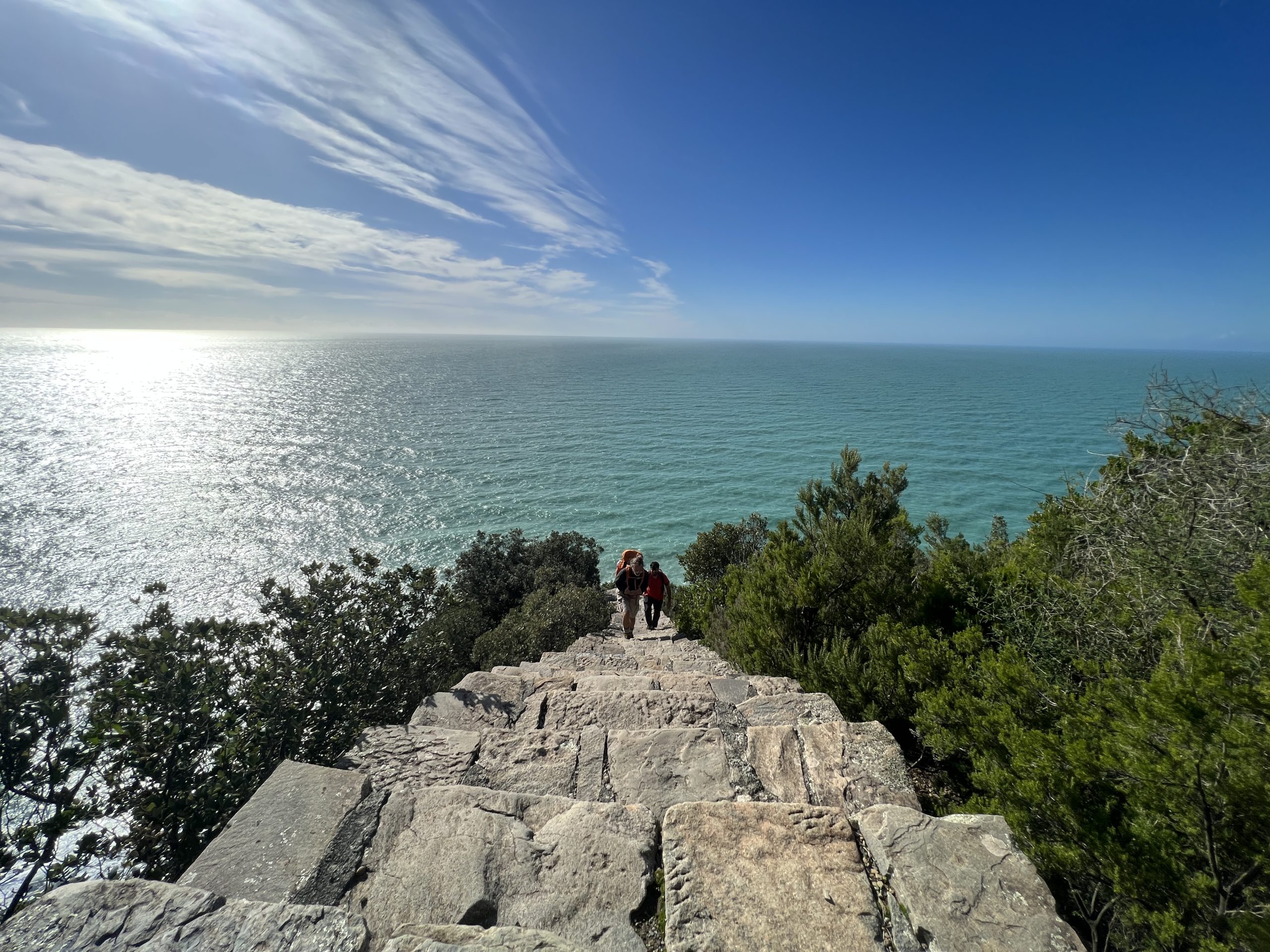
For us, this is the perfect excuse to combine eating with walking. The same valley holds the Casentino Forests National Park and the monasteries of Camaldoli and La Verna. Consequently, a tasting slots naturally into a hiking day. If that sounds like you, our sustainable hiking and wine experiences are built on the same map.
Tarese del Valdarno: Slow Food Tuscany's Giant Pancetta
Imagine a pancetta the size of a doormat. The tarese, made in the Valdarno towns of Montevarchi, San Giovanni Valdarno, Bucine and Terranuova Bracciolini, can measure up to 50 by 80 centimetres. That scale was born of necessity: before refrigeration, families raised enormous pigs, and salt preserved every part of them.
Production still follows the old sequence. Butchers take the back and belly in a single piece, including part of the prized loin. Next, they rub it with red garlic, ground pepper, juniper, Tuscan spices and sometimes orange zest. Then the slab spends about ten days under coarse salt. Afterwards, it is washed, massaged again with garlic and spices, coated in pepper, and aged for two to three months. The flavor is pronounced yet surprisingly fine, with the loin's fat lending real softness.
Old-timers grilled young tarese and served it with bitter winter radicchio or zolfino beans. Today, you can hunt it down at butcher shops along the Florence–Arezzo regional train line. As a result, the Valdarno is one of the easiest of these territories to reach without a car.
Mortadella di Prato: The Hidden Gem of Slow Food Tuscany
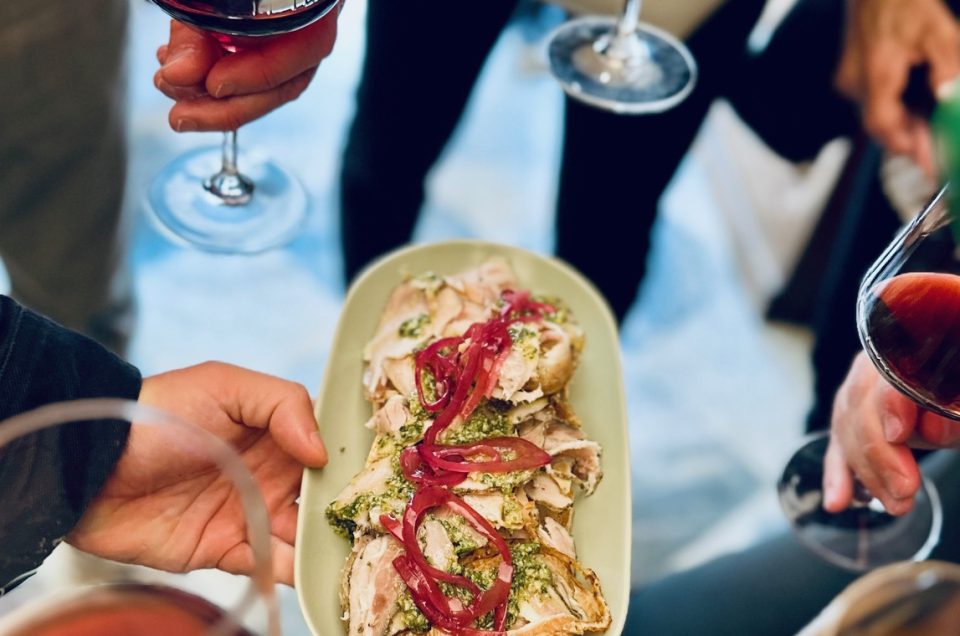
Here is the one we beg you not to skip. Despite the name, Mortadella di Prato has nothing to do with its famous Bologna cousin. It is a cooked, finely spiced pork salume, tinted opaque pink by alchermes. That crimson liqueur was once made from cochineal, the "grana del tintore" that also dyed cloth in Prato's medieval textile district. In other words, food and fabric here share a dye.
The documented history runs deep. Archives first mention it in 1733, when Dominican nuns in Prato served it at the beatification of Catherine de' Ricci. Production faded after World War II, until a Prato salumeria revived it about three decades ago. Slow Food then gathered the remaining makers around a shared protocol: garlic, mace, pepper, coriander, cinnamon, clove, alchermes and a natural casing. In 2016, the product also earned PGI status from the European Union.
Eat it the local way: thin slices at room temperature, with bozza pratese bread and, the masterstroke, Carmignano dried figs. Sweet fig, warm spice, a whisper of alchermes. Prato sits roughly 25 minutes from Florence by train, and almost no tourist makes the trip. Their loss.
Real Travellers Protect These Foods. Tourists Order Another Steak.
Let us be blunt, with love. The bistecca alla fiorentina is glorious, and we will defend it forever. However, a steak near the Duomo plus a pizza from a tourist menu is not a food memory. If that was your whole trip, you ate in Tuscany without ever tasting it. Mass tourism rewards the same ten dishes in the same three streets. Meanwhile, the producers keeping a 1733 mortadella or a Decameron onion alive count their customers in dozens, not millions.
Choosing them is not just a better lunch – it is a small act of preservation. Every piccia of figs bought in Carmignano, every etto of tarese sliced in Montevarchi, keeps a producer in business and a tradition off the extinction list. That, to us, is the real difference between a traveller and a tourist: one consumes a destination, the other helps it survive.
Planning a Slow Food Day Trip From Florence
Here is how to build it without a tour bus in sight:
- By train: Certaldo (about 50 minutes, direct), Prato (about 25 minutes) and the Valdarno towns all sit on regional lines. Buy producer-direct whenever you can.
- By car or bike: Carmignano pairs figs with wine and a Medici villa; the Casentino pairs prosciutto with forest trails and monasteries.
- In Florence itself: several of these foods appear at farmers' markets and on Slow Food-allied menus. For trustworthy places to eat and drink, use our free map, Florence Off the Beaten Path: From Real Locals, instead of gambling near the Duomo.
- Check the calendar: the new dried figs debut on the third Sunday of October. Meanwhile, summer is Statina onion season, and cured meats are at their best after winter production.
Prefer to fold a tasting into a walk? Our Florence urban hikes leave the postcard zone behind in twenty minutes.
FAQ: Tasting These Hidden Treasures Near Florence
What does "Presidium" actually mean?
A Presidium is a Slow Food project that protects one endangered food by uniting its remaining producers under a shared traditional protocol. It is a guarantee of method and origin, not gourmet marketing.
Which Slow Food Tuscany product is closest to Florence?
Mortadella di Prato wins on travel time: Prato is roughly 25 minutes from Florence by regional train. Certaldo, home of the onion, is about 50 minutes away.
Can I buy these products in Florence?
Often, yes – look for them at farmers' markets and well-stocked alimentari, checking labels for the Presidio Slow Food snail. For reliable addresses, see our Florence Off the Beaten Path: From Real Locals map.
When is the best season for a Slow Food Tuscany trip?
Every season offers something. Summer brings fresh Statina onions, while October brings the Carmignano fig festival and the pungent Vernina. Meanwhile, the cured meats – prosciutto, tarese, mortadella – are available year-round.
Are these foods expensive?
Not compared with tourist-zone menus. A generous etto of protected salume usually costs less than a mediocre pizza by the Duomo. Better still, the money goes straight to small producers.
Taste It With People Who Grew Up Here
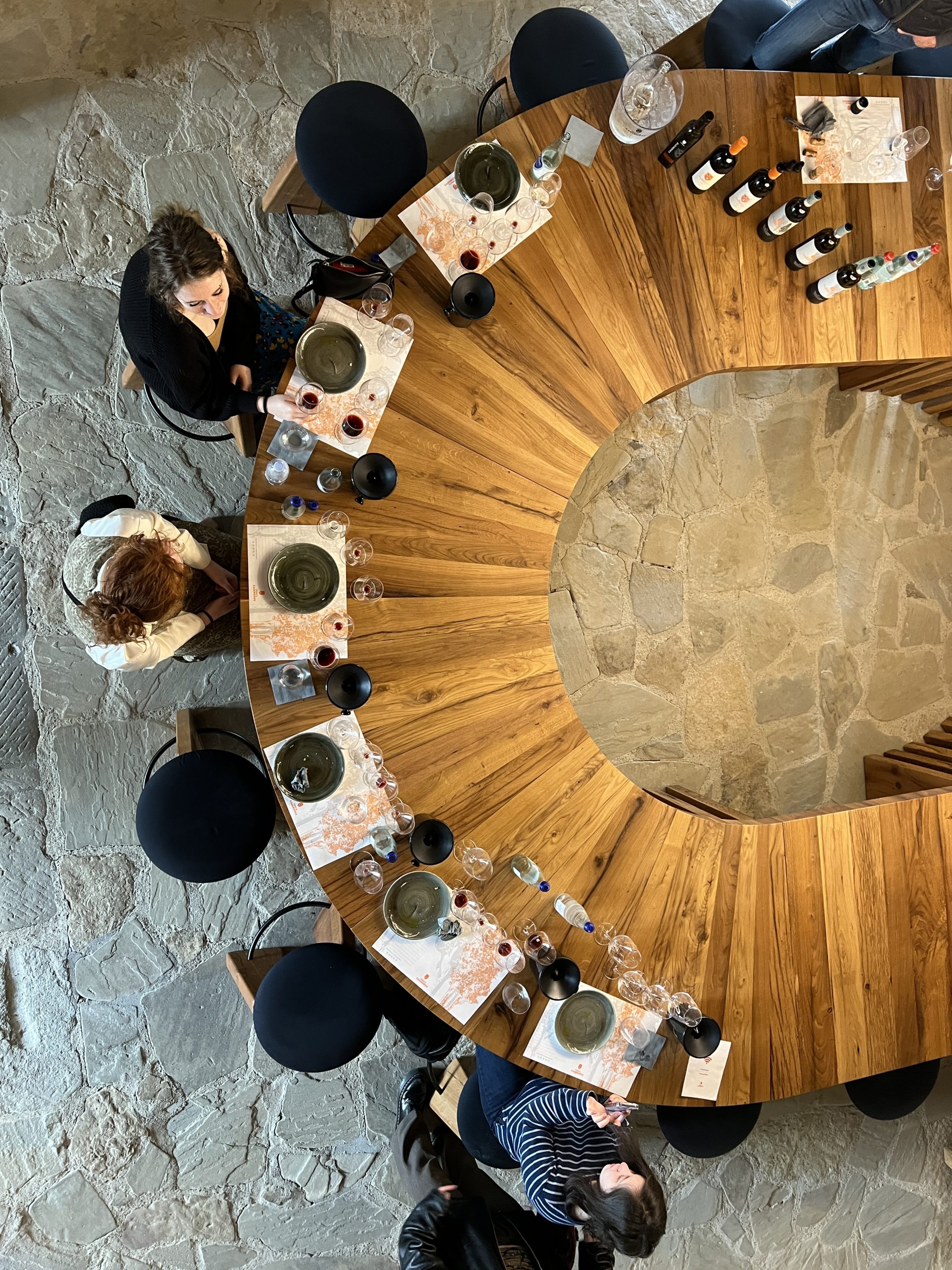
We are locals, and these products belong to our family tables, not our marketing. If you want to meet them properly, we will build the day around your appetite: a hike, a gravel ride, or a tasting board between vineyards at Out of the Box Florence.
Ready to go? Write to us through our contact form or email info@outoftheboxflorence.com, and travel like the place matters. Because it does.