
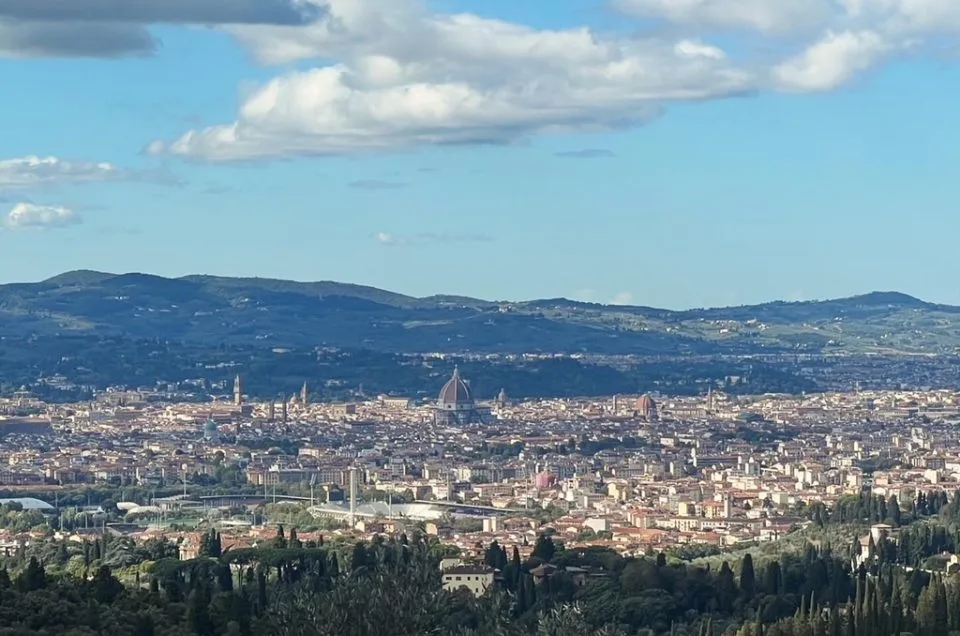
Three days from Florence works best as one day in the city, one day in Chianti Classico, and one day among the hill towns to the south. Keep to one area per day and never more than two destinations inside it. Stay in Florence and travel out and back: changing hotel inside three days costs you half a day you do not have.
Three days is short. The way it goes wrong is almost never the itinerary, it is the map. Guests arrive with Florence, Siena, Pisa, Cinque Terre and Montalcino on the same list, and end up seeing all five through a windscreen.
What follows is the shape we build most often at Out of the Box Florence for a 72-hour stay. There are no clock times in it, on purpose. The hour a day starts depends on where you are sleeping, what time you landed, and how the group is walking by three in the afternoon. What matters is the order of the days and the distance between them.
What does a 3-day Tuscany itinerary look like?
| Day | Where | Distance from Florence | Time in the van |
|---|---|---|---|
| Day 1 | Florence and the hills above it | 0 to 8 km | None, or a short transfer |
| Day 2 | Chianti Classico | 20 to 60 km | Under an hour each way |
| Day 3 | The hill towns to the south west | 56 to 75 km | About an hour each way |
Total driving across the three days is roughly five hours. That is the number worth protecting.
Why should you stay in one area each day?
Because the drive is never the cost you think it is. Distances in Tuscany look trivial on a map. Siena is 75 km from Florence, San Gimignano 56. But the roads are two lanes, they climb, and every arrival needs parking, orientation and a slow walk in from wherever you left the vehicle.
Two destinations in a day is the honest maximum. Three is a coach tour with a different logo on the side.
The second reason is heat and light. From June to early September the Tuscan countryside sits at 35 to 38 degrees through the middle of the afternoon, and the hours worth having are the early morning and the one before sunset. A day built around a single area lets you use both ends. A day built around three uses neither, because you spend both of them in transit.
Everything below leaves from Florence and comes back to it. If you would rather sleep in the countryside, read how many days you actually need in Tuscany first. Moving out of the city only starts to pay off from five days upwards.
Day 1: What should you do on your first day in Florence?
Spend it on foot, and spend part of it above the city.
The historic centre of Florence is small enough to cross in about twenty-five minutes, which is exactly why it feels crowded. Everyone is walking the same four streets. The Duomo complex, the Uffizi and the Ponte Vecchio are worth the queues, but for most visitors they are also the whole of Florence. The Oltrarno, on the south bank of the Arno, is where the workshops still are and where Florentines still eat.
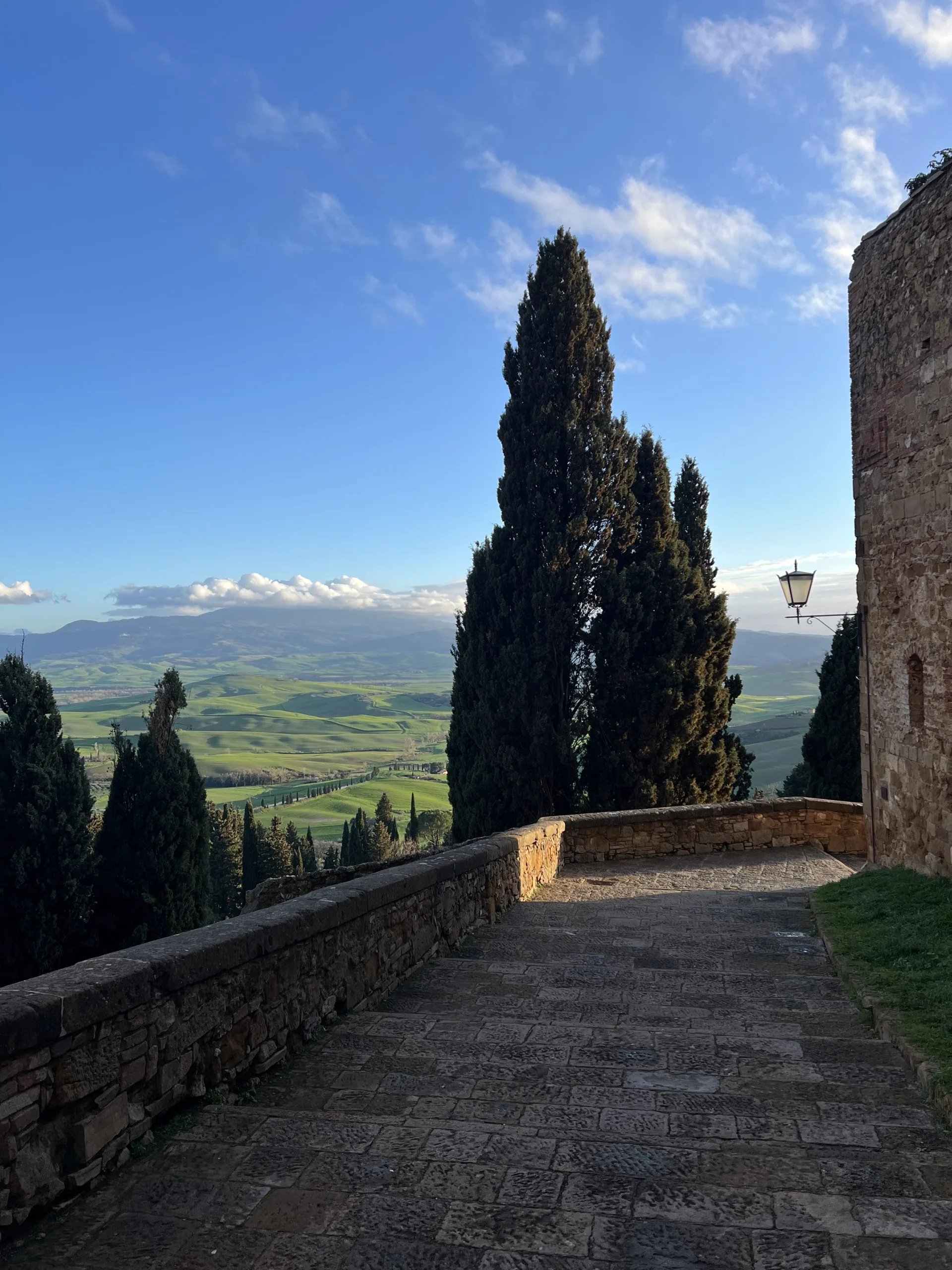
Then go up. Fiesole sits in the hills directly above the city, Etruscan before it was Roman, and the paths between the two give you the dome from a distance and in silence. Our Florence hiking tour with lunch and wine runs this as a five-hour half day: easy trails on the ridge, a stop to eat, a tasting on the way back. It leaves the museums intact.
Two other ways to spend a first day, depending on what you want out of it:
- If you want the city from the water instead of the hills, the wine boat tour on the Arno is an hour in a traditional flat-bottomed barchetto under the Ponte Vecchio, with organic prosecco. It is the shortest thing we run and the best hour of the day to do it is the last one before sunset.
- If food is the reason you came, Eat Like a Local is a half day in the markets and the trattorie Florentines actually use. It is a different city from the one on the food tours.
One rule for day one: do not drive anywhere. Jet lag and a Tuscan back road are a poor combination, and the ZTL in the centre of Florence is enforced by camera.
Day 2: Why is Chianti Classico the best second day?
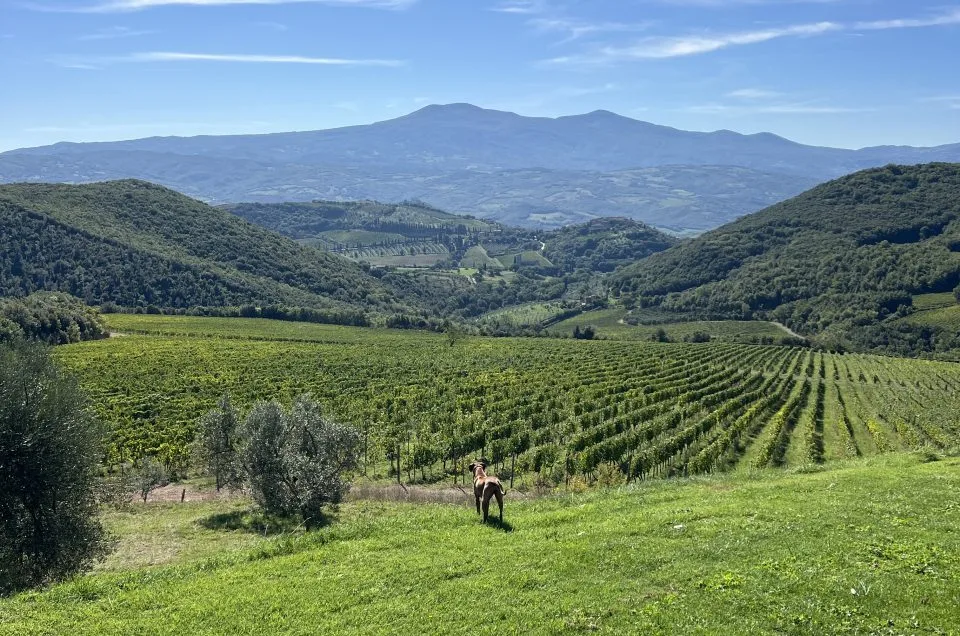
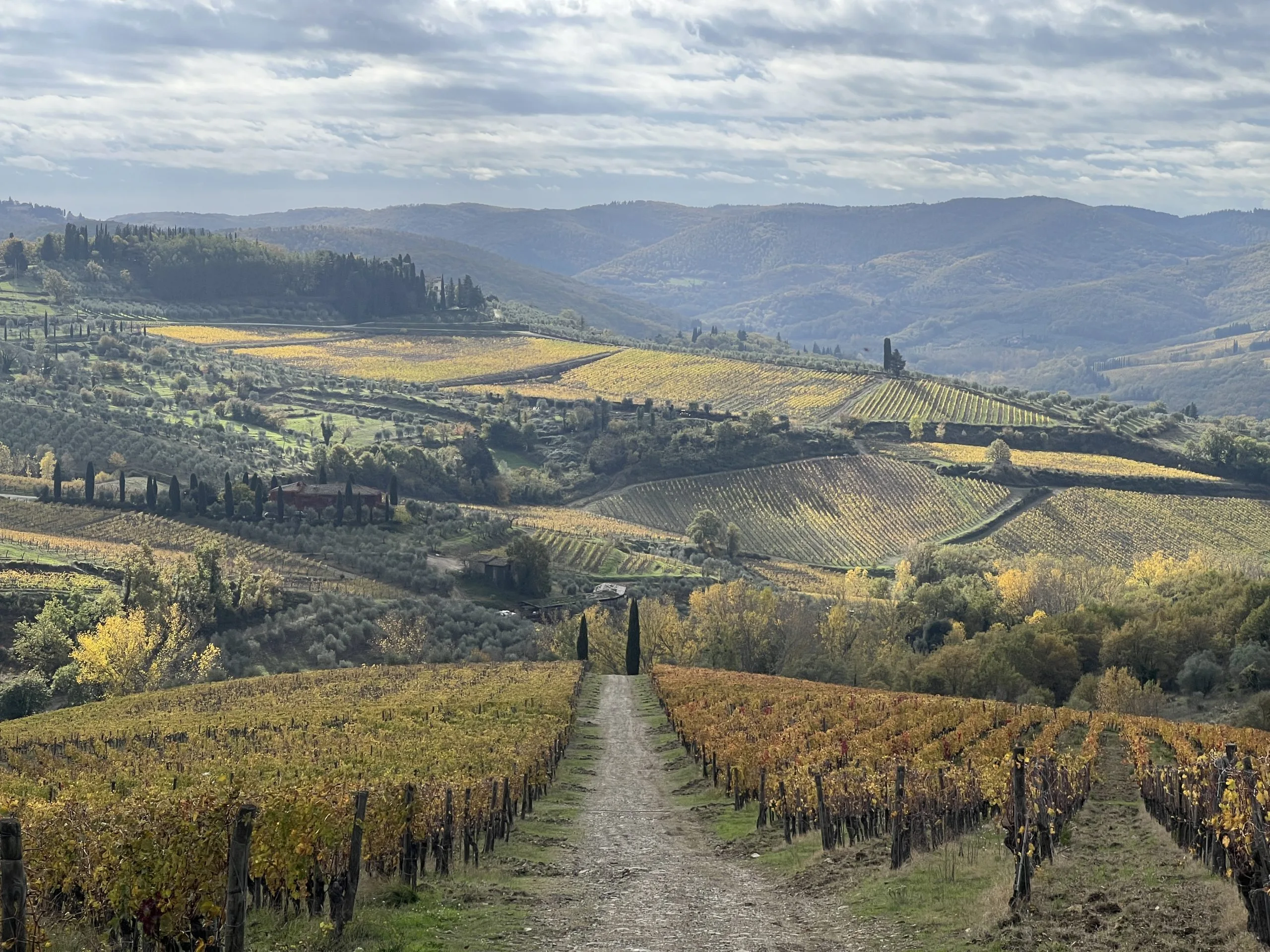
Because Chianti Classico is the closest serious wine region to Florence and the shortest drive of the three days. The DOCG zone starts about 20 km from the centre. The villages worth stopping in, Greve, Panzano, Radda, Castellina, sit between 30 and 60 km out. There is no useful public transport to the estates, so whatever you decide, this day involves a vehicle.
The real choice is how you want to spend the middle of it.
If you want to walk between the tastings. The Chianti Classico wine hiking day is an 8 km walk on vineyard trails linking three organic estates, with lunch in the middle and around ten wines across the day. It is the fullest day we run in Chianti and the one guests come back for.
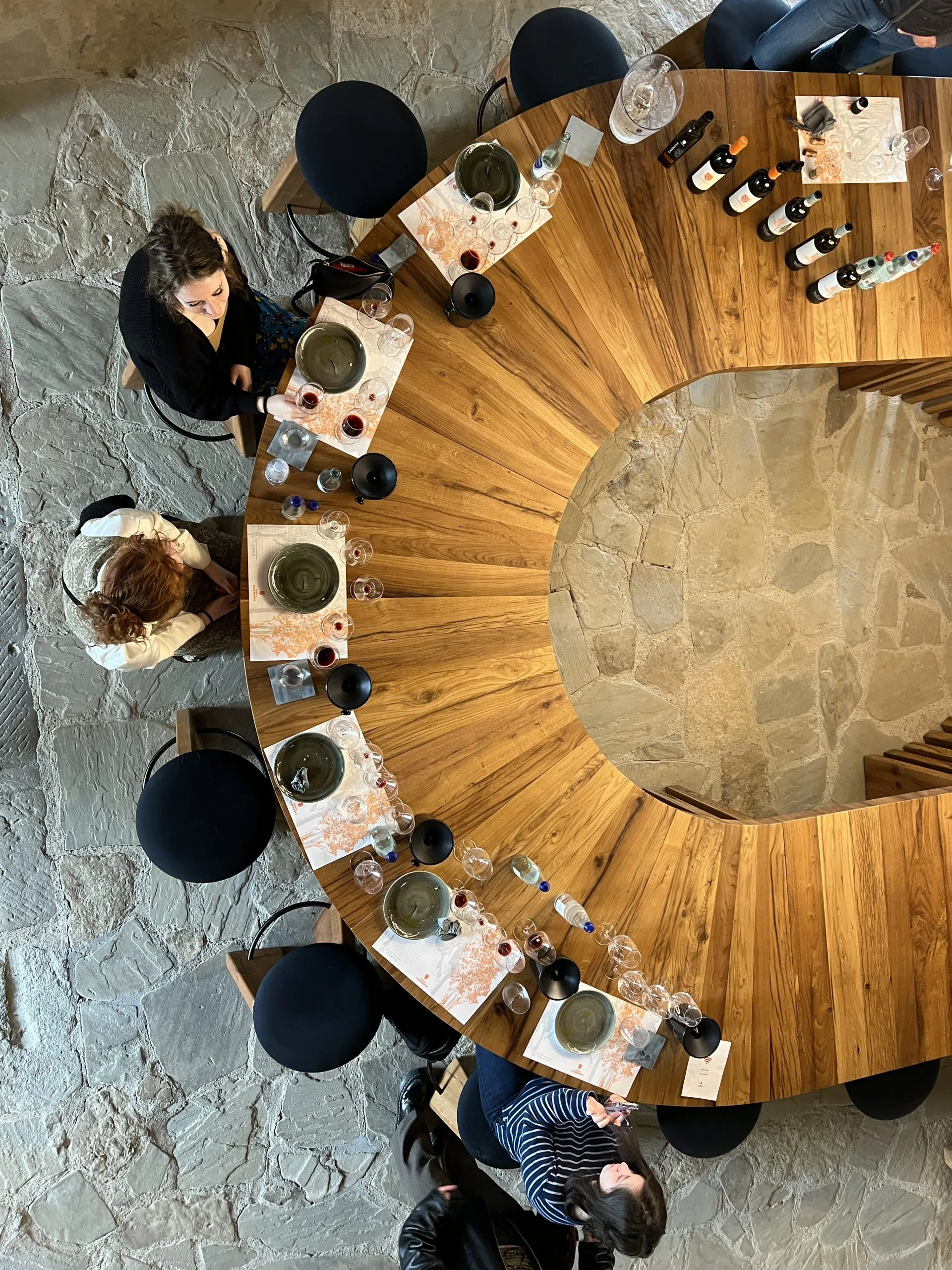
If you want the wine without the walking. The Chianti Classico wine tour is a five-hour visit to two family-run estates, led by a sommelier, with the tastings and none of the trail. It works well when day one was heavy on your feet.
If you would rather cook than taste. The home cooking class in Chianti Classico takes place in a private house in the middle of the region. Four courses, hands on, and you eat what you made.
One thing worth saying plainly. Out of the Box Florence takes no commission from any winery, producer or restaurant on its itineraries, and nothing on the wine you buy. Ask any operator that question before you book. In Chianti the answer is very often the opposite, and it decides which cellars you get taken to.
Day 3: Should you choose San Gimignano, Siena or somewhere quieter?
This is the day where three-day itineraries usually break, because half the internet insists on San Gimignano and Siena together. It can be done. They are 56 km and 75 km from Florence and about half an hour apart. But it is a long day with two crowded medieval towns in it and almost no time standing still.
Here is how we actually run it. Our San Gimignano and Certaldo day pairs the towers with Certaldo Alto rather than with Siena. Certaldo is a walled brick hill town reached by funicular, where Boccaccio spent his last years, and where at eleven in the morning you can hear your own footsteps. Seven hours, and you get the famous skyline plus a town that is still a town.
Two rules if you go independently. Visit San Gimignano before half past nine in the morning or after five in the afternoon: 14 of the original 72 towers survive, and between those hours you will mostly be photographing the backs of other people's heads. And Piazza del Campo in Siena deserves an unhurried afternoon rather than ninety minutes, so if Siena is the one you have always wanted to see, give it the whole day and drop San Gimignano.
If neither appeals, the Casentino and Mugello valleys are 65 km east of Florence over the Passo della Consuma. They are the part of Tuscany that stayed off the itineraries: monasteries, beech forest, and no queue anywhere.
What if you came to Tuscany for one thing in particular?
Three days does not have to mean the standard three. Swap day 3, or occasionally day 2, for whichever of these is the reason you booked the flight.
Serious wine. Val d'Orcia and Brunello di Montalcino are about 120 km south of Florence, two hours each way, and they need a full day rather than half of one. The landscape is genuinely different from Chianti: clay ridges, cypress lines, wider sky. Brunello is aged a minimum of five years before release, which makes for a different conversation in the cellar.
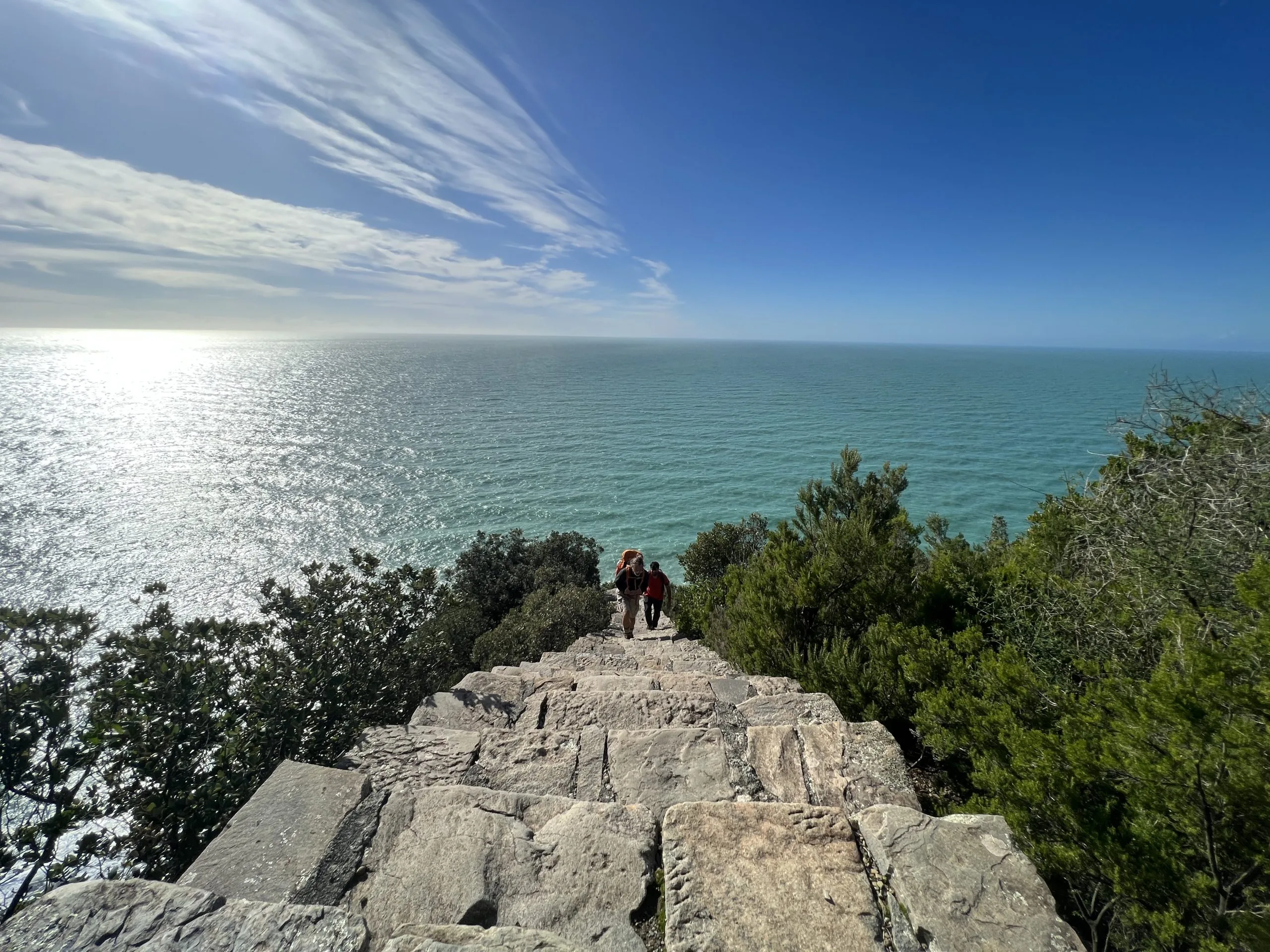
The sea. Cinque Terre is around 220 km from Florence. We run it as a hiking day on the coastal paths between the villages, and at 12 hours door to door it is the longest day on our books. There is also a Cinque Terre day without hiking, by van, train and boat, for anyone who wants the villages and not the climb. On three days, going means giving up one of the other two entirely.
Riding. The white gravel roads of central Tuscany are the reason a lot of cyclists come here at all. Our gravel bike tours run as single days out of Florence into Chianti, or as self-guided multi-day routes with tested GPX tracks, hotels booked and luggage moved between stages.
Truffle. From roughly October to December, truffle hunting with lunch is four hours in the woods with a hunter and his dogs. Being a half day, it fits alongside something else rather than replacing it.
What should you leave out of a 3-day trip?
- Rome, Venice and the Amalfi Coast. Each is a travel day in both directions. Three days in Tuscany means three days in Tuscany.
- Cinque Terre and Pisa alongside anything else. We do run the two together as one long day and it works, but it is 11 hours and it is the entire day.
- Changing hotel. One night in Florence, one in a farmhouse and one in Siena sounds romantic and costs you two half days in packing, checking out and finding the next place.
- A hire car for all three days. You need transport on one day out of three. Florence's ZTL is camera enforced and the fines arrive months later at your home address.
How should you get around Tuscany for three days?
Three honest options, and they suit different trips.
Train. Works for Pisa, one hour direct from Firenze Santa Maria Novella, and for Siena, about an hour and a half via Empoli. It does not work for Chianti Classico, Val d'Orcia or any winery worth the drive, because the estates are not near the stations.
Hire car. Gives you freedom and hands you the ZTL, hill-town parking and a designated non-drinking driver on a wine day.
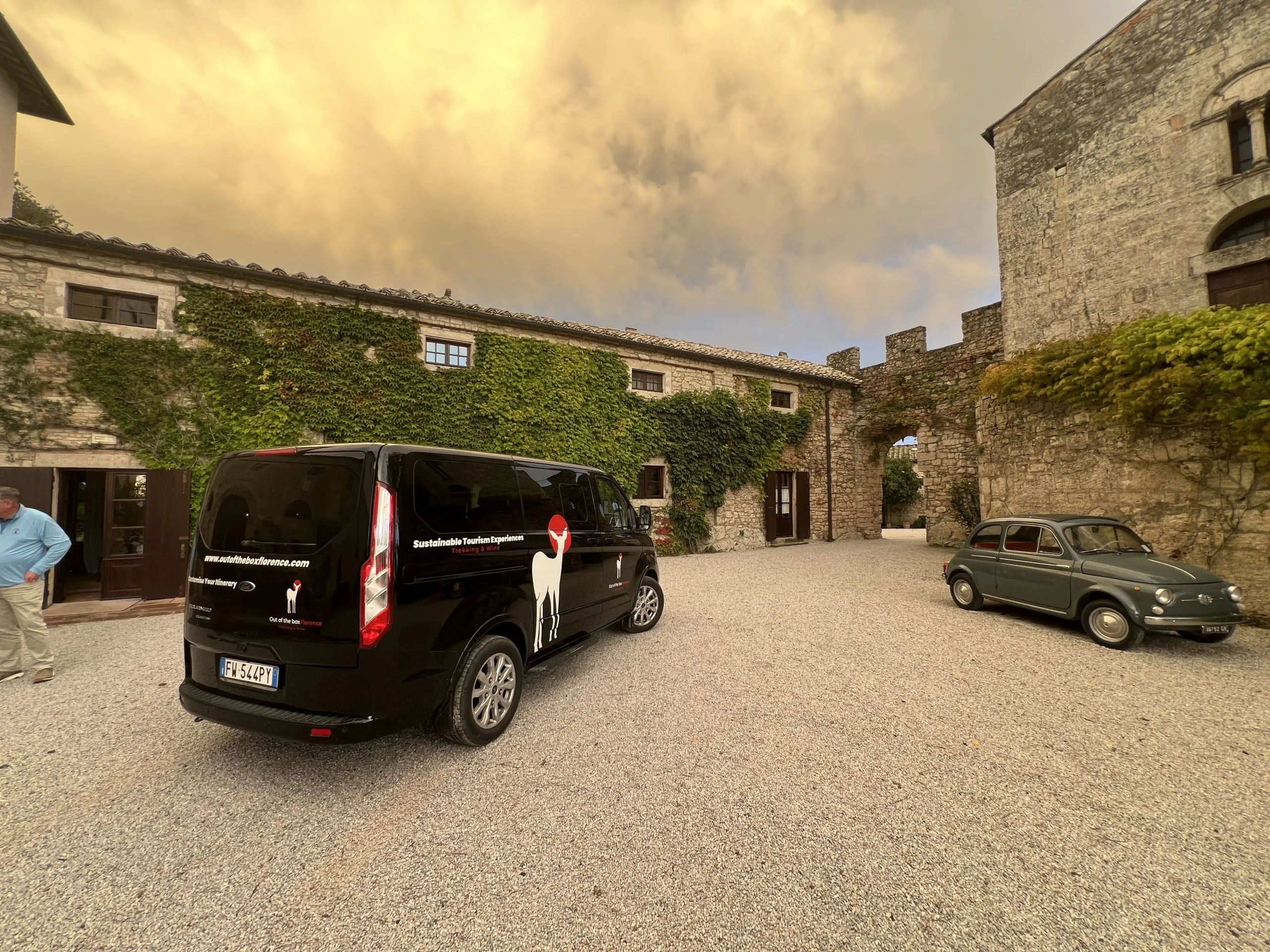
A guided day. Removes all of that. On a private day with Out of the Box Florence we collect you at your hotel or apartment in Florence and bring you back, the group is only your own party, and timing and stops can move on the day itself. Never more than 15 guests, travelling in two air-conditioned vans seating eight and seven. If you want the driving solved and not the guiding, we also run a private driver service in Florence and Tuscany.
If the three days above are close but not quite yours, that is what our tailor-made Tuscany itineraries are for. Tell us how many days you have, where you are staying and what actually matters to you, and we will say honestly what fits and what does not. The full catalogue of day trips is worth a look first, and if you are still deciding where to go at all, our guide to the best day trips from Florence covers every destination within reach of the city.
Written by Stefano Mazzantini, founder of Out of the Box Florence, FISAR-certified sommelier and licensed hiking and cycling guide. He has spent more than 20 years leading private and semi-private tours across Florence, Tuscany and Cinque Terre.
Frequently asked questions about 3 days in Tuscany
Is 3 days enough for Tuscany?
Three days is enough for Florence and two areas around it, and not much more. It works if you stay in Florence and travel out and back each day. If you want Chianti, Val d'Orcia and the coast in the same trip, you need five days at least.
Should I stay in Florence or in the countryside?
Stay in Florence for a three-day trip. Everything in this itinerary is within an hour of the city, and changing hotel costs you half a day in packing and checking in. Sleeping in the countryside starts to pay off from five days upwards, when you have time to slow down.
Can I see Siena and San Gimignano in the same day?
Yes, but it makes a long day. San Gimignano is 56 km from Florence and Siena is 75 km, with about half an hour between them. Two crowded medieval towns in one day leaves little time to stand still. If Siena matters most to you, give it the whole day.
Do I need a car for three days in Tuscany?
No. You need transport on one day out of three, and Florence's ZTL means a hire car sits in a garage for the other two. Trains work for Pisa and Siena but not for the Chianti wineries. A private tour or a private driver solves the one day that matters.
Can I fit Cinque Terre into a three-day trip from Florence?
You can, but it takes the whole day. Cinque Terre is about 220 km from Florence and our hiking day there runs 12 hours door to door. On a three-day trip that means giving up either Chianti or the hill towns. With four days or more it fits comfortably.
What is the best order for a three-day Tuscany itinerary?
Florence first, then Chianti Classico, then the hill towns. The first day needs no driving, which suits jet lag. The second day is the shortest drive out of the city. The third is the longest, and by then you know how your group walks and how early it starts.
How much driving is involved in three days?
About five hours in total, spread across days two and three. Chianti Classico is under an hour each way from Florence. San Gimignano and Siena are around an hour. Day one involves no driving at all, because the centre of Florence is faster to cross on foot.
When is the best time of year for a short Tuscany trip?
May, June, September and October. July and August reach 35 to 38 degrees in the countryside and the hill towns fill by mid-morning. Harvest runs through September into early October, which is the busiest and the best month in the wineries. Winter is quiet, cheap and often clear.