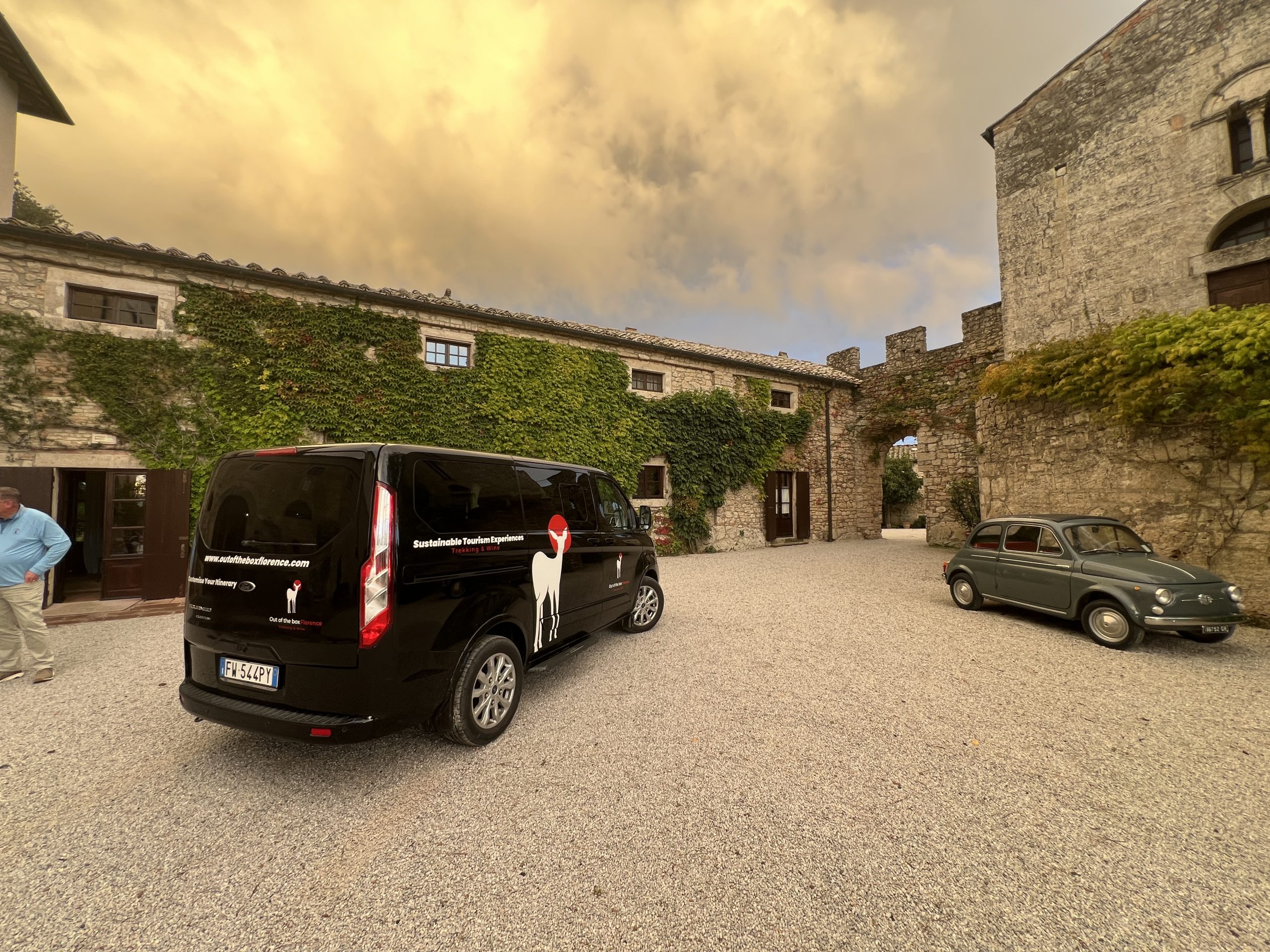

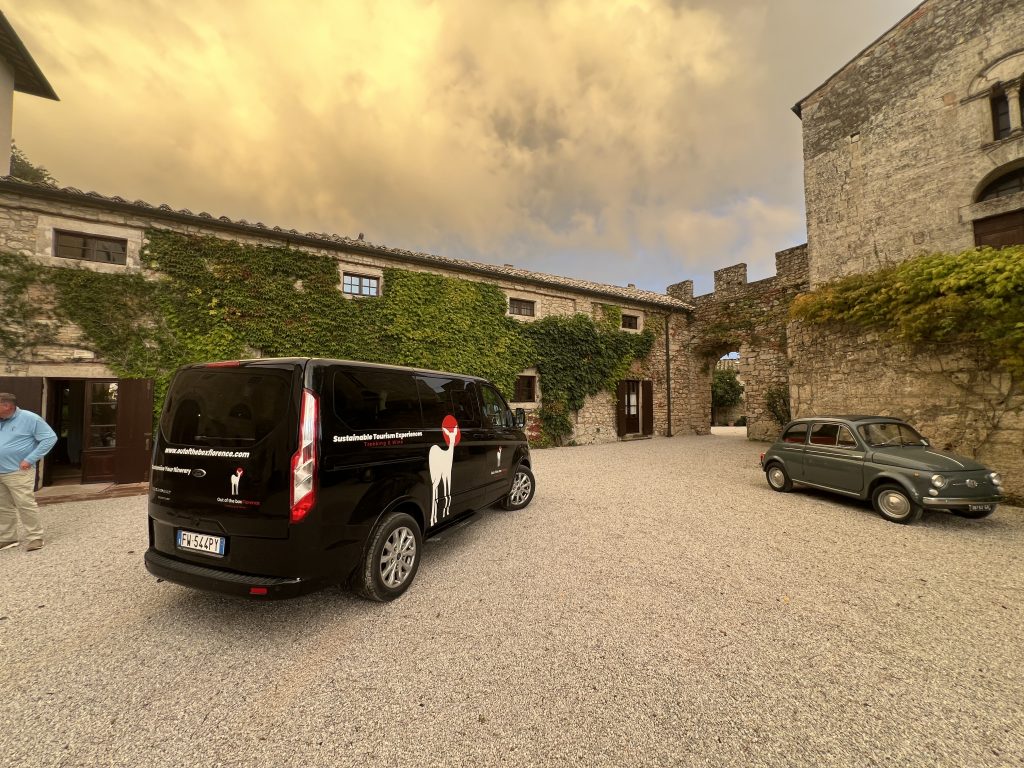
You do not need a car to see Florence, and in the city centre one is a liability because of camera-enforced ZTL zones. For Chianti, Val d’Orcia and the hill towns you need wheels of some kind, since public transport barely reaches the wineries. Whether that means a rental, a private driver or a driver-guide depends on one question: will you be tasting wine?
Self-drive, private driver or driver-guide at a glance
| Self-drive rental | Private driver | Driver-guide tour | |
|---|---|---|---|
| Best for | Long stays, remote countryside bases, people who enjoy driving | Airport runs, transfers, hill-town days planned by you | Wine regions, first trips to Tuscany, anyone who wants to taste |
| Can everyone taste wine? | Passengers only | Everyone | Everyone |
| Florence ZTL risk | Yours to manage | None | None |
| Who plans the day | You | You, with the driver’s local advice | Built with your guide around your interests |
| Winery visits by appointment | You book them | You book them | Arranged for you |
| How it is priced | Rental, fuel, tolls, parking | Per vehicle, not per person | Per group (private) or per person (semi-private) |
Do you need a car in Florence?
Not for a single day of it. The historic centre is a ZTL (zona a traffico limitato), and cameras at every entry gate read your number plate. A rental car has no permit, so each gate you cross can generate its own fine.
The fine doesn’t arrive while you’re here. It goes to the rental company weeks or months later, and they charge it to your card with an administration fee on top.
Everything most visitors want to see in Florence sits within walking distance of the Duomo. So our advice is simple: spend your Florence days on foot, and collect a rental only on the morning you leave for the countryside, ideally from the airport or a depot outside the centre.
What does driving in Tuscany actually involve?
The motorway is the easy part. The last few kilometres are where self-drive days get complicated.
- The ZTL follows you. Siena, San Gimignano, Montalcino, Pienza and most walled towns have their own restricted zones. You park outside the walls and walk up.
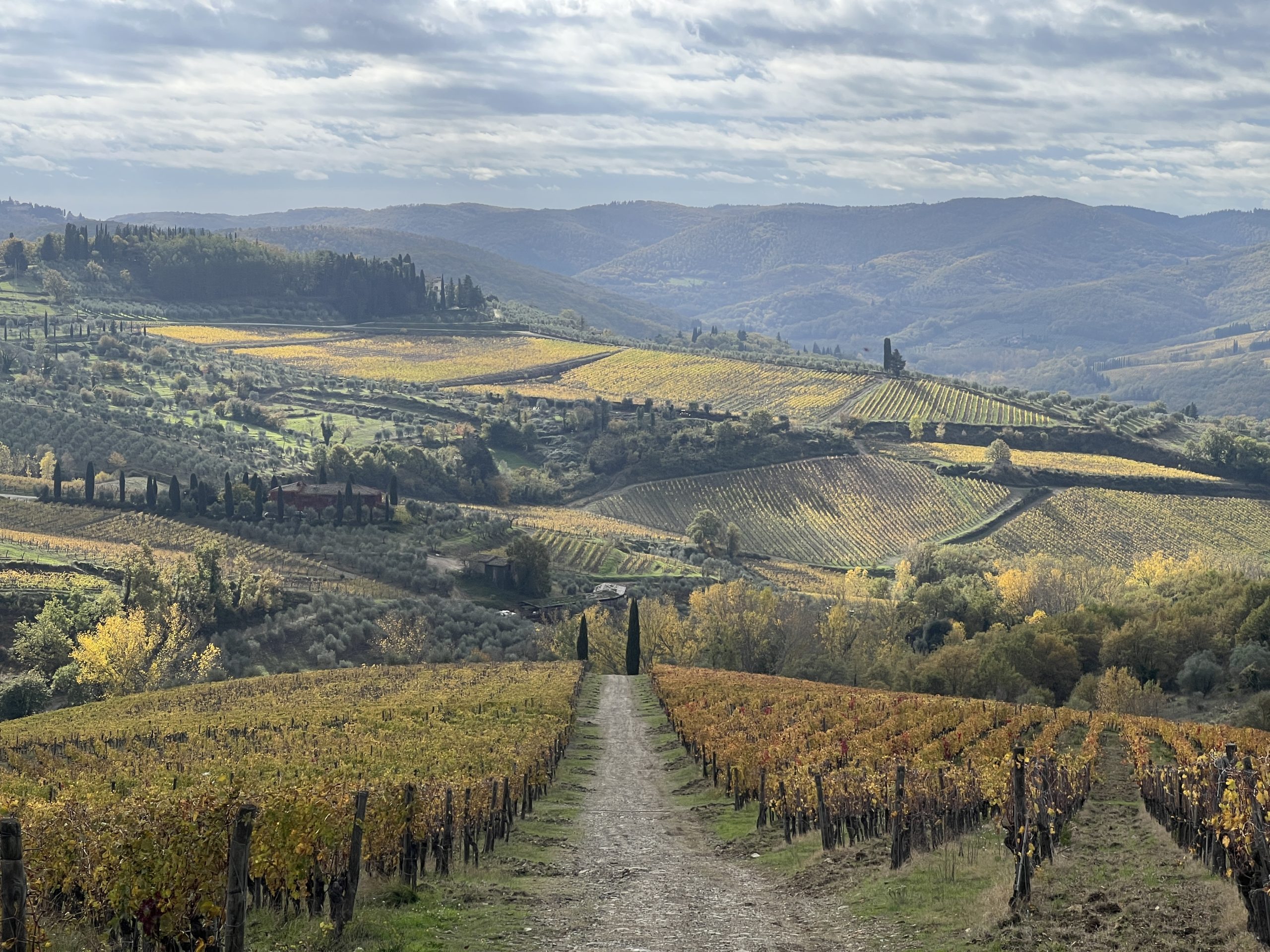
- The best estates sit on strade bianche. Many small wineries are at the end of white gravel roads. Check whether your rental contract excludes unpaved roads before you go.
- US licence holders need an International Driving Permit alongside their normal licence to drive legally in Italy.
- Distances are short, days are long. The Chianti Classico villages are 30–60 km from Florence, the Val d’Orcia around 120 km, about 2 hours each way. Add narrow roads, parking and a long lunch, and a “short” drive fills the day.
So decide day by day which days are worth driving yourself, and which are better spent in the passenger seat.
Can you drive to Chianti wineries yourself and still taste?
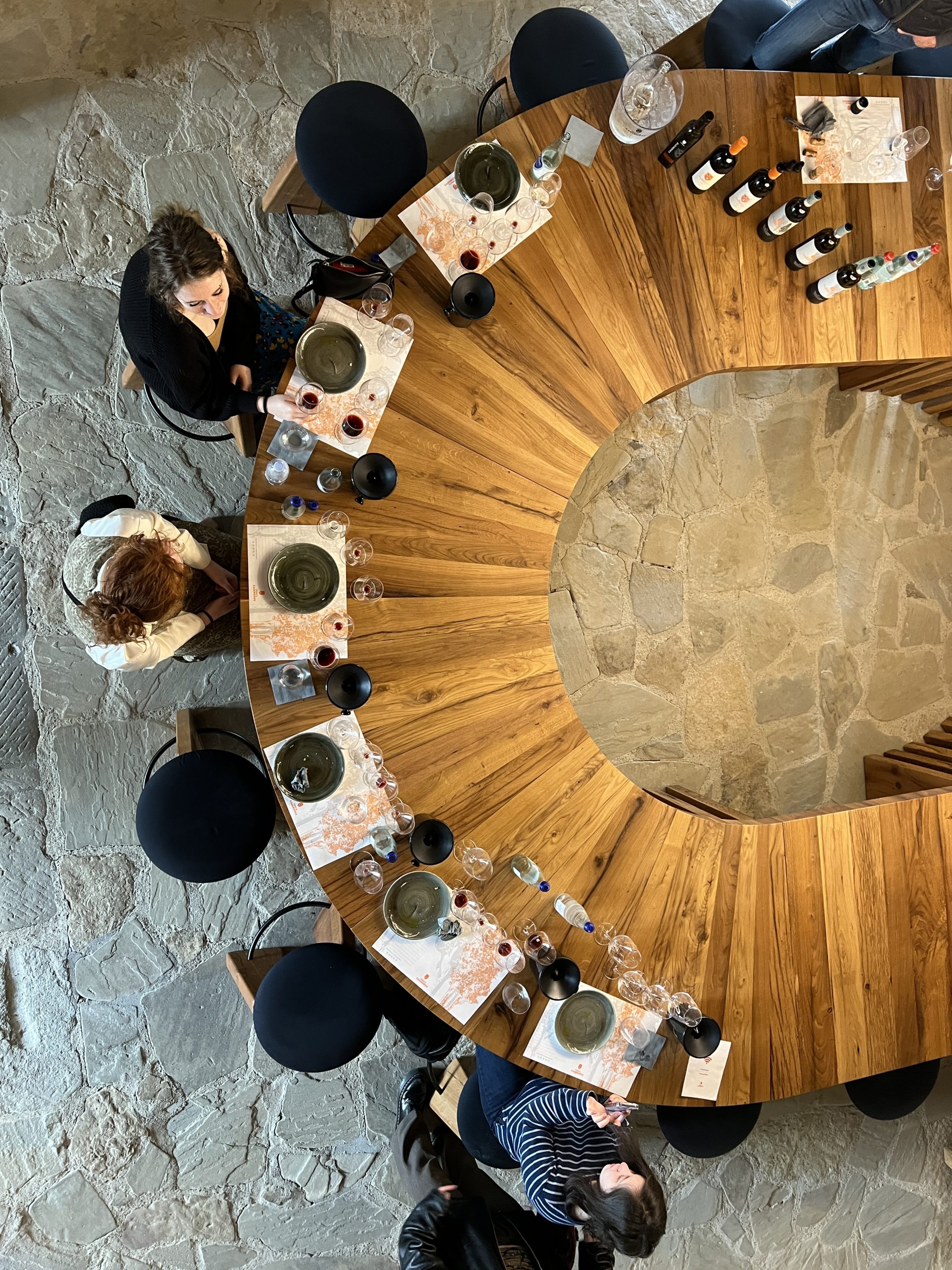
Only one of you can. Italy’s blood alcohol limit is 0.5 g/l, and zero for anyone who has held a licence for less than three years. A proper tasting day in Chianti means three estates, several pours at each and lunch with wine.
In practice, whoever drives spends the day spitting or not tasting at all. For a wine trip, that is half the point of the trip gone.
This is exactly why the driver-guide model exists. On our Chianti Classico wine tour, a sommelier drives you from cellar to cellar and does the talking once you’re inside. If you want to walk between the estates instead, the Chianti Classico wine hiking day covers three wineries on foot, linked by vineyard trails. For how to choose between wine days, see our guide to the best Tuscany wine tours.
What is the difference between a private driver and a driver-guide?
A private driver holds an NCC licence (noleggio con conducente). They take you where you ask, when you ask, and they know the roads, the parking and where locals eat. They are not licensed tour guides, so they won’t lead you through a cathedral or a cellar.
That makes a private driver right for airport transfers, cruise port pick-ups and days when you already know where you want to go. Our private driver service from Florence covers transfers, day trips and city-to-city journeys.
A driver-guide is a licensed guide who also drives. On our tours the guide is behind the wheel, which means the person explaining the Sangiovese in your glass is the same person who chose the estate and knows the family who runs it.
If you want a separate driver and a separate guide on the same day, we can arrange that too.
When is renting a car the better choice?
Sometimes it clearly is, and we’d tell you so.
Rent a car if you’re staying a week or more in a farmhouse far from any station, if you want to stop wherever something catches your eye, or if nobody in your group cares much about wine. Southern Tuscany rewards a slow drive, and a rental gives you freedom no schedule can.
Most of our guests end up mixing the two. They rent for the countryside stretch of the trip and book a driver-guide for the one or two days built around wine, when nobody should be driving anyway.
Which Tuscany day trips work best without a car?
- Chianti Classico. There is no public transport to the best estates. A private Chianti wine tour is the simplest way in.
- Val d’Orcia and Montalcino. Two hours each way, with Brunello at the end of it. Our Val d’Orcia day trip and Brunello di Montalcino wine tour handle the driving.
- San Gimignano and Certaldo Alto. There is no direct train from Florence. The San Gimignano and Certaldo tour pairs the towers with the quieter medieval upper town.
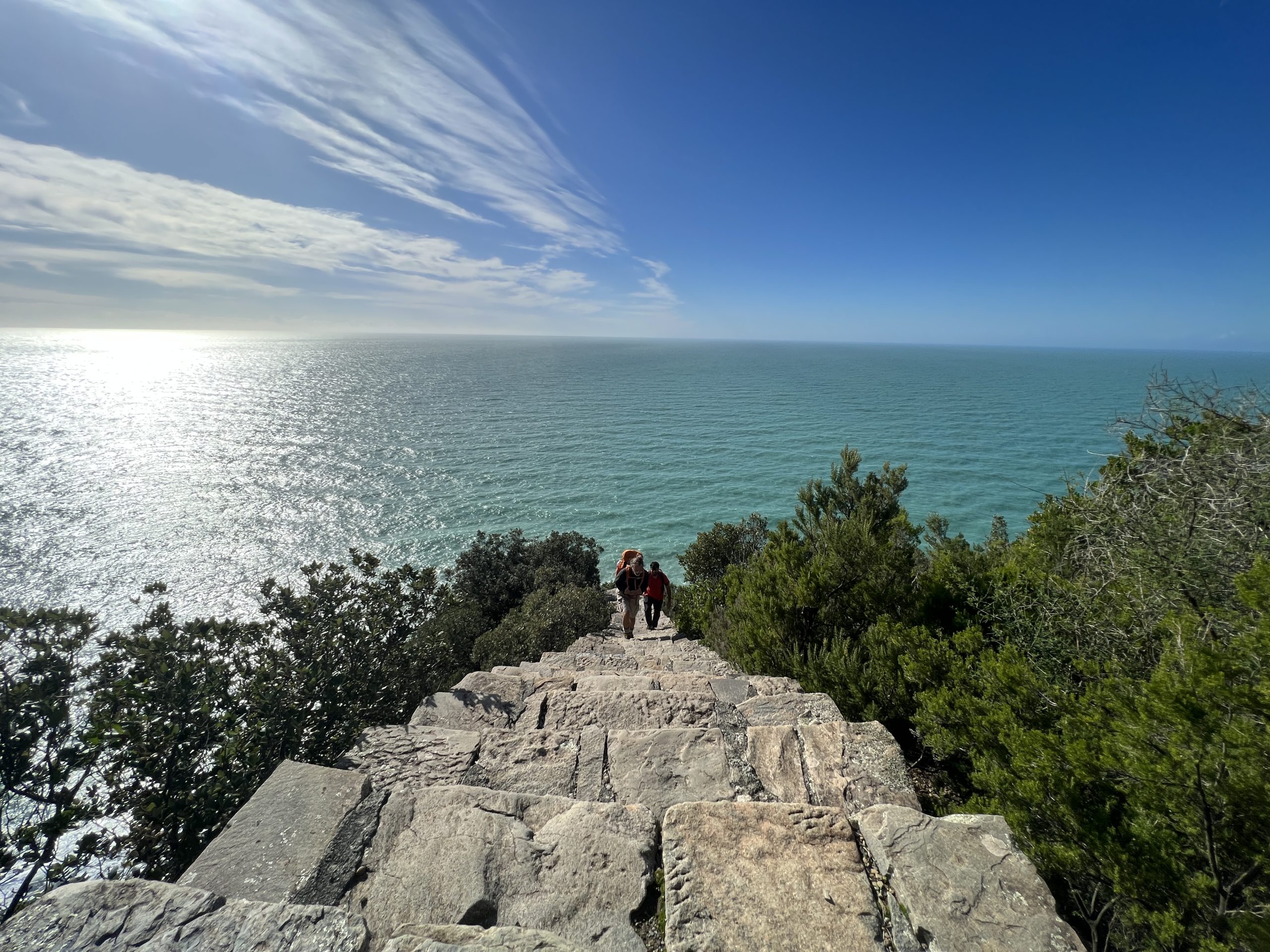
- Cinque Terre. Cars cannot enter the village centres, so a car is little help once you arrive. Choose between the Cinque Terre hiking day and the Cinque Terre day without hiking, which uses trains and boats between the villages.
- Pisa and Lucca. Honestly, you need neither a car nor a driver. Direct trains from Florence do the job.
Staying in Siena rather than Florence? We also run day trips starting from Siena.
How do you plan a Tuscany trip that mixes self-drive and a driver?
Start from the number of days you have, then assign each day a way of moving. Our guide to how many days you need in Tuscany helps with the first part.
A pattern that works for most first trips:
- Florence days on foot, no car.
- A wine day with a driver-guide, picked up at your hotel.
- A rental collected on the way out of the city for the countryside stretch.
- The car returned at the airport, never driven back into the centre.
For a worked example, see our 3-day Tuscany itinerary from Florence, and for more destinations, the best day trips from Florence. If you’d rather hand over the whole puzzle, we build tailor-made Tuscany itineraries for groups of 2–15 guests, including which days need a vehicle and which don’t. You can also browse all our tours from Florence.
FAQ
If you hold a US licence, you need an International Driving Permit alongside it to drive legally in Italy. Rental desks don’t always ask for it, but the police can during a roadside check. Get it at home before you travel, since it cannot be issued in Italy.
Avoid it. The centre is a ZTL watched by cameras, and a rental car has no permit to enter. Each gate you cross can produce a separate fine, charged to your card by the rental company weeks later with an admin fee. Collect your car on the day you leave Florence.
Most hill towns have paid car parks just outside the walls, and you walk up into the centre. The historic cores of Siena, San Gimignano, Montalcino and Pienza are restricted zones like Florence. In summer the closest car parks fill by mid-morning, so arriving early makes the whole day easier.
Barely. Italy’s limit is 0.5 g/l, and zero for drivers licensed less than three years. A tasting day means three estates and lunch with wine, so whoever drives ends up spitting or skipping the tastings. That is why most wine travellers book a driver-guide for their wine days.
NCC stands for noleggio con conducente, the Italian licence for private hire with a driver. An NCC driver can legally take you on transfers and day trips at a pre-agreed price. They know the roads and local spots well, but they are not licensed tour guides for museums or historic sites.
A private driver shares local knowledge on the road but is not a licensed guide. On our guided tours the guide drives, so the same person leads you through the cellar and the village. If you want a dedicated guide at one site, such as Siena Cathedral, we can add one.
Buses reach a few Chianti villages, but the best small estates sit on country roads and gravel tracks with no service at all, and most receive visitors by appointment only. A car, a private driver or a guided wine tour are the realistic options.
It often is, because private drivers are priced per vehicle rather than per person, so the cost per head falls as your group grows. For three or more travellers, a driver can compare well with a rental once you add fuel, tolls, parking and the risk of ZTL fines.