
The best time to visit Tuscany is late April to early June, or mid-September to the end of October. Florence averages highs of 24°C (76°F) in May and 27°C (81°F) in September, and the hills are much quieter than in July and August. November to March is cheaper and emptier, with short days, new olive oil and black truffles.
I have guided more than 10,000 guests through Tuscany in over 20 years. The weather figures in this guide are Florence airport averages for 1991–2020. Most Chianti villages sit 250 to 600 metres above sea level, so expect them to run a couple of degrees cooler than the city.
If you are still deciding how slow you want the trip to be, our piece on slow travel and overtourism in Tuscany explains how we think about crowds and timing.
Tuscany month by month: weather, crowds and events at a glance
| Month | Avg high / low in Florence | Rain days | Crowds (our read) | What’s on |
|---|---|---|---|---|
| January | 11 / 2°C (52 / 36°F) | 8 | Low | Black truffles, quietest museums |
| February | 13 / 3°C (55 / 37°F) | 7 | Low | Viareggio Carnival, vineyard pruning |
| March | 16 / 5°C (61 / 41°F) | 7 | Medium | Strade Bianche race, Easter on 28 March 2027 |
| April | 20 / 8°C (68 / 47°F) | 9 | High | Wildflowers, Nova Eroica, long weekends |
| May | 24 / 12°C (76 / 53°F) | 8 | High | Best hiking month, Eroica Montalcino |
| June | 29 / 16°C (84 / 61°F) | 5 | Very high | Calcio Storico, San Giovanni on 24 June |
| July | 32 / 18°C (90 / 65°F) | 3 | Very high | Palio di Siena on 2 July, peak heat |
| August | 32 / 19°C (90 / 65°F) | 4 | Very high | Palio on 16 August, Ferragosto closures |
| September | 27 / 15°C (81 / 59°F) | 6 | High | Grape harvest, Expo Chianti Classico, porcini |
| October | 22 / 11°C (71 / 52°F) | 9 | Medium to high | L’Eroica, white truffles, autumn colour |
| November | 16 / 6°C (60 / 44°F) | 10 | Low | Olio nuovo, San Miniato truffle market |
| December | 11 / 3°C (53 / 37°F) | 10 | Low, busy at Christmas | Black truffles, Christmas week in Florence |
Which month is best for wine, hiking, cycling or the Cinque Terre?
- Wine: mid-September to October for the harvest; March, April and November for quiet cellars.
- Hiking: late April to mid-June, then mid-September to early November.
- Gravel cycling: March to early June, September and October. The big dates are Nova Eroica in Buonconvento (11 April 2027), Eroica Montalcino (30 May 2027) and L’Eroica in Gaiole on the first Sunday of October.
- Cinque Terre: May, June and September. The boat leg of our Cinque Terre day runs from April to October, sea conditions permitting.
- Truffles and olive oil: October to December.
- Fewest crowds: January, February and November.
If you can only pick one window, pick mid-September to mid-October. As we explain in how many days you need in Tuscany, a five-day autumn trip covers what would take six in high summer.
What is Tuscany like in spring (March to May)?
Spring is the best season for hiking and quiet wine days, as long as you plan around Easter and the late-April long weekends in Florence.
Tuscany in March
Highs of 16°C (61°F), cold mornings and bare vineyards. In early March the professional Strade Bianche race runs on the white gravel roads around Siena. Easter falls on 28 March in 2027: the Scoppio del Carro sets off a cart of fireworks outside the Duomo, and Florence fills for the long weekend. Chianti stays quiet, which makes it a good month for a Chianti Classico wine tour.
Tuscany in April
Highs of 20°C (68°F) and the wettest month of spring, with about 9 rain days. Two national holidays, 25 April and 1 May, turn the end of the month into long weekends. After mid-April wildflowers come out on the hills above Florence, the right moment for our Fiesole hike with lunch and wine. Nova Eroica leaves Buonconvento on 11 April 2027.
Tuscany in May
Highs of 24°C (76°F) and long, usable days. If we could only hike one month a year, it would be May: the Chianti Classico wine hiking day crosses vineyards in full leaf. It is also a strong month for the Cinque Terre hiking day, midweek if you can. Eroica Montalcino runs on 30 May 2027.
What is Tuscany like in summer (June to August)?
Summer brings heat, crowds and Florence’s biggest festivals, so plan anything active before eleven in the morning.
Tuscany in June
Highs of 29°C (84°F) and light until about 9 pm. The Calcio Storico semifinals are played in Piazza Santa Croce in mid-June, and the final falls on 24 June, the feast of San Giovanni: a public holiday in Florence, with fireworks from Piazzale Michelangelo. Summer truffles start mid-month. Hike in the morning and keep the evening for the 7 pm boat and wine on the Arno.
Tuscany in July
Highs of 32°C (90°F), and the driest month: about 3 rain days and 25 mm of rain. In heatwaves the countryside reaches 35 to 38°C. The Palio di Siena runs on 2 July; standing in the middle of the Piazza del Campo is free if you arrive hours early and stay put. For cooler days, go up into the beech forests of the Casentino and Mugello or pick one of our summer day trips from Florence.
Tuscany in August
Highs of 32°C (90°F) and the second Palio on 16 August. Ferragosto, on 15 August, is the biggest summer holiday in Italy, and many family-run trattorie, shops and small producers close for a week or two around it. On the coast, in Bolgheri and the Maremma, the grape harvest often starts in late August. Base yourself outside Florence, plan mornings, and keep afternoons for shade or wild swimming.
What is Tuscany like in autumn (September to November)?
Autumn is harvest season and, for us, the best time of year: wine, porcini, truffles and olive oil arrive in that order, along with the rain.
Tuscany in September
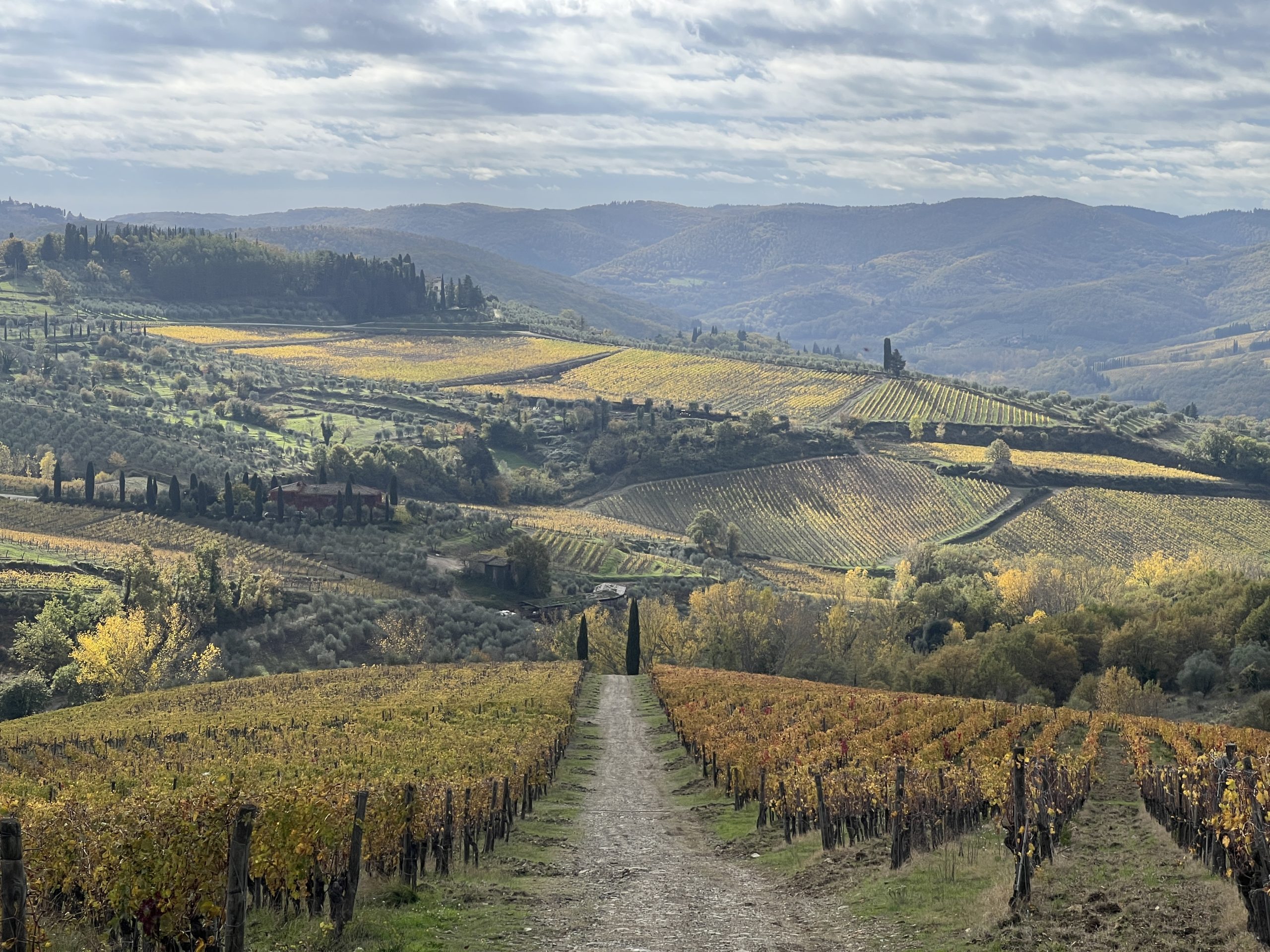
Highs of 27°C (81°F) and about 6 rain days. In Chianti Classico the Sangiovese is usually picked in the second and third weeks of September; in 2026 the whole harvest ran about ten days early. Our grape harvest guide covers when and where picking happens, and our Chianti vendemmia piece explains what goes on in the cellar. Greve hosts the Expo Chianti Classico in mid-September, Florence lights paper lanterns for the Rificolona on 7 September, and porcini season peaks from mid-month.
Tuscany in October
Highs of 22°C (71°F), and the rain comes back: 105 mm over about 9 days. Brunello producers in Montalcino often pick into late October, a good reason to book the Brunello di Montalcino wine tour. L’Eroica leaves Gaiole on the first Sunday of the month. White truffle season opens, olive picking starts towards the end of the month, and the autumn colour in the Casentino peaks in the last two weeks.
Tuscany in November
Highs of 16°C (60°F) and the wettest month: 115 mm over about 10 days. It is also the month we eat best. The olio nuovo comes out of the frantoi green and peppery, the white truffle peaks, and San Miniato holds its truffle market on the last three weekends. Our truffle hunting guide explains the seasons, and the truffle hunt with lunch gets you into the woods. More in our Tuscan food experiences guide.
What is Tuscany like in winter (December to February)?
Winter is the quiet, cheaper season: short days, cold mornings, black truffles and Florence at its emptiest outside Christmas week.
Tuscany in December
Highs of 11°C (53°F), lows of 3°C (37°F), and the sun sets before 5 pm. The black winter truffle is in season from November into March. Florence gets busy again between Christmas and New Year; outside that week the countryside is close to empty, and a grey day suits a home cooking class in Chianti Classico.
Tuscany in January
The coldest month: highs of 11°C (52°F), lows of 2°C (36°F). After Epiphany on 6 January, Florence has its quietest weeks of the year. Some agriturismi and smaller wineries close or open by appointment only, so tastings need booking. Siena makes a good winter base: our day trips from Siena run every day, all year.
Tuscany in February
Highs of 13°C (55°F). It is pruning season in the vineyards, and the Val d’Orcia is bare and quiet, often with mist in the valleys on cold mornings: a good time for our Val d’Orcia day. On the coast, the Viareggio Carnival runs its papier-mâché floats through February; the third parade of 2027 is on 7 February.
Which weeks are hardest for a trip to Tuscany?
- Easter weekend in Florence (28 March 2027): the city is at capacity.
- Italian long weekends around 25 April, 1 May and 2 June, when Italians travel too.
- Mid-July to late August: average highs of 32°C (90°F) and the busiest towns.
- The week of Ferragosto (15 August), when many small producers close.
- Palio days in Siena (2 July and 16 August), unless the Palio is the reason you are going.
On these dates, book earlier and start your days earlier.
How far ahead should you book a tour in Tuscany?
From April to October, book our Chianti Classico wine tour at least 2 weeks ahead, and tours starting from Siena 2 to 3 weeks ahead. Easter, Palio days and harvest weekends need more notice than that.
Our private tours take groups of 2 to 15 guests; most semi-private departures are capped at 8. The full catalogue is on our tours page.
Planning your dates with us
If your dates are fixed, tell us the week and we will tell you what the countryside is doing that week. If they are flexible, we will suggest the week to pick. Every tailor-made Tuscany itinerary we build starts from the calendar, and our 3-day itinerary from Florence shows what that looks like in practice.
When to visit Tuscany: frequently asked questions
The cheapest months are usually January, February and November, outside the Christmas holidays. Hotels in Florence and agriturismi in the countryside usually cut their rates, and the big sights are at their quietest. Expect short days, sunsets before 5 pm in December, and some small wineries open by appointment only.
October is one of the best months of the year, especially the first half. Florence averages highs of 22°C (71°F), Brunello producers in Montalcino are still picking, white truffle season opens and the Casentino forests turn in the last two weeks. The trade-off is rain: about 9 rain days and 105 mm on average.
August highs in Florence average 32°C (90°F), and heatwaves push the countryside to 35 to 38°C. It is manageable if you hike or cycle before eleven, spend afternoons in the shade or by water, and avoid the week of Ferragosto, 15 August, when many family-run producers and trattorie close.
Picking starts on the coast, in Bolgheri and the Maremma, in late August. In Chianti Classico the Sangiovese is usually harvested in the second and third weeks of September, and in Montalcino picking often runs into late October. In 2026 the harvest began about ten days earlier than in a typical year.
The white truffle runs from early October to December and peaks in November, when San Miniato holds its market on the last three weekends. The black winter truffle follows from November into March. The summer scorzone has two windows: mid-June to the end of August, and again in October and November.
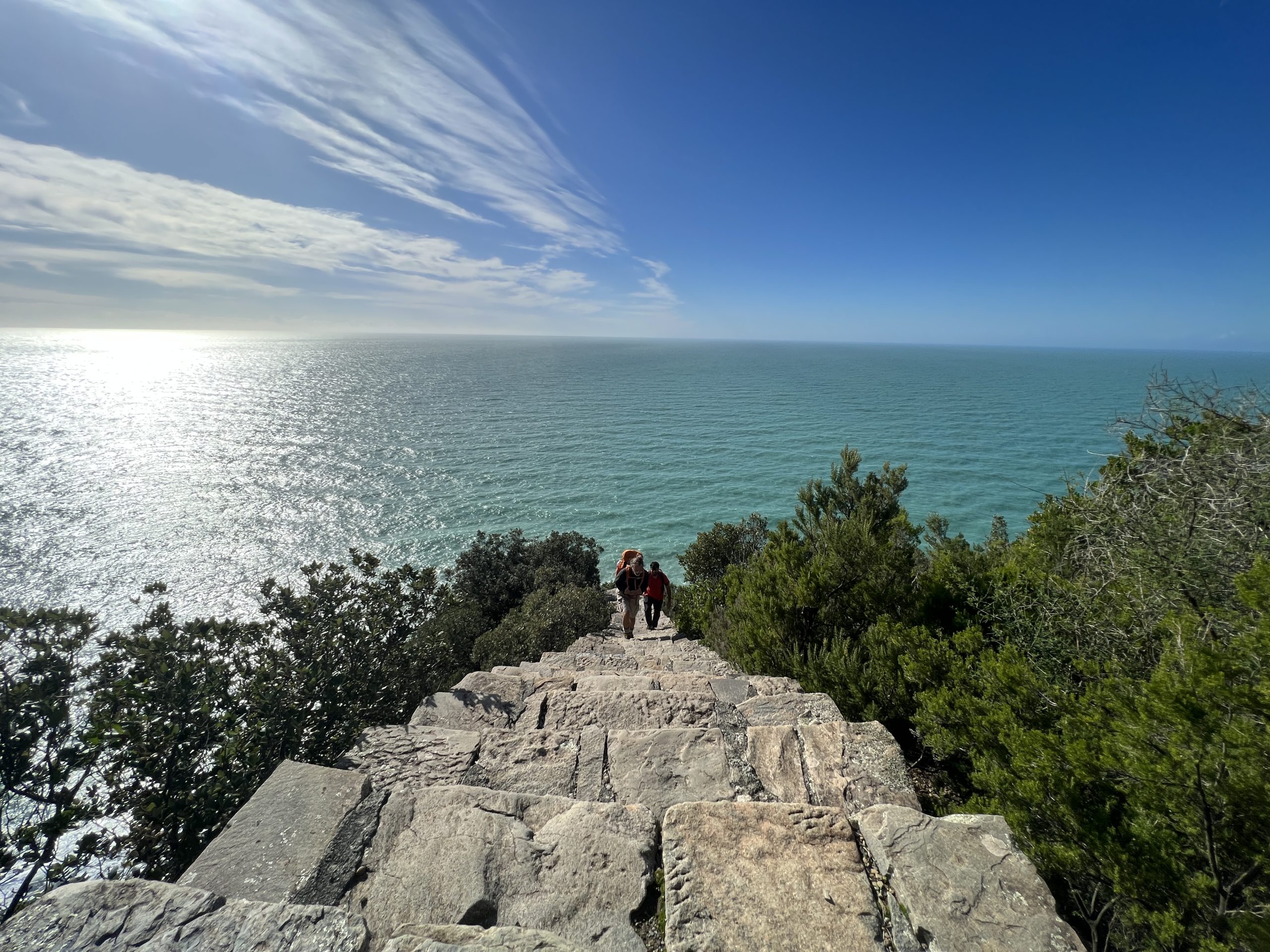
May, June and September give the best balance of weather and trail conditions. July and August are hot and crowded on the paths. On our Cinque Terre hiking day the boat leg runs from April to October, sea conditions permitting, and orange or red weather alerts may cancel the hike.
For food, wine and cities, winter works well. Florence averages highs of 11°C (52°F) in January, museum queues are at their shortest, the olive oil is new and black truffles are in season. Days are short, some agriturismi close, and the boat leg of our Cinque Terre day only runs from April to October.
November is the wettest month in Florence, with about 115 mm of rain over 10 days on average, followed by October with 105 mm. July is the driest, with about 25 mm over 3 days. Spring rain peaks in April, with around 9 rain days.